
South Africa 2 week Itinerary: Cape Town, KwaZulu-Natal & JoBurg
Our sensational South Africa 2 week itinerary captures the best experiences from our repeat visits (our sister lives here) to guide you in designing your perfect stay.
Our route starts in Cape Town, continues to Durban and KwaZulu Natal and ends in Johannesburg.
Despite turbulent times, we feel South Africa remains a unique place to visit, full of history in KwaZulu Natal, beaches around Durban and less crowded, affordable northern safari parks.
Our articles reflect our personal experiences in featured destinations. When you book using a link on our site, we may receive a small commission at no cost to you. Read our Privacy Policy and Disclaimer for more information.
Quick Itinerary Overview
If you’re in a hurry, here’s a quick overview of our suggested itinerary.
➡️ Day 1 – Fly to Cape Town, settle in & explore a little.
➡️ Day 2-5 – Visit Robben Island, Stellenbosch Wines, Beaches.
➡️ Day 6 – Fly to Durban, discover the coastal city.
➡️ Day 7-10 – Road trip in Kwazulu-Natal, & Drakensberg.
➡️ Day 11-12 – Safari in Kwazulua-Natal Region.
➡️ Day 13-14 – Drive or Fly to Johannesburg. Explore city including Soweto, Nelson Mandela memorial.
Days 1-5: Cape Town Region
A beautiful city on the southern coast, this is a great starting point for any visit to South Africa. Organize from our highlights below to suit your interests, and your preferred pace of sightseeing.
Cape Town Highlights
Table Mountain National Park by Cable Car.
Historical Cape Town Bo-Kapp and District Six Museum.
Boat Tour To Robben Island
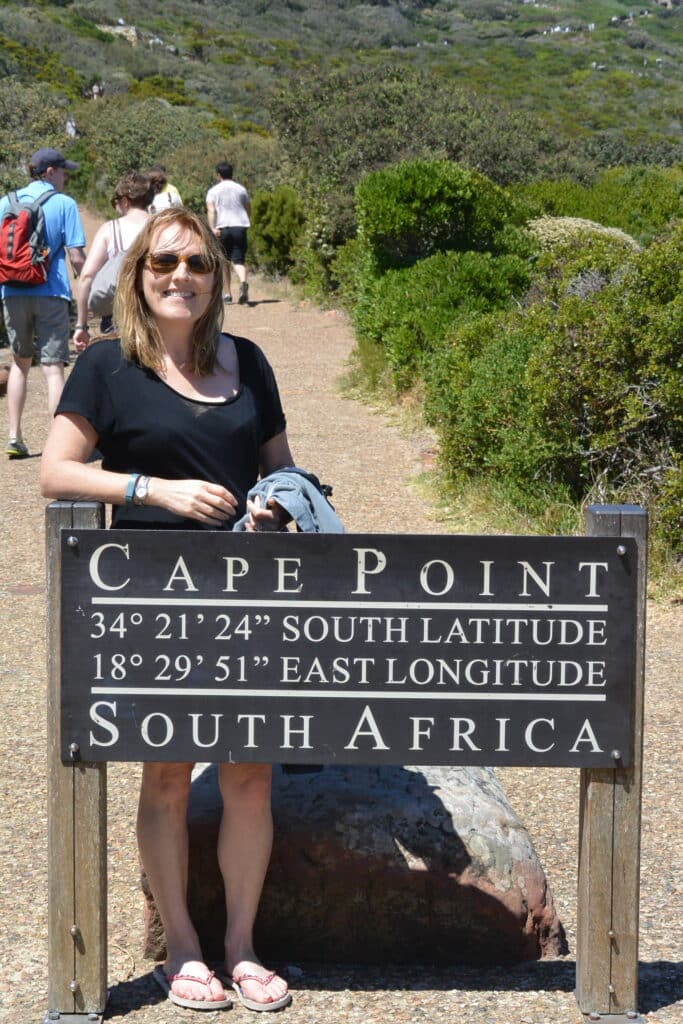
Stand at the continent’s southerly Cape Point.
Stellenbosch Wine Tasting.
Kirstenbosch National Botanical Gardens.
Camps Bay African penguins at Simonstown.
Enjoy A Cable Car Ride Up Table Mountain
Buy Tickets On Line. They cost between R60 – R1050.
Park at the free Lower Tafelberg Road & take free Shuttle.
Stop on Hop On/Hop Off Route – click to gets tickets.
Afternoons are quieter. Typically runs from 8am to 9pm.
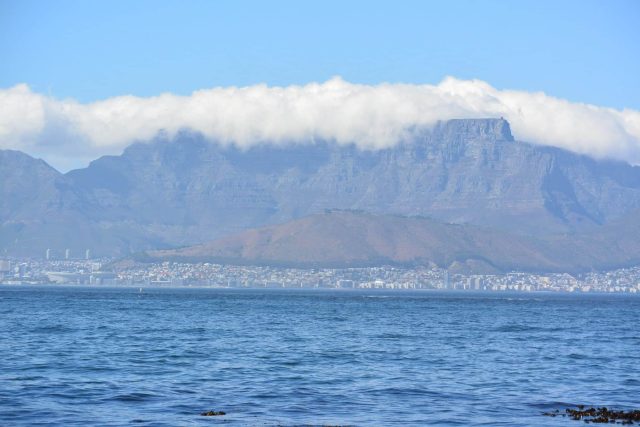
Who doesn’t recognise Table Mountain? It’s featured on South Africa’s flag, supports an incredible biodiversity and is part of a massive Table Mountain National Park hiking system.
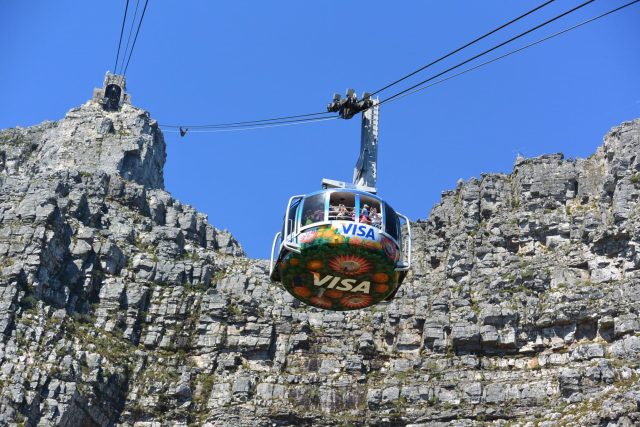
If you’re driving, park near the cable car entrance. Or take a bus, or combine a City and Table Mountain Tour from Cape Town. The aerial cableway only takes 5 minutes to take you to the top of one of the New Seven Wonders of Nature.
🎒Our Tip: Be aware your ticket is valid for 7 days after purchase. The cableway can close in bad weather, and clouds often cover the mountain, so be flexible.
This table top is home to more than 1200 species of fynbos (small plants, often shrub-like with small, hard leaves). That’s huge – to compare, it’s more than all types found in the UK!
When we got to the top, the views took our breath away. Rugged coastline with waves splashing onshore and blue and green water. It’s impossible to capture how this place feels in a photograph 🙂
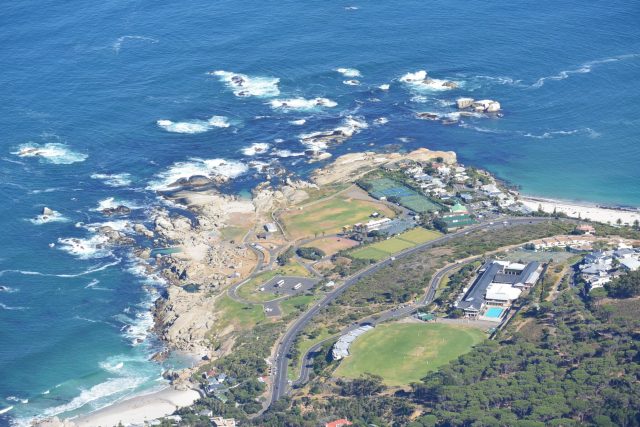
Plan to spend a couple of hours up top. There’s quite a bit to explore. We were impressed that the footpaths on top are well maintained, and there are interesting information boards to pause and read en route.
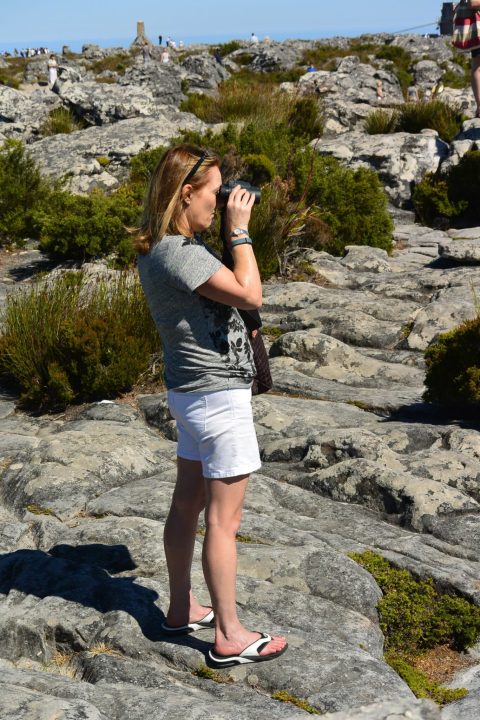
🎒Our Tips: Wheelchair Cable Car access is available and you can rent mobility scooters on the mountain top. Book in advance. Don’t forget to bring your binoculars!
There is a restaurant and shop on top. We didn’t go to them as we wanted to spend time walking around outside, soaking in the views from all sides. I could have spent hours up here, and it’s a must do when in Cape Town.
Learn About UNESCO Bo-Kapp in Cape Town
District Six Museum Hours: 9 am – 4 pm Mon-Sat.
Buy Tickets at Entrance vs via on-line sites.
Spend a morning or afternoon in this part of town to experience both Cape Malay culture and the Islamic heart of Cape Town.
Its origins sadly came out of slavery when people from East Africa to Malaysia, Madagascar, Indonesia, India, Sri Lanka, and The Philippines were brought here.
It’s a miracle that this area of town is still with us as it was nearly torn down during apartheid by the City Council. The historic buildings date back to pre-1850s: the country’s oldest residential area.
With so many people away from their homeland, food was an important way to keep their original culture alive. Taste these ‘local’ foods when you visit and learn a little about their history.
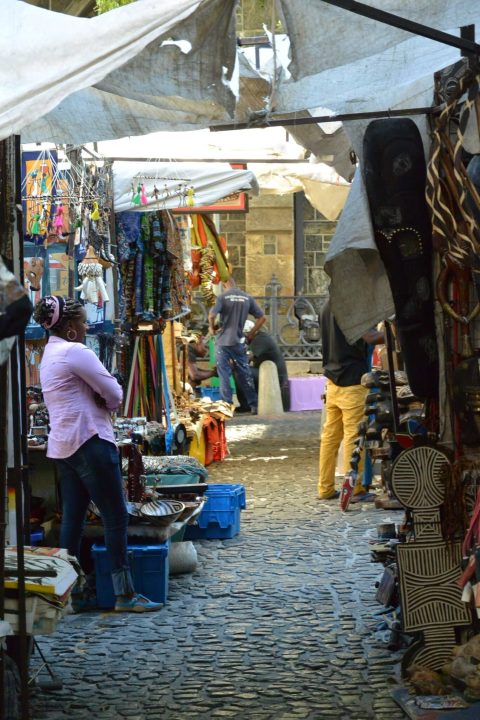
🎒Our Tip: Markets here are interesting to meander around although quite touristy. I enjoyed them especially woven items.
Visit District Six Musuem
Our visit to District Six Museum was a sobering reminder of the difficult past here. It’s really well designed for visitors, helping us understand why this specific place became a symbol of apartheid.
People were forcibly removed from their homes in District Six during those times and many of these dwellings were bulldozed.
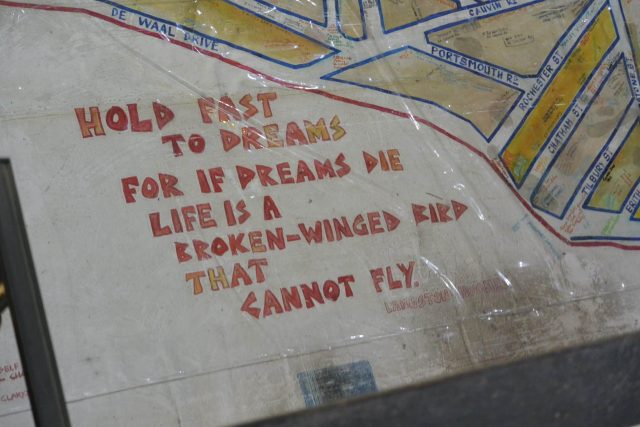
The museum tells the story of some of these former residents. The Zonnebloem area is what remains from the original District Six. It is slowly re-emerging with a new generation of residents.
If you see a small area of bare land, still empty, it’s that way for a reason: to ensure no-one forgets what happened here.
🎒Our Tip: There have been reports of fraud ticket sales, so we highly recommend buying tickets directly at the museum!
Robben Island Guided Tour (By Boat)
Tours last 4 hours (including return boat trips).
Prices Adults 600ZAR; Under 18 years 310ZAR
This excellent Half Day Robben Island Tour leaves from the waterfront several times daily. You sail for around 30 minutes to get to the island, then disembark and walk a short distance to the prison area.
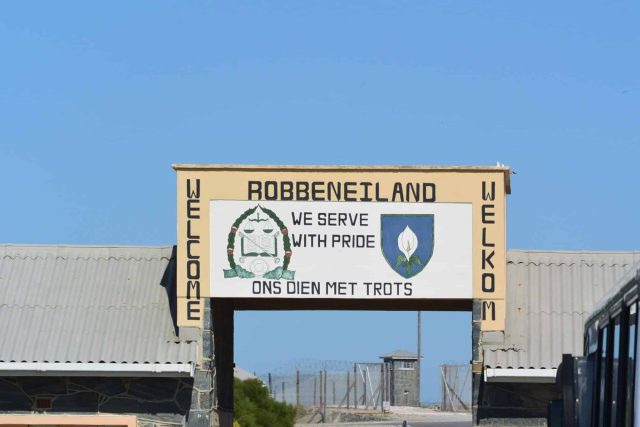
There are different boats used, some are faster than others, so if you want to use a faster vessel, check when you book for that option.
🎒Our Tip: Our crossings have been quite calm. That said, we know it can be choppy at times, so if you need to, take a dramamine before hand.
Once you’re at the island’s main museum areas, an official guide leads your group around this UNESCO heritage site.
Our tour ended with seeing the tiny, concrete cell where Nelson Mandela spent 17 of his 25 imprisoned years. It is hard to imagine how his life must have been.
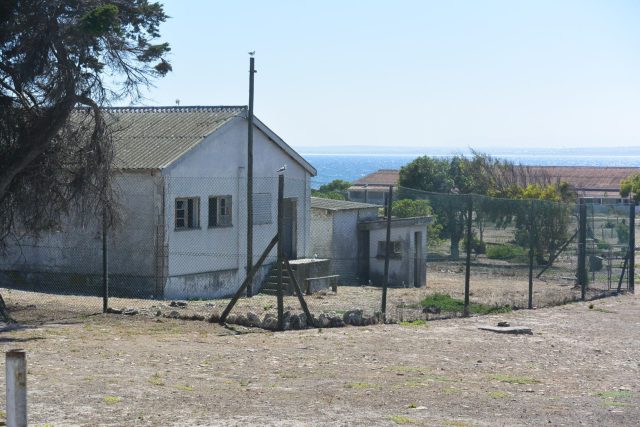
Our guide was excellent explaining the realities of life here during this time and afterwards we had time to reflect on our own.
After you disembark back in Cape Town Waterfront, it’s an easy walk to a host of restaurants and bars. Here’s our recommendations:
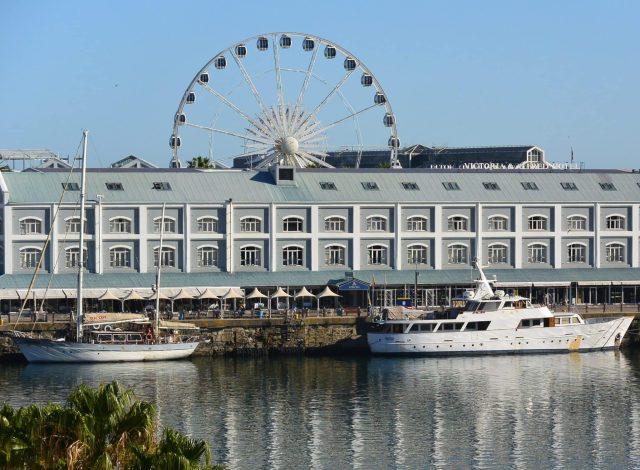
- Harbour House – a local fresh menu with local wines at a reasonable price.
- Tasha’s – popular for brunch; can get busy at weekends.
- Mugg & Bean – range of coffees & pastries, think South Africa’s Starbucks; you will find them throughout across the country.
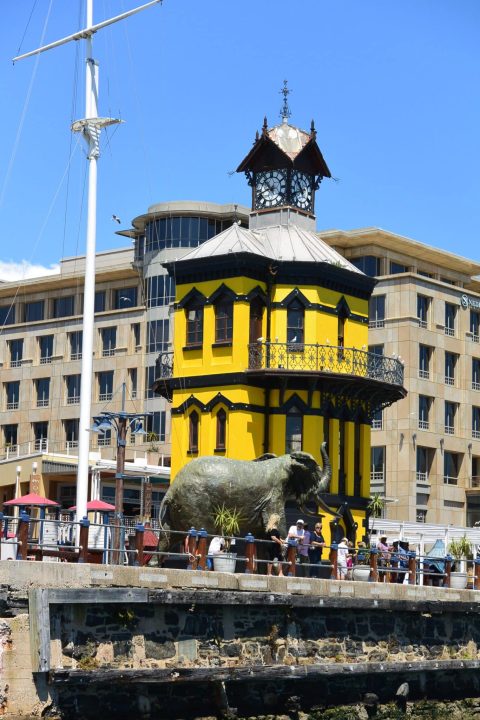
If you’re in need of a meeting point on the waterfront, the clock tower is it (see photo below). This is where most of the boat tours leave from, and it’s also popular to stroll around before or after your Robben Island tour.
Stand At Cape Point, Cape Of Good Hope
Entrance Costs: R515 (Adults) and R250 (2-11 years).
The drive from CapeTown downs Camps Bay and through small coastal towns is stunning too. If you are driving you will want to stop as there are lots of brilliant photo opportunities!
This is often a windy spot but definitely worthwhile. Cape Point is in the Cape of Good Hope nature reserve, part of Table Mountain National Park. This whole area is part of Cape Floral Region, and not surprisingly, a World Heritage Site.
It includes the majestic Table Mountain chain, which stretches from Signal Hill to Cape Point, and the coastlines of the Cape Peninsula.
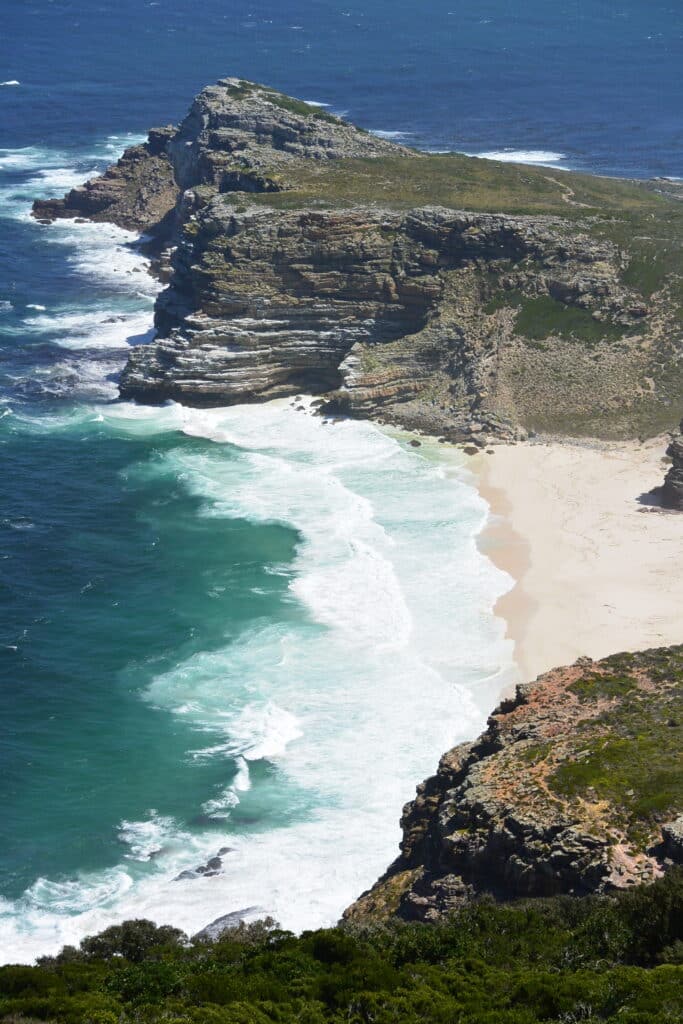
This narrow stretch of land, dotted with beautiful valleys, bays and beaches, contains a mix of extraordinarily diverse and unique fauna and flora.
After you park up, you can follow the signs to view points, and enjoy amazing hiking trails.
Relax in the Botanical Gardens
Part of the park system continues to the south and the Kirstenbosch Botanical Gardens where a series of Summer Concerts are held. These are beautiful gardens for a picnic. Sit on the grassy areas, relax listening to great music. It’s a lovely way to end a full day of sightseeing.
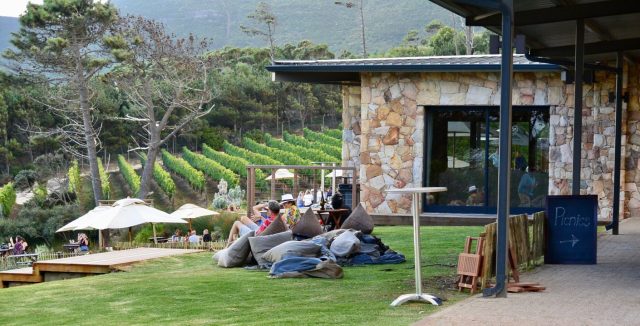
The Cape Point Vineyard is also a local perfect spot for indulging in fantastic South African wines and enjoying countryside vistas. You can pre order a picnic which we did and it was delicious.
Best Of South Africa’s Beaches
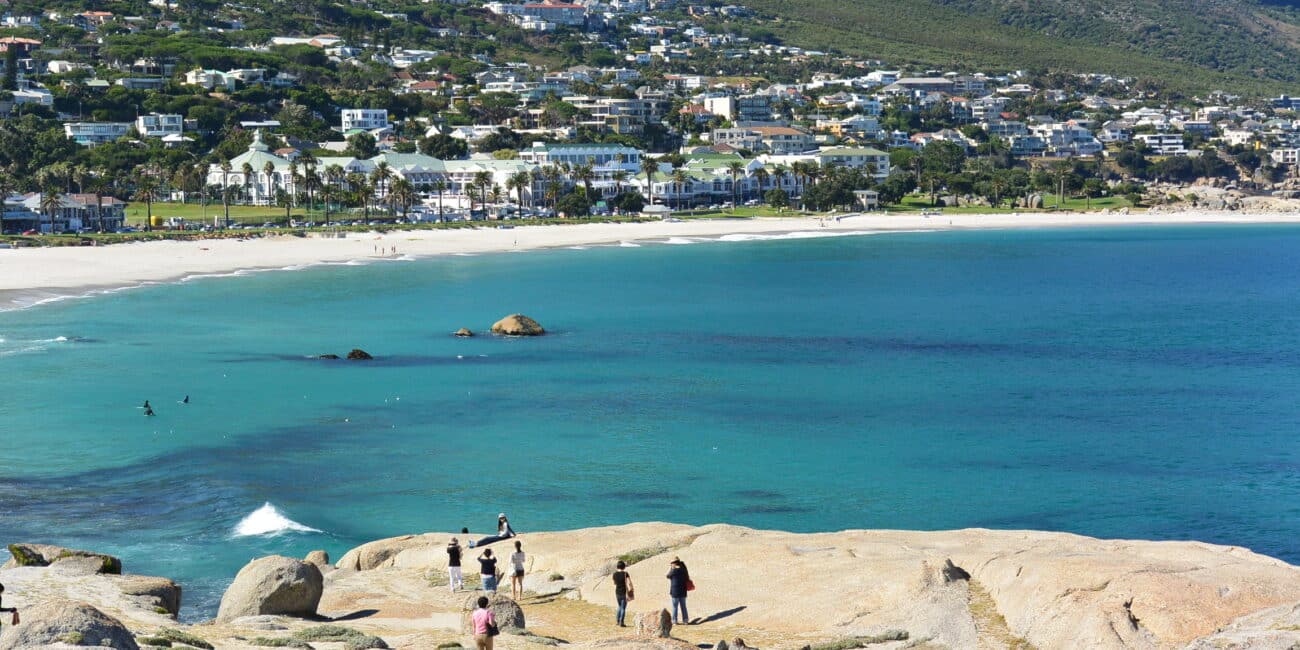
There are numerous beach areas dotted around Cape Town like this one. As you drive around you will find the one that is perfect for you for a few hours. Use this Best Beaches Guide to learn more about Camps Bay, Boulders and Clifton amongst the top rated.
See South African Penguins
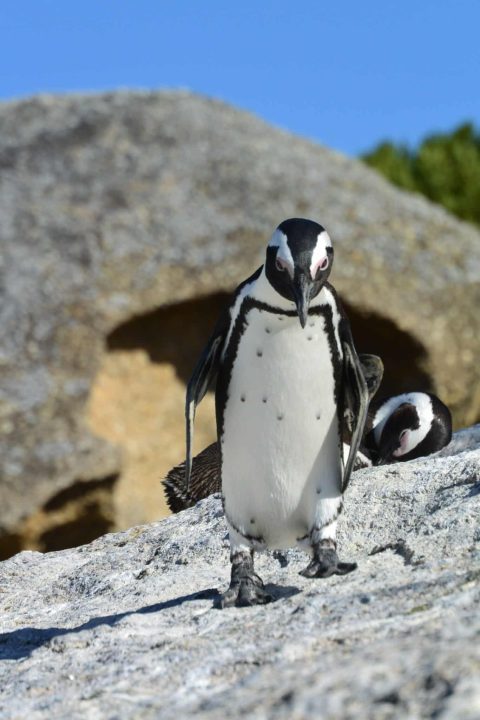
On this same trip, take in Boulder Beach between Simons Town and Cape Point and meet it’s cute African Penguins, known as Jackasses.
You can wander amongst them as they go about their rituals and they are so entertaining to watch. Do not touch though – they can give you a good peck apparently!
Go Wine Tasting
Our knowledge of South African wine has improved over our years of travel here. But, even now a lot of the best wines are simply not on the shelves of shops in the UK or USA.
However, at the source, there are many amazing vineyards to visit and fantastic wines to sample.
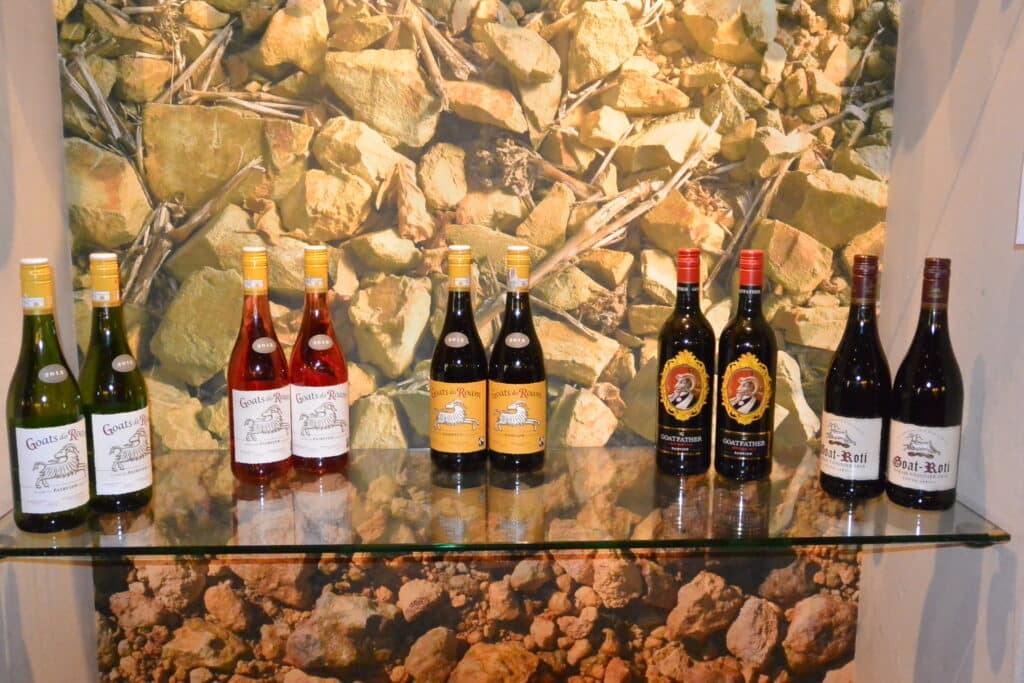
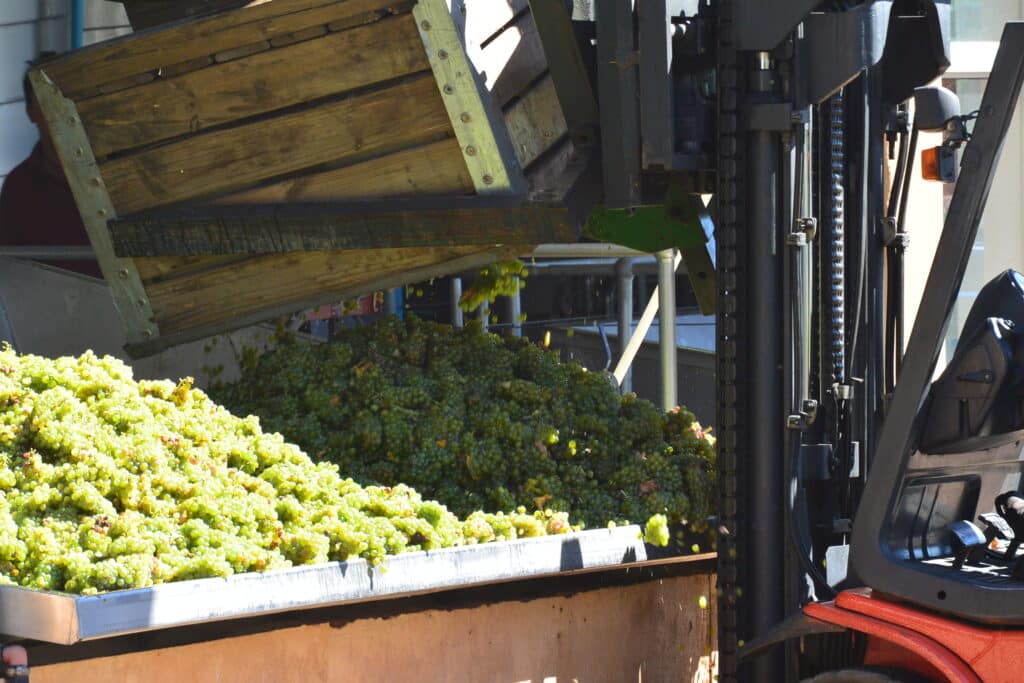
We organised a trip via a friend who was South African and she did an outstanding job. Sadly, she’s no longer a tour guide otherwise we’d share her details but there are plenty of tours on offer.
We visited a range of vineyards on a day trip from Cape Town. There were six wine routes. Such routes enable you to visit the historic and interesting towns of Stellenbosch, Franschhoek and Paarl. Check out a range of tours around the region.
The countryside here is stunning and well, with all these wines, you need more time to sample and make your own mind up which is your favourite!
Spend A Day With Lunch In Stellenbosch
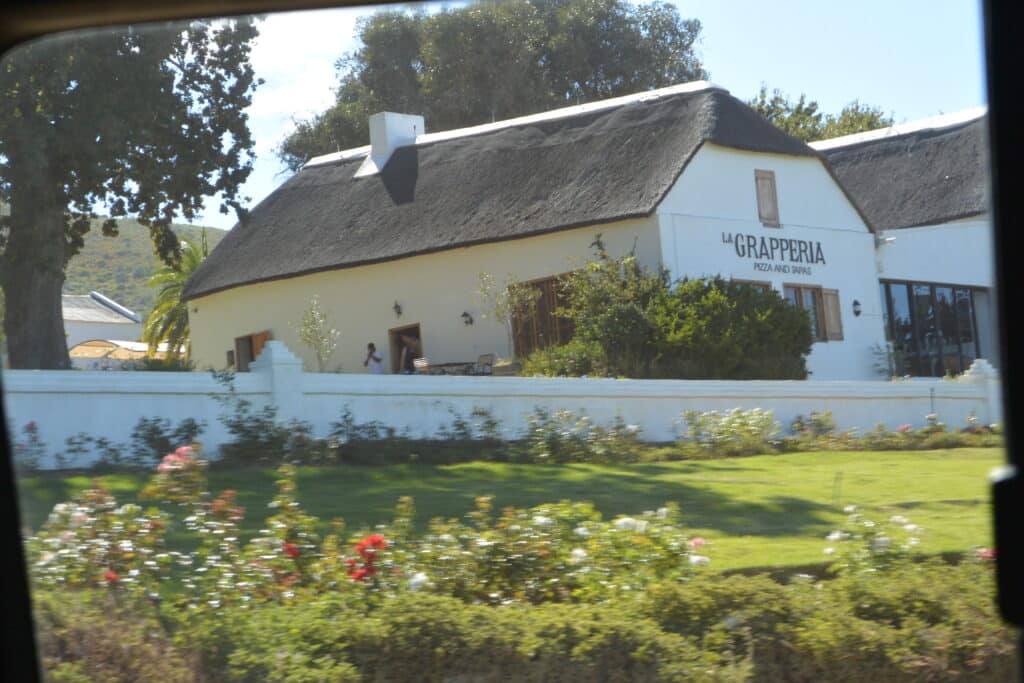
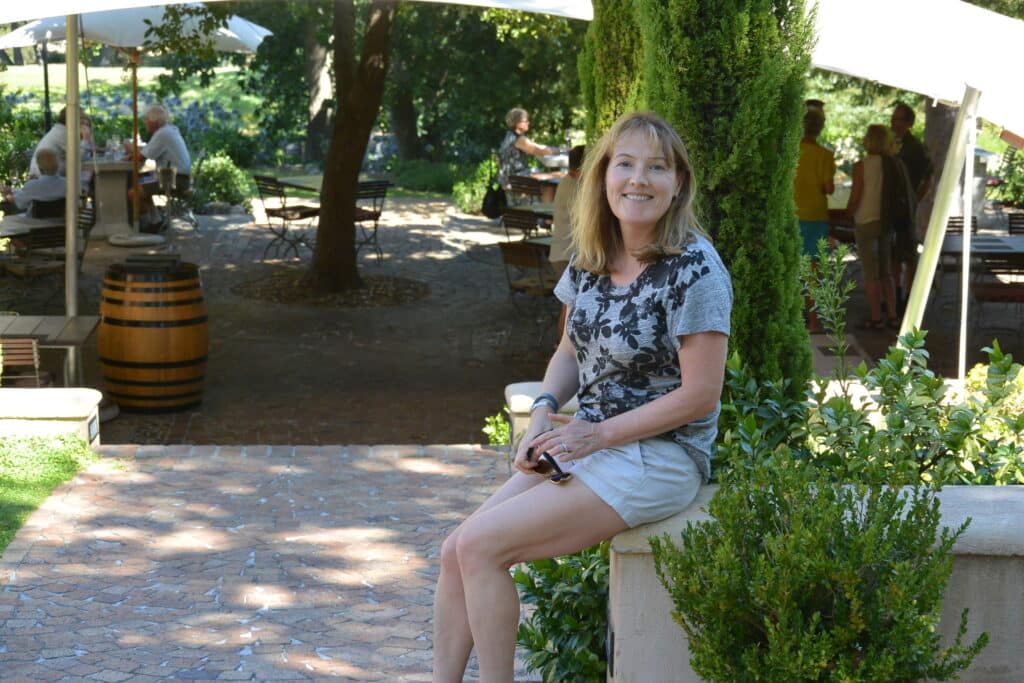
Some of the vineyards we enjoyed were Fairview, Goats Do Roam and a wonderful lunch at La Grapperia (below) with view over the mountains.
It is very relaxing to sit in the gardens and sample the wine whilst watching some of the process in front of us. Quite informal as you can see from the photos.
Where to Stay In Cape Town
Our picks are based on location, safe links to transport, and overall value for money.
If your budget allows it, stay at Cape Grace Hotel. It’s a fantastic location only 900 feet from the city’s clock tower landmark on the Victoria and Alfred Waterfront.
📍$ – The Sage Aparthotel by Totalstay – it may have an odd name, but guests love the location and facilities like balconies, and kitchenette. Easy to get to main sights, but no parking or A/C.
📍$$ – Pullman Cape City Centre – this is a good city option in mid range, with a pool terrace, and modern comfortable rooms. Their shuttle to the waterfront is a bonus!
📍$$$ – Belmond Mount Nelson Hotel – this is a perfect choice if you love the idea of enjoying tea on an outdoor terrace, outdoor swimming in between sightseeing. Traditional atmosphere with modern facilities.
->> Click here for more great Cape Town accommodation choices.
Days 6-10: Durban & KwaZulu Natal
- Hire a car and head north to Hluhluwe Game Reserve/Safari.
- Head to the Durban coast St Lucia and check out the Hippos.
- Cross the border to Lesotho or Eswatini.
- Explore The Midlands and Drakensberg (highest in S Africa)
Johannesburg
- Drive over the mountains from Durban to Johannesburg.
- Explore Johannesburg’s museums & Nelson Mandela square.
- Go shopping.
- Visit Soweto township.
Top Things To Do In KwaZulu-Natal
We flew from Cape Town to Durban, then picked up a car there to explore KwaZulu-Natal area.
This region is growing in popularity as a destination for overseas visitors as it offers a lot of variety, from golf, to surf-friendly beaches, amazing wildlife and inland peaks.
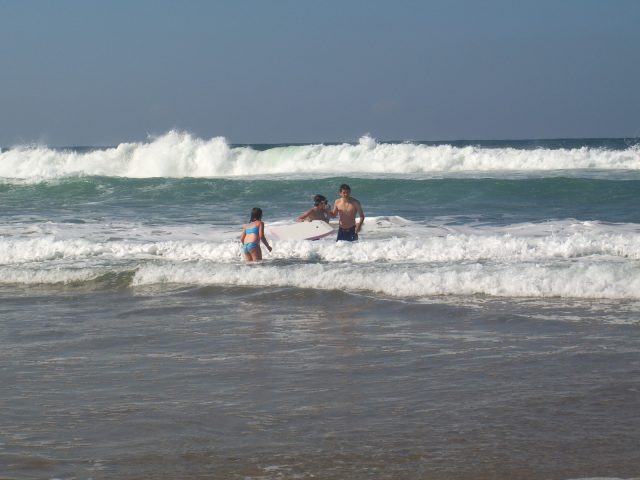
Much of the area around Durban is fast growing both the city and further south its east coast region. If you come here with kids, you will likely spend a lot of time at the beaches here, just hanging out and enjoying the waves.
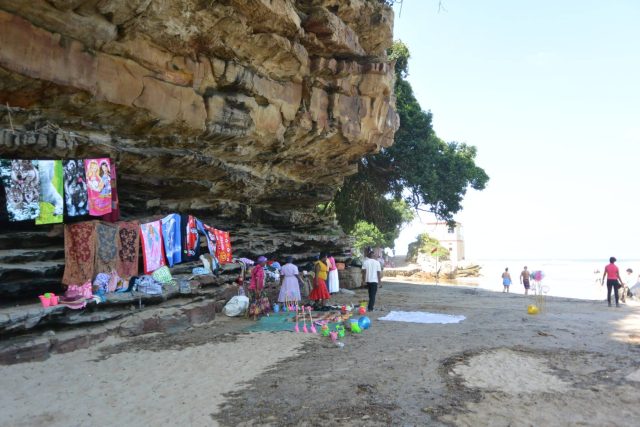
Stop Off In Southbroom – A Casual Beach Town
If you are driving, stop by this area for lunch and take a couple of hours to check out the beaches of Shelley Beach and Port Edwards dotted along the wild coast.
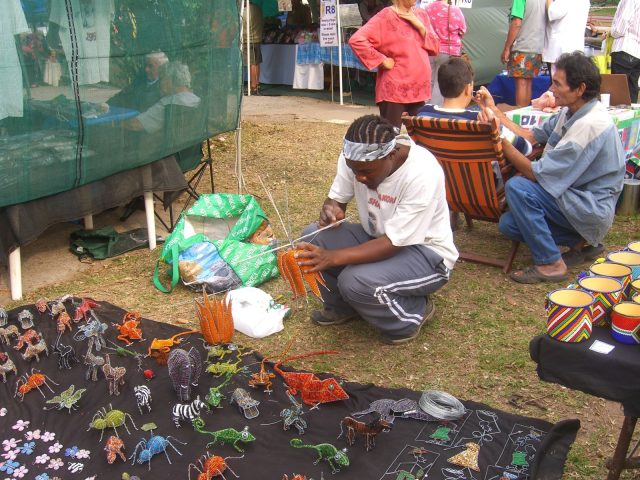
This area is also well known for traditional crafts with a number of authentic craft sites around the Southbroom area.
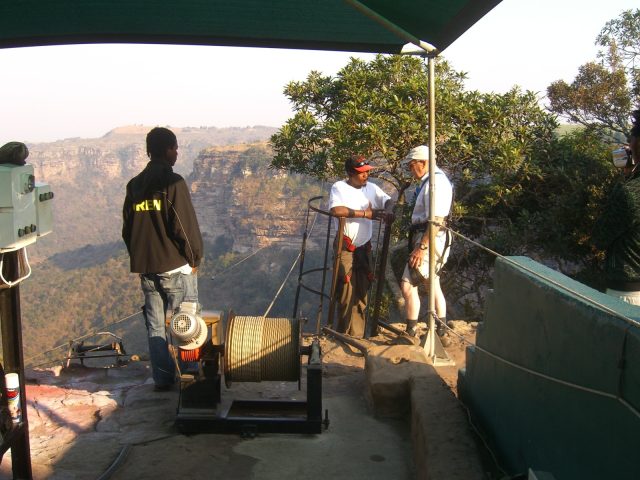
Zip-lining and bungee jumping is available for those seeking thrills. Our Dad did a bungee jump here in his mid 70’s. We haven’t been talked into it yet!
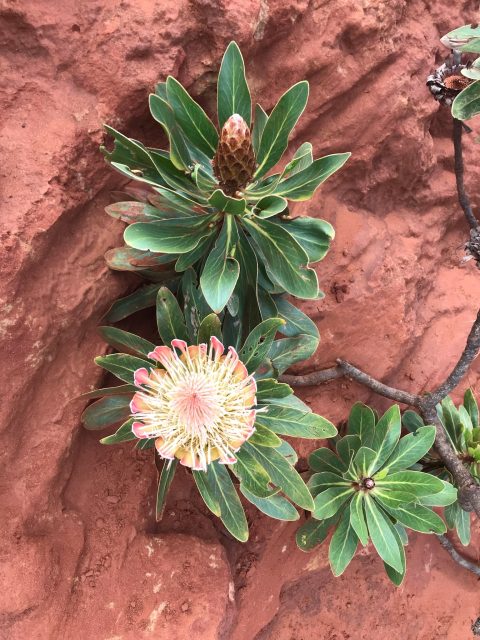
There is a natural beauty in this area with an incredible range of wild flowers growing almost within deserts in places.
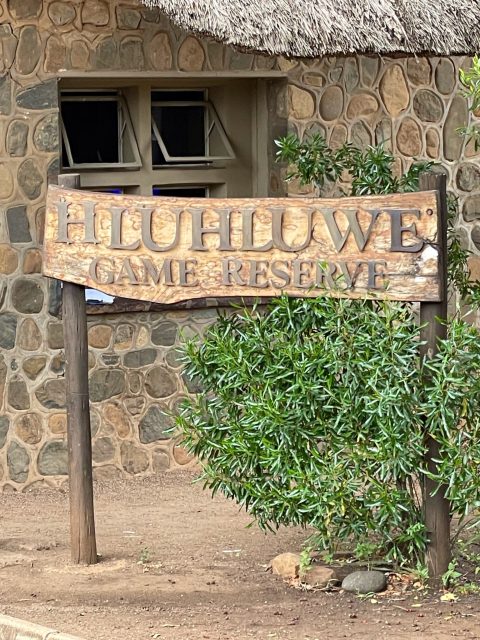
Hluhluwe-Imfolozi National Safari Park
Immersing yourselves in nature is a ‘must do’ in South Africa and there are South African safari options for every budget.
Things to consider when looking into safaris are what you want to see and how much travelling to/from your accommodation each day you are willing to do.
Also check whether there is malaria in that location and how to protect yourselves from any risks. It might sound obvious but do be sure you understand what is included in your safari price (or not).
For example, most camps included morning and evening game drives but do check.
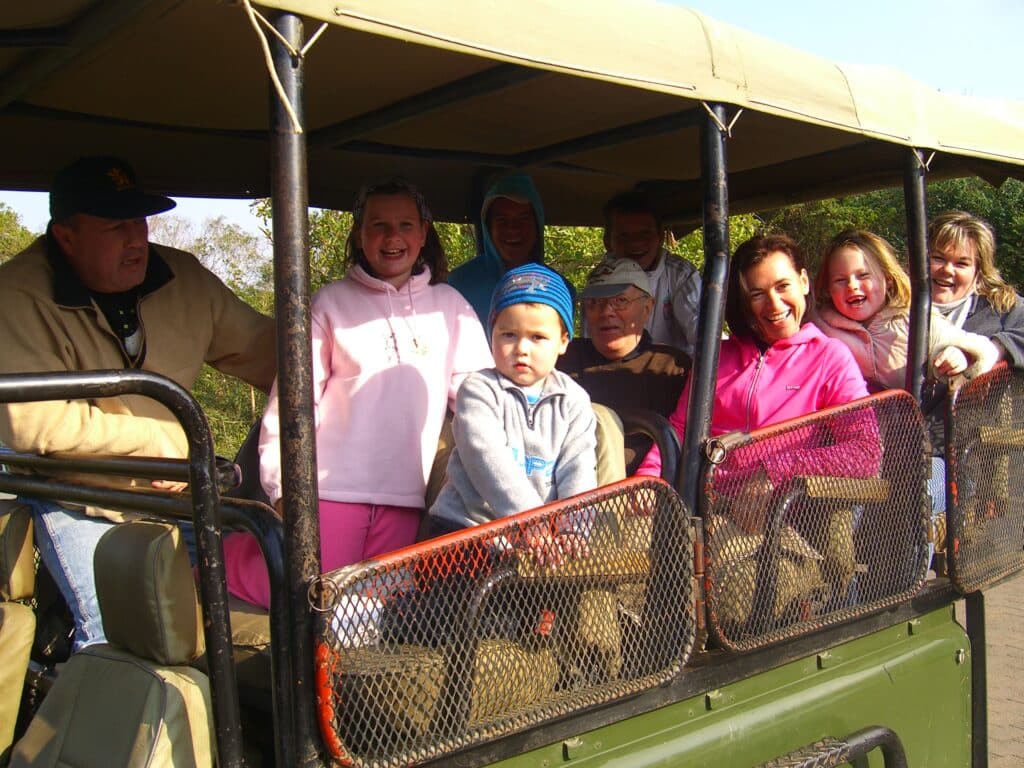
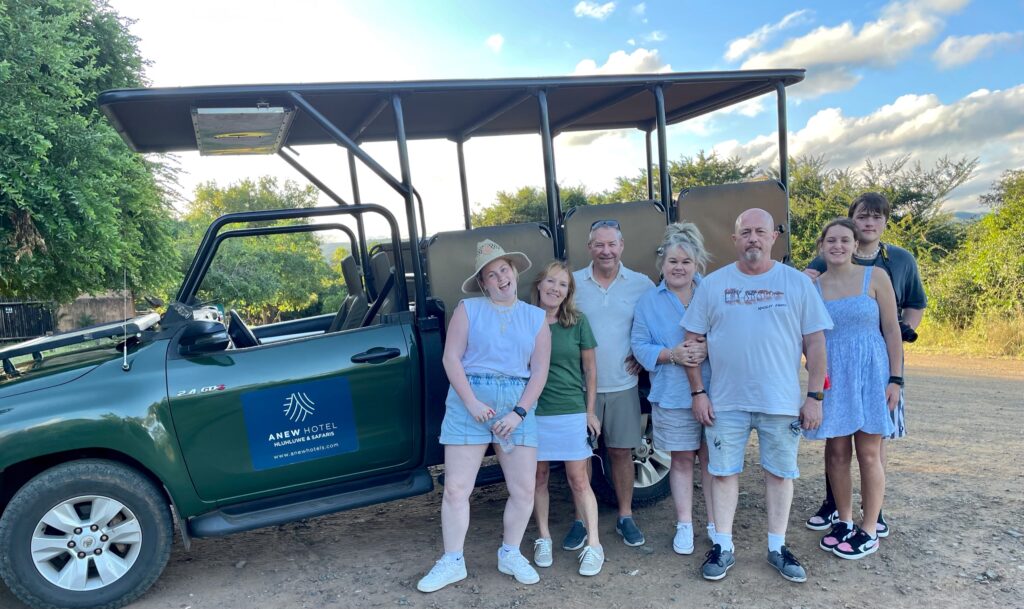
Early mornings are a necessity on safari as this is when many animals are active. Set that alarm as it really is an incredible experience to see animals in the wild at dawn.
Then relax, have nap and be ready for a dusk safari which is also going to be full of activity.
If you are looking for other idea for an African Safari, read our 3 Day Masai Mara Safari from Nairobi article to see the best of Kenya’s nature.
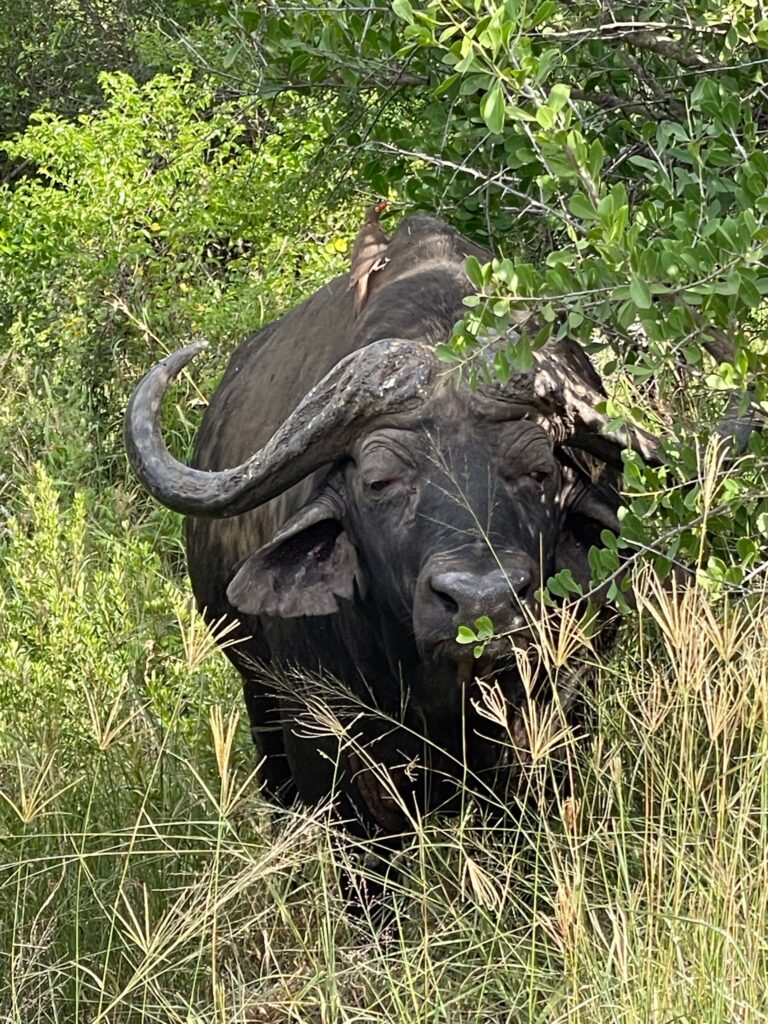
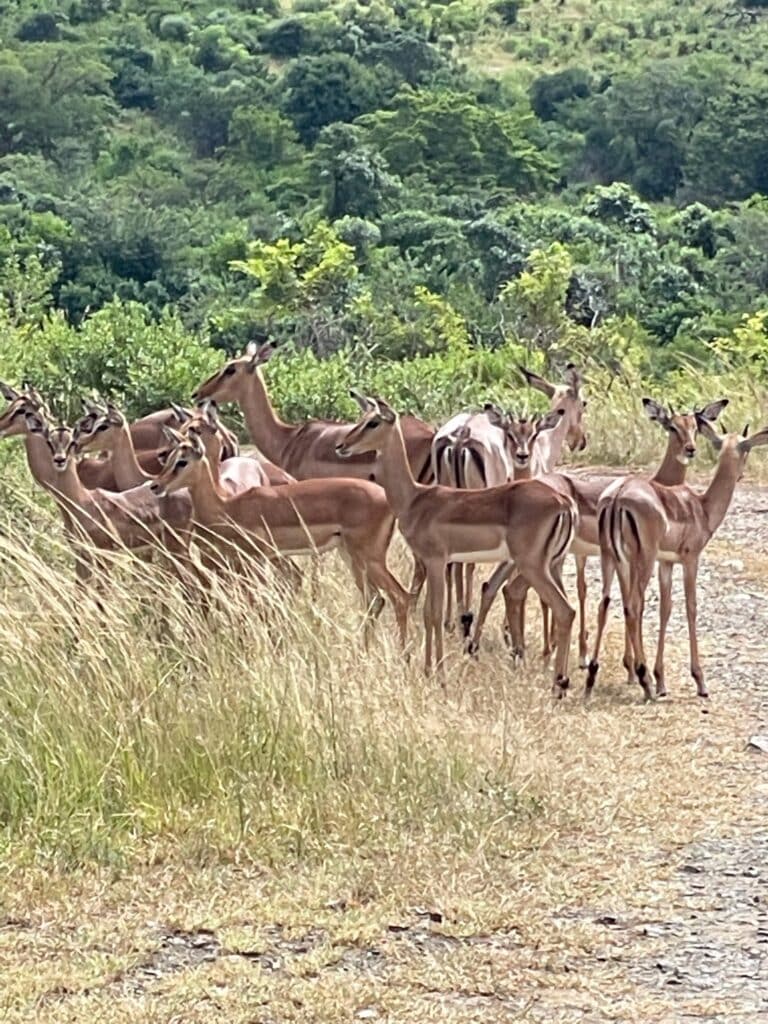
Overnight stay at Anew Hotel
Around 3 hours drive north of Durban, is the oldest reserve in South Africa. At over 950 square km, Hluhluwe opened as a park in 1895.
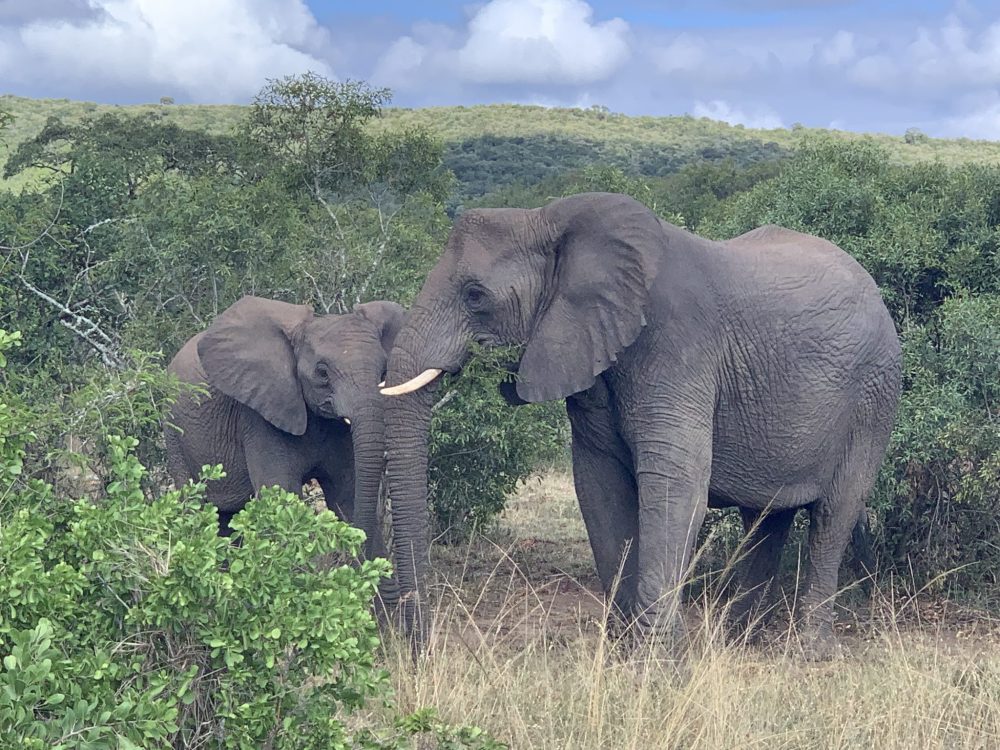
It is the only state-operated park in KwaZulu Natal that protects and supports Africa’s Big 5. Elephants, Giraffes, Rhinos, Lions are in residence here and Hippos can be viewed in the St Lucia Estuary which is a drive to the east of here.
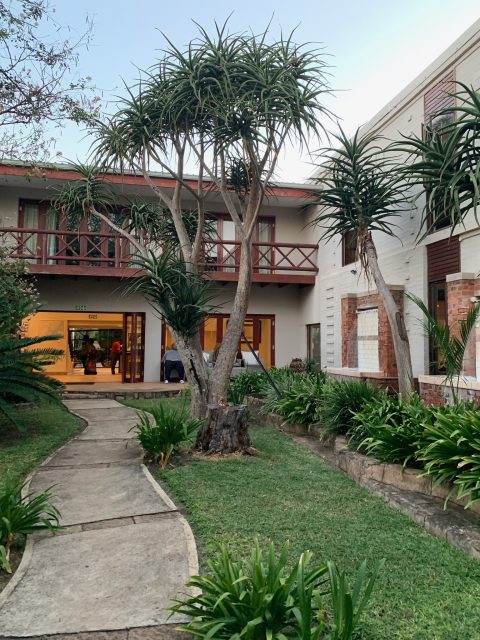
There are two options for staying here – in the park at Hilltop Camp or outside at one of the resorts.
We stayed at ANew Hotel. It was very comfortable. They organized the safari pick-ups from reception. Nice pool and restaurant – fun Zulu music /dance show.
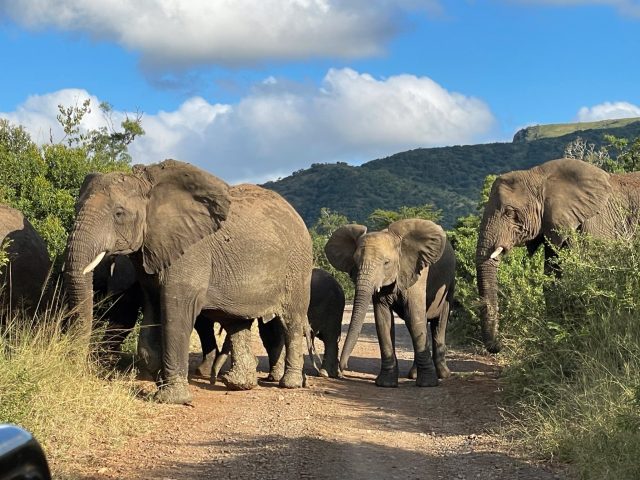
The park states that it has the largest population of White Rhino in the world. We aren’t posting photos at the time of our visit because of the ongoing poaching risks.
It is an easy detour to head over the border to Lesotho or Eswatiti from this area. You should plan to stay overnight for at least 2 nights.
The Drakensberg Mountains
The Drakensberg range lies within KwaZulu Natal, home of Zulu kingdom. We drove west from Durban through beautiful rolling countryside stopping at Pietermaritzburg and Nottingham Road on route.
There are some unique spots to check out along the route especially with kids. Piggly Wiggly and Chocolate Heaven at Nottingham Road being two of the favourites.
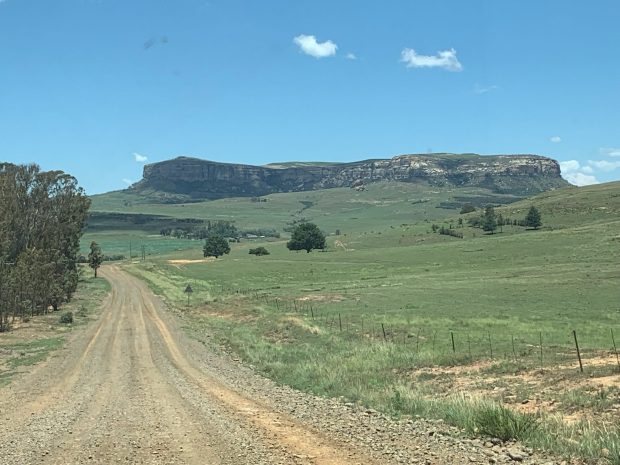
On our first night, we stayed at Fourdoun Hotel and Spa. The facilities were excellent and it was quiet so we pretty much had the pool to ourselves.
We ate at the restaurant and everything was delicious, fresh and local. The spa was also great value with high standards which us girls enjoyed for an hour or two.
Drakensberg Mountains
The next day, we drove on into the mountains into more remote areas, with rougher roads (SUV needed here) until we reached our next lodge.
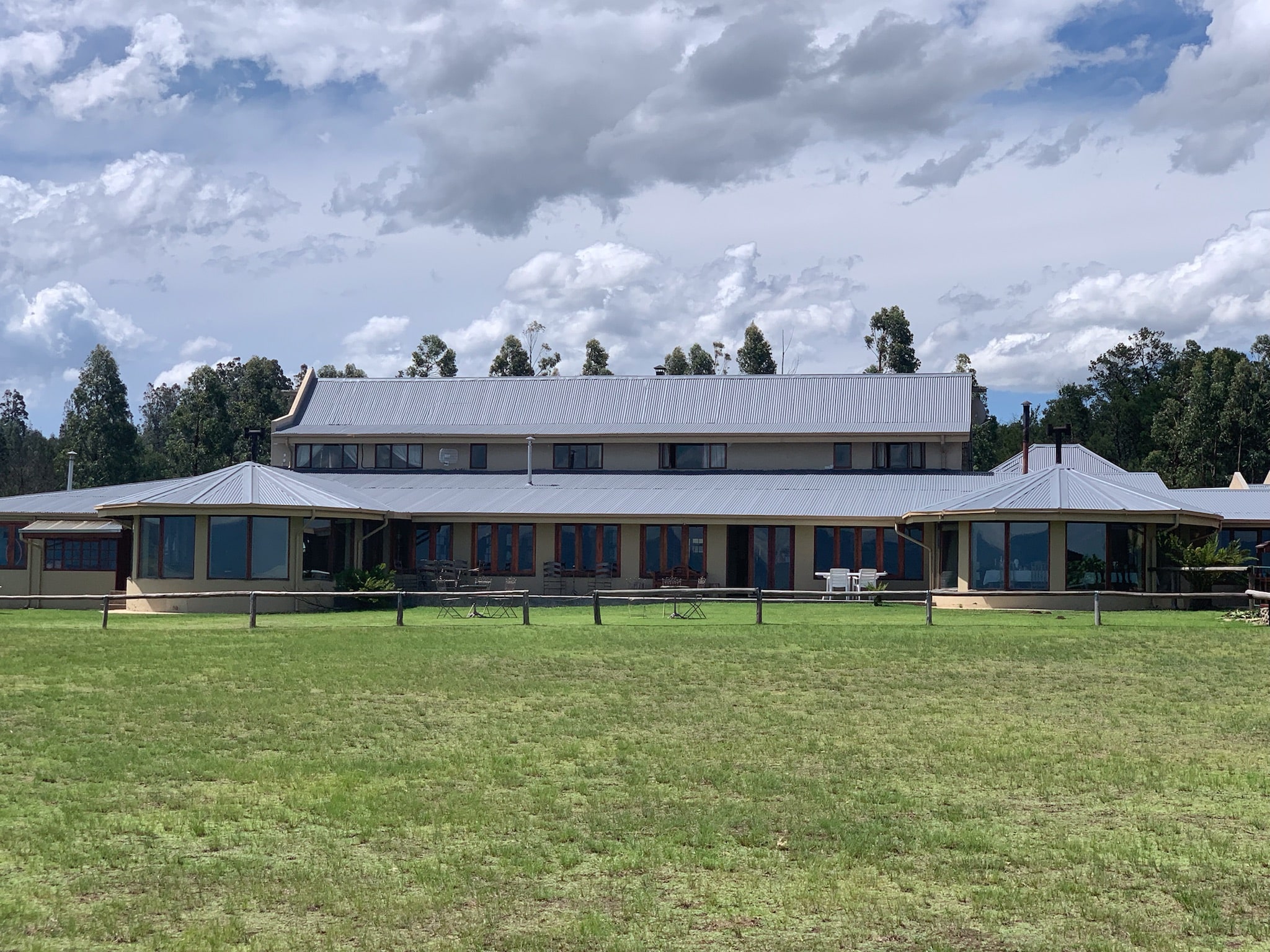
The Drakensberg Mountain Retreat is 25 miles from Harrisburg and an old-fashioned, family style lodge, set in glorious countryside. It was not full of mod cons, but for a night or two, it was adequate and the views alone were worth the trek.
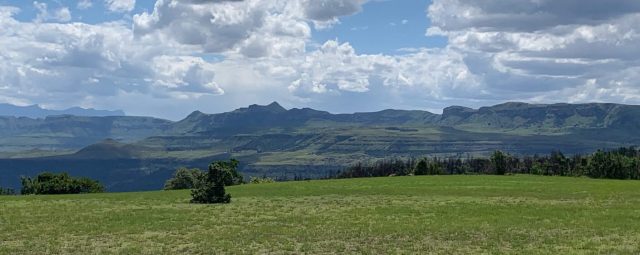
You can hike, horse ride or just lounge by the pool. The sunsets were beautiful over the mountain.
Nelson Mandela Capture Site
On our return we stopped at the impressive Nelson Mandela capture site nearby.
It was humbling and despite thinking we knew quite a bit about apartheid, we really didn’t appreciate enough about who this man was.
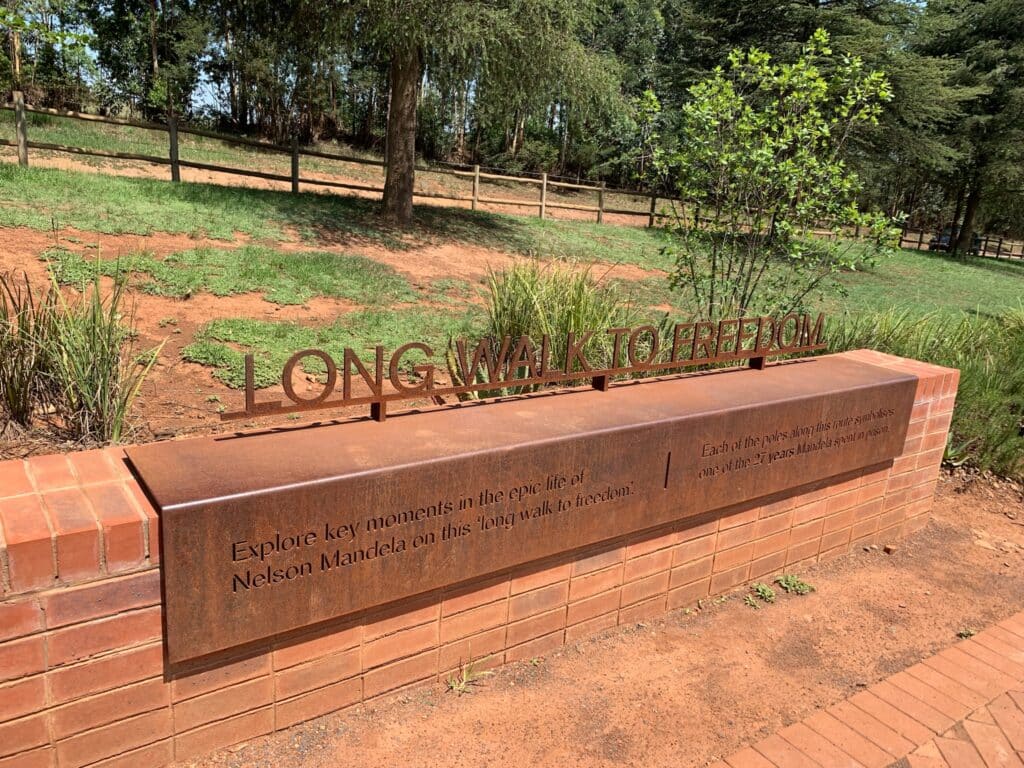
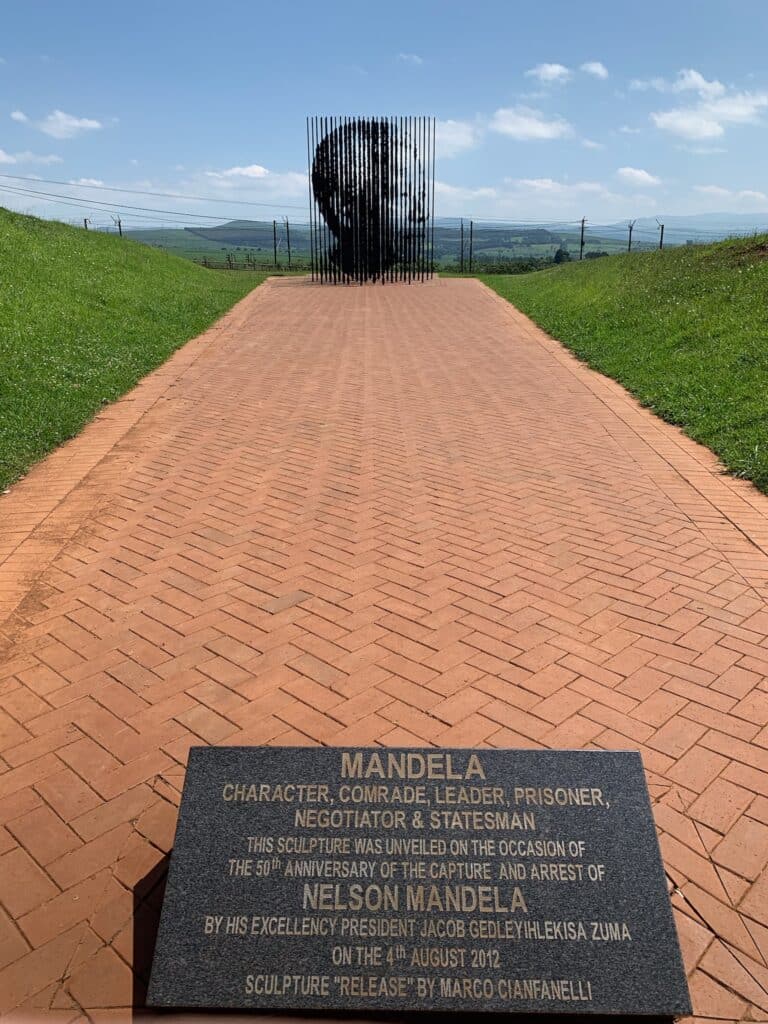
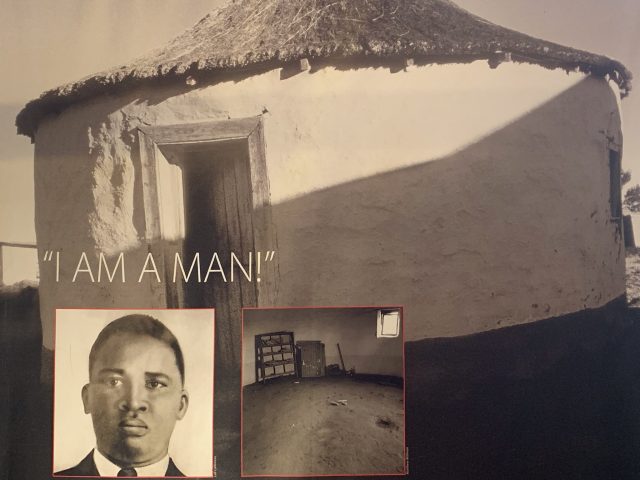
A couple of hours here to fully appreciate the journey is a must in my book. The metal monument was so clever with the reveal of his face visible when you stand back at a specific angle, as you can see below.
Cool Things To Do In Johannesburg
After enjoying the mountains travel back to Durban or continue on to Johannesburg before flying home. It’s a few hours drive and relatively easy. Although there’s not that much to stop for as you’re on a highway most of the way.
Explore JoBurg’s Museums & Go Shopping
The square named after Mandela is worth visiting downtown. It was an easy walk from our hotel here although be careful at night.
Artists lined the streets with a range of work and goods for sale. The Nelson Mandela monument is huge, measuring 6m and weights 2.5 tonnes.
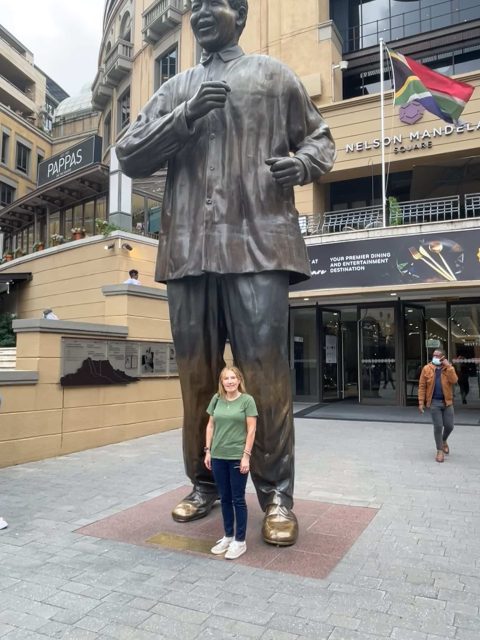
If you choose to spend a night or two in Johannesburg, visit Soweto township, explore a wide range of museums, street art. Shopping is good here too.
Around 1.5 hrs from Johannesburg you can visit the Maropeng Cradle of Humankind & Sterkfont Cave. Best to take a tour with a guide to help you explore this site where fossils over 3 millions year old have been found.
If you’re after more safari experiences (& who isn’t) then you can enjoy another park near Sun City. Pilanesberg National Park is a another Day Safari option with the possibility of seeing the big 5.
🎒Our Tip: Ask your hotel in advance for local tour operators to get best deals. Pre-book for any visits in the high season.
In our experience South Africa is a safe for families and loved by our kids. Family experiences like safaris are simply not available elsewhere on our planet.
At the bottom of the African continent, with around 50 million people, South Africa borders six other nations.
Two, Lesotho and Eswatini are embedded within its landmass. With Indian and Southern Atlantic coastlines, there are almost 2,800km of gorgeous coastline!
If you want to indulge, take the Blue Train from Cape Town up to Pretoria, or from there to Kruger! It’s on our remaining bucket list of things to do in South Africa. Otherwise, drive or fly!
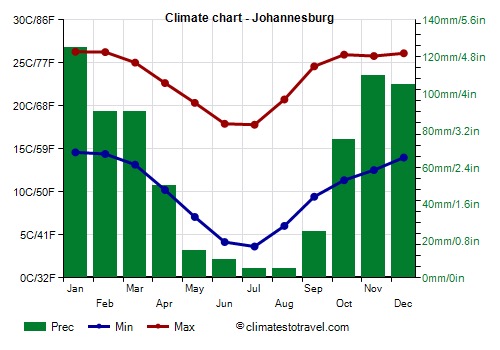
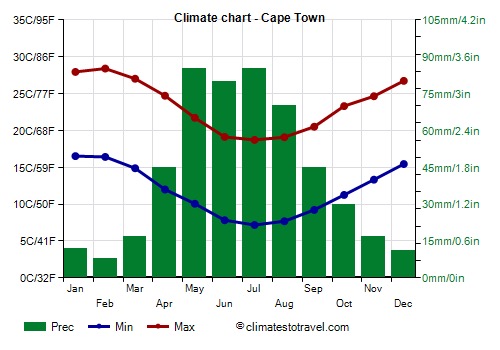
Most of our trips to South Africa have been in their summer – January to March. It can be wetter and cooler in the July/August winter months. So if you plan to travel between Cape Town and say Durban, check both locations for weather averages.

How To Get Around
Rent a Car in South Africa
We always hire a car when visiting South Africa. Do read the small print in terms of insurance as they differ from company to company. Insurance is essential.
There may be a requirement to pay insurance when you pick the car up so double check if this is the case when you book. Typical rentals will be smaller cars, with a small engine. If you can, upgrade to a large vehicle for a family and longer drives.
It’s easy to drive in South Africa but the distances between places are further than you might imagine. You may not need a car if part of your trip is in Cape Town as there is the option to take organised tours from the city.
One point on driving is that there are a lot of toll roads, so make sure you have small change if you are collecting your car from an airport and heading straight onto a main ‘N’ road.
Where to Fly Into In South Africa?
In our experience, international flights into Johannesburg or Cape Town offer the best schedules and prices. We usually fly via London to Cape Town and then up to Durban.
You will also find flights to Cape Town from most European hubs including Paris, Amsterdam, and Istanbul, as well as southern hemisphere cities like Singapore.
If coming here from the USA (East Coast), Delta, or United you can fly directly into Johannesburg Airport, so you might adjust this itinerary to start here. While these are very long flights the good news is that there are no layovers or transfers to deal with!
Emirates offers flights via Dubai into Durban which might work better if you’re only planning to visit the KwaZulu-Natal region.
More Wildlife Destinations
If you love wildlife, Africa as a continent offers endless travel options.
It’s possible to combine time in South Africa and then fly to Kigali, Rwanda or Uganda to go trekking with mountain gorillas.
Read about how to plan an Uganda Gorilla Trekking Adventure here.
