
A First-Time Visitor’s Guide to Scotland!
Looking for an introductory guide to Scotland for first-time visitors? Ceud mile faitle – or translated from Scots Gaelic, ‘A hundred thousand welcomes’.
After years of living here and exploring, we’re excited to share insider tips and personal recommendations to help you plan your perfect trip.
Our articles reflect our personal experiences in featured destinations. When you book using a link on our site, we may receive a small commission at no cost to you. Read our Privacy Policy and Disclaimer for more information.
Why Visit Scotland
It wasn’t until a recent summer evening sitting on a grassy cliff near Aberdeen with my sister watching puffins, that I realized the best experiences in Scotland don’t always fit into guidebooks!

Scotland’s main cities – Edinburgh, Glasgow, Aberdeen, Inverness and Dundee – are each full of history and culture. But for us the real magic of discovering Scotland lies in the hills, glens and small towns.
Here’s everything we feel you need to know to plan your unforgettable first trip to Scotland!
Scotland Bucket List For First-Time Visitors

Must-See Cities & Cultural Highlights
- Climb Arthur’s Seat for an amazing view of Edinburgh — a sunset climb is unforgettable in summer.
- Explore Glasgow’s art and music scene, and don’t miss nearby freshwater Loch Lomond, where you can fish, sail, hike and picnic
- Tour Balmoral Castle near Aberdeen, the royal family’s Scottish retreat.
- Play a round at any public golf course or famous St Andrews and experience a piece of golf history.
- Pay respects at Culloden Battlefield, near Inverness, the site of the 1746 Jacobite Rising.
- Take part in Highland Games in Braemar, Aberdeenshire. (September)
Scenic Landscapes & Natural Wonders
- Climb at least one heather-clad hill; bag your first Munro.
- Ride the Jacobite Steam Train to the Highlands (the Harry Potter train) — the views are cinematic. (Book well in advance)
- Marvel at puffins, dolphins, seals — a wildlife adventure like no other.
- Go wild swimming in one of Scotland’s Lochs — maybe not Loch Ness!
- Sail by ferry from Oban to experience the Hebridean islands — a taste of traditional island life.

Unique Experiences & Festivals
- Attend an Edinburgh Fringe show and see the Military Tattoo in the Castle — the city buzzes with energy in August. (Book early for Tattoo tickets).
- Listen to fiddle music or dance to ancient tunes at a ceilidh — a fun, authentic cultural experience.
- Discover your Scottish clan and tartan (plaid) — get a kilt made too!
- Visit the Kelpies and Falkirk Wheel — incredible engineering and sculpture with a Scottish folklore twist.
Food, Whisky & Local Specialties
- Take the ‘whisky tour’ in Aberdeenshire including Glenfiddich and Aberlour, famous distilleries we grew up near to.
- Venture to Islay, Scotland’s whisky isle — where you taste the flavour of the peaty moors like Lagavulin (my favourite).
- Have a night out in Glasgow, famed for its live music and vibrant nightlife.
- Eat dinner at Makers Mash in Edinburgh — haggis but so much more, even for vegetarians like me.

Scotland, the UK, and Europe: What First-Time Visitors Should Know
It can be confusing when you’re planning a trip to Scotland for the first time. Is it part of the UK? Do I need a visa for Scotland? How do I travel to and from other parts of the UK or Europe?
Here’s what first-time visitors need to know for a short (up to 30-day) visit.
Scotland has been a country since the 9th century, so we’ve been around a long time! England, Wales, and Northern Ireland are separate countries too, but together these four countries form the United Kingdom (UK).
The main land border is between Scotland and England. There are Scottish ferry links to Northern Ireland as well as domestic flights. You do not need a visa to travel between the UK countries.
Scotland and the EU: Post-Brexit Considerations
If you are coming to Scotland from outside the UK, you will need to apply for an Electronic Travel Authorization (ETA). It’s the same thing as an ESTA when visitors come to the USA for example. At the time of writing it costs £16 per application and it is valid for 2 years (or less if you passport expires before this).
Also, if you are thinking about travelling from Scotland to the EU, here’s what you need to know. The UK left the European Union (EU) in 2020.
In 2025, the EU introduced a travel system called European Travel Information and Authorization System (ETIAS). If you’re not an EU passport holder, you will need to apply online for this approval before leaving Scotland for Europe.
Always check official government sources before travel as policies change.
Currency, Health, and Travel Insurance Tips
Currency: The UK Pound is the legal currency in Scotland and throughout the UK. However Scottish Banks issue notes and coins, depicting our culture and heritage. So they look a little different to the English ones!
Debit and credit cards are widely accepted, and contactless “tap and pay” is how we locals typically pay for day-to-day purchases.
🎒Our Tip: Scottish Bank Notes are often declined in England although they are legal tender. So annoying, but it’s been this way for years.
Health: In Scotland, we have a National Health Service (NHS). If you need any medical attention during your stay it is important to have travel insurance for this.
In an emergency, dial ‘999’ for ambulance and medical help. This NHS tip sheet offers a good overview of medical services for overseas visitors in Scotland.
Travel Insurance is a personal choice depending on the level of coverage you feel comfortable with. If helpful, we use Visitors Coverage for our travel insurance when traveling outside our home countries.
Getting To Scotland
Compared to just a decade ago, it’s much easier for overseas visitors to fly directly into Scotland. If you’re planning your first trip to Scotland, here’s what to consider when choosing your flights.
Flying to Scotland
Scottish airports with international connections are Edinburgh (the capital) and Glasgow (our biggest city). If you’re coming from within Europe, or from the Middle East, there are numerous direct (non stop) options to both cities.
Edinburgh Airport typically has more international routes, while Glasgow can sometimes offer better prices depending on the season.
Seasonal Flight Routes to Scotland
Every year we see more seasonal flights directly into Scotland especially from Canada and the USA.
Top routes as of time of writing are from Toronto, Orlando, New York, Newark and Atlanta.
These direct flights are quicker but often more expensive, and the aircraft used are sometimes smaller and less comfortable (e.g., a 737 versus a wide-body jet like a 777). I once flew from New York to Dublin on a 757 — it wasn’t much fun and felt quite cramped.
Connecting via London
When flying from the US, we usually fly non-stop into London Gatwick from our local airport. Depending on where you are coming from you will land at London Heathrow or London Gatwick.
Flight times are between 7-12 hours from the USA. The shortest flights (around 7 hours) are from the New York area. From Denver or Miami, it’s usually 8-9 hours inbound. Returning flights are longer — we often experience 9-10 hours flying back to Florida.
🎒Our Tip: There are not many connecting flights from Gatwick to Glasgow and Edinburgh, so if possible choose London Heathrow airport.
Another popular route to Scotland from the US and Canada is via Iceland. Consider stopping over in Reykjavik for a night or two before flying onward to Edinburgh or Glasgow.
Train to Scotland from London
We often take the train up to Edinburgh because this avoids having to wait hours for flight connections from Gatwick, and is an easy journey, and cheaper!
For example, if you land in Gatwick which we often do flying from Tampa, you can get a train right at the airport. Using LNER with one change in Stevenage, you’ll be in Edinburgh in around 4 hours from London.
When to choose Edinburgh vs Glasgow
If you’re visiting Scotland in the summer months – especially June, July, and August – flight prices will be higher. If you find a cheaper flight into Glasgow instead of Edinburgh, seriously consider it.

It’s only an hour on the fast train link between the two cities, and if you plan to visit both (we think you should!) it really doesn’t matter where you start. Read our Glasgow vs Edinburgh article if you’d like our views on each city.
With getting here sorted, the next big decision is how to explore Scotland from our cities, up into the Highlands and even to our beautiful islands.
Getting Around Scotland
A key part of planning your Scotland trip is deciding how you want to explore the country. Distances in Scotland may look short on a map, but roads are slower and more scenic than many visitors expect.
If your itinerary ideas include driving through Glencoe in the Highlands or touring Aberdeenshire’s castles, your options will differ from basing yourself in Edinburgh or Glasgow and taking day trips.
Do You Need to Rent a Car in Scotland?
We learned to drive at a young age living in rural Aberdeenshire because there really wasn’t any public transport. Our little train station was 5 miles from home and the bus stopped a mile from our farm road once a day.
Outside of Edinburgh and Glasgow, renting a car allows you to discover why Scotland’s raw countryside is so beloved and unique.
This way, you can stop off at the small coffee shop in Braemar, or take a detour to visit historic Culloden Battlefield south of Inverness (where you can also meet some Highland cows).
Driving Tips for First-Time Visitors
Our Ultimate Scotland Road Trip article goes into more detail about driving in Scotland. Here’s what I tell my foreign friends about driving in Scotland when they ask:
- We drive on the left.
- Roads can be narrow — stick to the speed limit.
- We have lots of roundabouts, and you cannot turn right on red.
- There is zero tolerance for drinking and driving.
- Cars and parking spaces are smaller — choose your rental wisely.
Train and Bus Travel in Scotland
I often use trains and buses to get around Scotland. My favourite train journey is from Glasgow to Oban — our seafood capital and the gateway to the western islands.

The 1 hour fast train service that connects Glasgow and Edinburgh is perfect for a day out in either city.
ScotRail is the national rail company with an extensive network that covers most of Scotland. Do check ahead for rail works, which often happen on summer weekends.
Avoid travelling during rail works unless you’re happy to be on a replacement bus service. It can add hours to your journey. We strongly suggest booking tickets in advance and reserving a seat, otherwise you might find yourself standing.
🔍 Click Here to Check Train Schedules
Buses are worth considering too if you’re on a tight budget. We’ve recently used the bus from Edinburgh to St Andrews and from Edinburgh to Aberdeen, and the service is fairly reliable. CityLink is a good resource for trip planning.
The only downside is you can’t stop on a whim and explore on the way with either of these public options, but for a day trip out of Edinburgh to Queensferry, why not enjoy an outing on the local bus.
Ferries to the Islands
Scotland has over 800 islands, we are blessed with accessible ferry services to many of these. If your Scotland Itinerary is 1 week, it will be difficult to fit in an island trip, although you could drive to Skye.
I want to be honest. Before 1995, when we were growing up, there was no bridge to the Isle of Skye and it was never that busy. Today, it suffers from over-tourism. If I was to suggest a western island for you to visit, it would be Mull, Iona, Arran or Islay.
If you have more time, island hopping through the Western Isles is a fantastic Scottish adventure. After our 5 hour ferry crossing from Oban, I once cycled from Barra (the southern tip) to Stornoway (northern tip), taking a return ferry from here back to the mainland. This week remains one of my favourite Scottish adventures.

Alternatively, catch the overnight ferry from Aberdeen and wake up in Orkney or Shetland. If you’d prefer a shorter crossing to Orkney, drive to John O’Groats at the most northerly tip of mainland UK and catch the ferry with your car.
Domestic Flights
I’ve flown within Scotland to Shetland and Orkney, and once from Aberdeen to Glasgow. Loganair is the main regional airline for short hops to our western and northern islands.
For example, you can take their quick flight to Barra (Western Isles), where you land on a beach, or from Glasgow directly to the whisky Isle of Islay.
When is the Best Time to Visit Scotland
Scotland is a year-round destination, with each season bringing something different. In June, I love that when I glance out the window in Edinburgh at 10:30pm, the sun is just starting to set.
On a crisp November morning, though, daylight ends around 4pm. Aberdeen sits at a similar latitude to Anchorage, Alaska. Having lived in both places, I’ve always loved a winter morning just as much as a summer evening. This is when crowds in Scotland are far fewer!
The exception to this is Hogmanay, where every 31st December, traditional celebrations ringing in the New Year spring up across the country.
Deciding when to visit will depend on what appeals to you most – long evenings, fewer crowds, attending festivals, outdoor walking, or indoor activities.
Visiting Scotland In Spring (April to May)
Growing up, Spring was magical as a child. Wildflowers start to bloom at roadsides. Green shoots spring up in farmer’s fields and baby lambs dot our rolling hills.
Nights start to stretch out and although it’s still cool in April, May is often sunny – perfect for hikes.
🎒Our Tip: This is a great time to be outdoors as the notorious midges – tiny biting insects – are not yet active.
This is also the time to come to Scotland for fewer crowds (although it can be busy over Easter school holidays). You’re unlikely to encounter snow outside of the Highlands, so driving conditions should be fine.
Daylight quickly extends by May to around 9pm so you have a longer day to pack in activities and driving.
Outside of Easter, accommodation prices are lower, so it’s easier to secure popular hotels, often without booking months ahead.
Restaurants, especially in Edinburgh, will be quieter and more enjoyable, although I always book in advance at weekends, at any time of year.
If you want to enjoy some of our whisky festivals, this is the time to come and attend the Speyside Whisky Event (April), or super popular Islay Whisky Festival (May).
Some ferry routes may operate a shoulder schedule especially in April, but the main routes operate year-round (weather permitting).
I remember walking on the tiny island of Colonsay one morning in May, and being in awe of the green beauty all around me, contrasted with a sandy beach and the blue/grey oceans.
It’s really hard to beat feeling, even having traveled to 100+ countries.
Visiting Scotland in Summer (June to August)
Temperatures usually range from 15-20 (C)/ 60-68 F, perfect for hikes, exploring islands, highlands and city evenings.
Scotland’s summer months are packed with outdoor events, from local fairs to world-famous festivals. The pinnacle is Edinburgh Fringe and Tattoo lasting month of August, filling the city with arts, music and thousands of visitors!

On the Outer Hebrides, the ever growing HebCelt Fest takes place each July, and this is a treat for traditional and modern folk music performances.
Summer is the best season for camping in Scotland, although it can rain any time, so waterproofs are essential.
As one of the few European countries that permits wild camping, the islands and North Coast of Scotland (NC 500 route) are busy, as are roads/ferries.
But long summer days and decent temperatures of between 15-20 Degrees (C), make exploring enjoyable.
A favourite summer spot is Perthshire, especially when Scottish strawberries and raspberries ripen. Picking your own on a farm is such fun and they taste delicious.

The highlands are free of snow, making conditions good for climbing or hiking around Ben Nevis and Fort William.
With 9 mountains over 4000 ft (1,219m) there’s a hiking challenge for everyone. It can get foggy and windy within minutes in exposed hill areas, so check local forecasts before venturing out.
My personal favourites are coastal walks, whether in cities by the River Clyde in Glasgow, the Water of Leith Walkway in Edinburgh or wilder Aberdeenshire and Moray Firth headlands.
Keep your eyes peeled for seals, otters and dolphins, puffins and sometimes a passing whale – inshore and harbour cruises are available.

Popular destinations including Skye, Outlander film sites and festival towns attract bus tours and crowds – try to avoid peak times.
🎒Our Tip: Summer is when the dreaded midgies appear, mainly on the west coast and islands. So packing insect repellent is a must!
Visiting Scotland in Autumn (September to October)
Temperatures range from 8-15 C/ 46-59 F.
If crisper days, a crackling log fire in the evening, and gorgeous autumn landscapes are your idea of a perfect Scottish getaway, this is your season.
Personally, I love the crunch of leaves underfoot, whether in city streets or across the countryside. It’s also the perfect excuse to enjoy a hot chocolate after a brisk walk or hike up Arthur’s Seat in Edinburgh.
Scottish schools return in August, so by September there are fewer family visitors. Similar to Spring, Edinburgh is a good deal quieter, though students have returned and there are still plenty of tourists around.
Events like the Braemar Games in Aberdeenshire attract visitors in September, and are a unique local culture experience. These events are ideal for multi-generational trips as very family-friendly.
Cooler weather is the ideal time to try crafting your own botanical gin – lessons are available across Scotland. You can also learn about single malt whisky making, combining a tour with special tastings and other indoor events.
Autumns brings back other Scottish traditions like ceilidhs, particularly in larger cities like Edinburgh. In our 3 Days in Edinburgh Itinerary, we share booking details.
The annual Royal National Mod in October is another opportunity to experience torchlit parades and attend traditional Celtic music performances – in 2026 it’s in Glasgow.
Visiting Scotland in Winter (November to March)
These winter months are ideal for couples and multi-generational trips with shorter days inviting indoor attractions, cozy cafes and festive events.
Typical daytime temperatures 5-7 C (41-46 F) in southern cities like Glasgow and Edinburgh. Expect cooler and below zero mornings further north and inland. Daylight: 6-7 hours.
I’m often in Edinburgh when the annual Christmas Market kicks off in late November. Each year it grows more popular, with attractions ranging from ice-skating to Ferris wheel rides – a festive treat for everyone!
Cozy independent coffee shops are scattered across the country, and even in small rural towns, so enjoy our cafes and their home bakes like scones.
British pantomime season ramps up in November through to early January, and offer matinee and evening festive performances of well loved traditional stories.
If you love winter sports, you can ski in the Cairngorms (small resort), or try the national historic sport of curling at indoor rinks, including Edinburgh. See our Winter in Edinburgh article for booking details.
If you are visiting Scotland for Hogmanay (New Year’s Eve) and want to experience even more festive celebrations, head to the Shetland Islands the last week of January.
There, you can join the historic Up Helly Aa Festival, the UK’s largest torchlit procession, steeped in historic Viking legend.
Also in January, enjoy a Robbie Burns Supper to sample haggis, neeps and tatties before whisky toasts to Scotland’s national poet. After the formalities, it’s a night of dancing to traditional live music. Everyone is encouraged to give it a go.
February is when you can attend the Fort William Mountain Festival and in March the Glasgow Film Festival shows a wide range of new releases.
How Long To Stay In Scotland

If you have around 10-14 days you can explore several cities and get out into the wilder landscapes. Squeeze in west coast Oban and maybe a ferry trip to a nearby island.
A 10 day self-drive itinerary can combine Edinburgh, Glasgow, a little of the Highlands, and Aberdeenshire’s castle and whisky trails.
For a detailed plan, check our Ultimate Scotland 10 Day Road Trip Itinerary. This shows you exactly how to plan and pace your days, where to stay and best scenic routes.
If you’re keen to come for a weekend break from within Europe, it’s likely you will want to come to Edinburgh. Our Cheap Things To Do in Edinburgh will also help your money go further, especially if you’re coming during peak seasons.
If you’re dreaming of a longer island trip, add 3-5 days to your core itinerary. Check our Mull, Iona and Staffa 3 day Itinerary or our Islay and Colonsay Guide for things to do on these islands and logistics of getting there.
Where to Go in Scotland – Regions Overview
Top Attractions Of Scotland

What makes Scotland so appealing is its variety. You could have breakfast in a stylish city-center hotel and by dinner be enjoying local sustainable seafood in a coastal village.
Over many years of living here and visiting all regions, I always suggest to visitors that their experiences in Scotland will be shaped by available time, interests, and budget.
Here’s a snapshot what to see and do in the main regions, all perfect for any first visit to Scotland:
Edinburgh and Glasgow (The Central Belt)
- Tour Edinburgh Castle & Walk The Royal Mile to Holyrood Palace – soak up history, architecture and the fascinating backstory of Scotland’s monarchy.
- Climb Calton Hill and/or Arthur’s Seat to enjoy 360 city and Firth of Fort views; Arthur’s Seat is my favourite picnic spot, after The Meadows!
- Visit National Museum or Glasgow’s Kelvingrove Art Gallery – both have excellent cafes for a spot of lunch afterwards.
- Take in a live show, music concert or festival event – concerts and art scene is vibrant year round.
- Day trip to The Kelpies and Falkirk Wheel – amazing feats of engineering connecting Scotland’s canals, and the quirky steel horse sculptures.

🎒Our Tip: On a first visit to Scotland, I recommend 2-3 days in Edinburgh, with a day trip to Glasgow to visit art galleries, food scene and live music.
From here it’s easy to head west to the islands or north to the Highlands.
The Highlands (Fort William, Glencoe) & Perthshire
It’s honestly hard to put into words what I see and feel when standing in the wide open space that is the Scottish Highlands. There’s usually a breeze, a few passing clouds, soft hues of mixed heather and soaring hills, valleys and rivers as far as the eye can see.
This is where you will see ‘postcard’ views of Scotland, and for a first-time visit, here are experiences to focus on:
Fort William and Ben Nevis
I first came to the small town of Fort William to celebrate the end of my college days and it is such a great place to disconnect from busy days and slow down in.
Many climbers come in the summer to climb Ben Nevis, the UK’s highest peak, but there are many easier, relaxing walks and viewpoints all around.
Fort William is also where you can board the Harry Potter train – The Jacobite – a meticulously restored vintage train. Dine aboard as you pass through stunning scenery, crossing the iconic Glenfinnan Viaduct bridge.
🎒Our Tip: If your budget doesn’t stretch to the Jacobite fares, take a regular train to Fort William. They use the same rail tracks!
Inverness and Loch Ness
Heading north of Fort William, follow the Great Glen route 62 miles (100 km), you will arrive in Inverness, near to the legend that is Loch Ness.
This is where Scottish gems await. Compared to Edinburgh or Skye expect fewer tourists, and a more authentic atmosphere.
We loved coming here as a family, sailing on Loch Ness, and having an ice-cream in Drumnadrochit, the wee village on the banks. No, we never saw Nessie, but who knows 🙂
Inverness is a compact and walkable town. Stroll along the River Ness, explore Inverness Castle, and discover local cafes and pubs for leisurely breaks.
If you love wildlife, consider a fast boat trip on the Moray Coast to spot the resident dolphins – the exhilarating ride is half of the fun. The Moray Walking Festival in June is a unique way to enjoy mid summer evening walks.

While here, a visit to Culloden Battlefield is central to appreciating Scotland’s history. Stand on the site of the last war on British soil, in 1745. In one hour alone, 1,600 men, 1,500 of them Jacobites, were massacred.
The site is really well managed, with an immersive theatre, walks through the barren site passing by marked graves representing clans who lost so many. If you have any Scottish heritage, I feel you will find this a very moving experience.
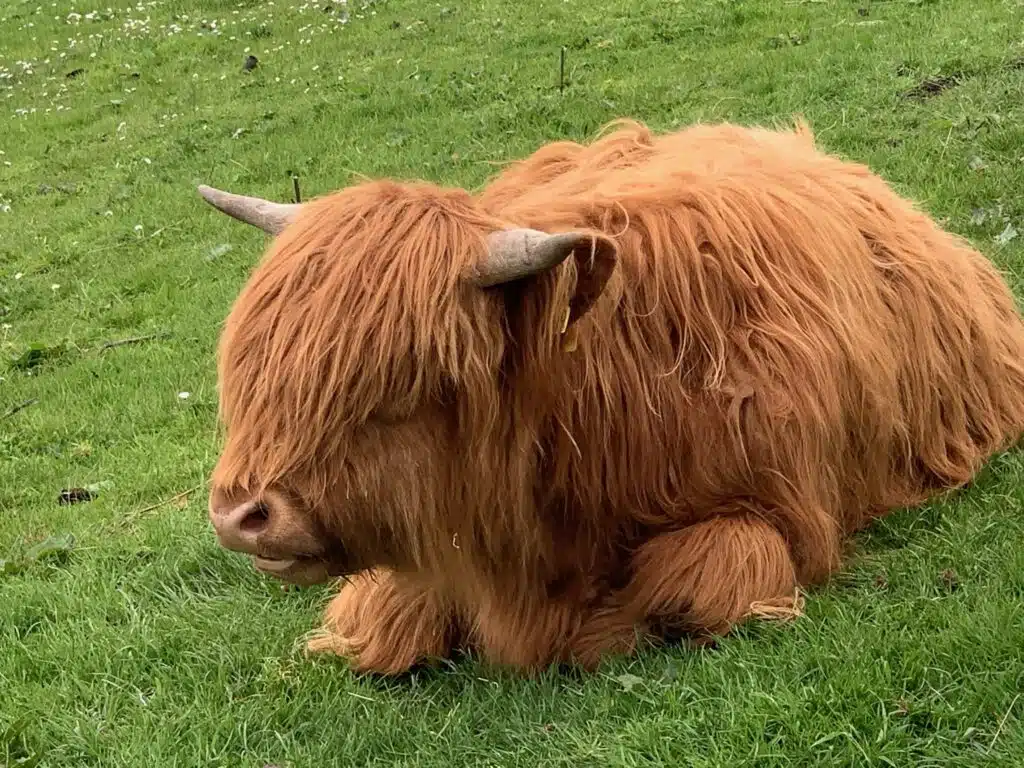
If Highland Cows make you smile, then put a visit to the Farm Ness on your list. You can enjoy a hands on experience and help brush their coasts, feed them. We had these on our farm, and they are such beautiful animals to see up close.
Inverness is an excellent base for exploring the Highlands if you have 1-2 days and don’t want to commit to the full NC500 route. Check out more about things to do here in our Scotland Road Trip Itinerary.
Scottish Islands – Western, Northern & Eastern
Scotland has around 800 islands, with 80-100 inhabited, so you have a wonderful choice of experiences off the mainland when you visit.
One of my Scottish hobbies is ‘island bagging’. To date, I’ve visited around 20, with a goal to add another 1-2 each year.

I highly recommend fitting in a trip to one during your visit – you will find yourself transported to a world of peaceful, slow living and I love it!
West Coast Isles
The west coast islands jutting into the Atlantic are perhaps the most famous, but they are very different in size, culture and landscapes.

- Mull and Iona – connected by a 5 minute ferry ride, explore rugged Mull and relax on the beach of Iona, famed for its abbey. Add on a Staffa Day Trip to see the spectacular basalt columns and caves of this uninhabited rock.
- Isle of Skye – easiest to reach with bridge access, the cliffs and landscapes are mesmerizing, but it’s overcrowded in summer.
- Colonsay, Islay and Jura – a trio, these Southern Hebrides islands can be visited with a ferry hop. Go for whisky, sailing, hiking and delicious honey on Colonsay!
- Isle of Arran – one of my favourites as it’s small enough to visit without a car for a night, has easy walks, and usually less busy than Skye.
Northern Isles
From Aberdeen, reserve overnight beds on the North Link Ferry and wake up in Shetland or Orkney islands, wild, unpredictable with a culture that is unique.
Orkney – a group of islands, closest to northern tip of mainland Scotland, is loved by cyclists and historians.
Explore St Magnus Cathedral, Skara Brae, Italian Chapel, and marvel at the coastline beauty. Be aware cruises ships dock often in summer and swarm the small capital Kirkwall.
Shetland Isles – if you have watched the popular Shetland TV detective series, you’ll have seen the sheer cliffs, grazing sheep and stone homes that dot the quite barren landscape. If you love bird watching you’re going to love it here!
🎒Our Tip: To maximise your time on the islands, consider taking a flight to these islands vs. the ferry. You can bring your car on the ferry of course so you have more freedom to explore when you arrive.
Scotland’s East Coast Islands
Less well known or promoted, Scotland’s east coast also has several islands that are accessible by short boat rides. Although you can’t stay overnight on most of them, its a unique day.
Isle of May (Firth of Forth) – is famous for its puffin, seals and seabird colonies and you can enjoy 3 hours on the island, sailing from several small ports. Our Isle of May Boat Trip Guide gives you full details on how to book this adventure.
Bass Rock – pack your waterproofs and get ready for a fast ride out from North Berwick (near Edinburgh). Thousands of Northern Gannets stop here around February until October, and trips run from March to October!
Although it can take a little more time and effort to travel to the islands, I recommend trying to visit one during your visit to Scotland.
Aberdeenshire & Speyside
In some ways, I’m saving the best of Scotland til last, as this is where Ruby and I grew up. Come here for a quieter part of Scotland, and a rich mix of history, castles, coast and countryside.

Dotted with castles, distilleries, rolling farmland and gentle hills, this is understated Scotland. While coastal Aberdeen is best known as the capital of North Sea energy, drive 10 minutes out of town, and you’re in rural tranquility.
Aberdeenshire is home to 260 ancient castles and homes and its Castle Trail is unique in Scotland. You can:
- Tour Inside Balmoral Castle (in summer only), the Royal Family’s Scottish Retreat.
- Explore fairytale-like Craigievar Castle (my Mum’s favourite).
- Scramble over the ruins of Dunnottar Castle, dramatically perched on sea cliffs in Stonehaven, just south of Aberdeen.
- Take a harbour cruise from Aberdeen, and also spot sea life.
What makes Aberdeenshire special is that in addition to the interior gems, the coastline is quite spectacular.

Sandy beaches are often deserted. Puffins nest in dramatic cliffs at Bullers of Buchan, and Aberdeen City has galleries, parks and excellent restaurants.
🎒Our Tip: If you make it to Aberdeen, try a buttery – a local specialty!
Nearby Speyside is home to more than half of Scotland’s malt whisky distilleries and a must to taste the smoother whiskies of Scotland.

There are many speyside whisky tours so you don’t need to drive (and distilleries won’t serve you alcohol if you are!)
FAQs
Edinburgh and top tourist spots like Skye can be expensive, especially in summer. Petrol/gasoline prices are high in the UK and there is a hotel tourist tax in Edinburgh.
If you’re on a budget, ethnic restaurants in student parts of Glasgow and Edinburgh, often with a Scottish twist are great value.
Bring layers! During the summer months, a rain jacket, fleece, and good walking shoes/boots are essential if you’re going to explore the hills and glens that Scotland is so famous for.
In the winter, bring layers, a thick coat, hat and gloves, and sturdy boots.
The electric system is 240v. Don’ t bring hairdryers for example from the USA, as they won’t work.
Don’t come to Scotland to sunbathe. But do visit some of our stunning beaches because the rugged beauty is hard to beat – a favourite is Sandend, located between Portsoy and Cullen!

How To Plan Your Scotland Trip – Summary
If I can finish this post talking to you as a good friend, my #1 piece of advice is: don’t try to see all of Scotland in one trip.
I once attempted that with family visiting from abroad, and as the driver, it quickly became a blur of racing from stop to stop. That’s not how Scotland is meant to be experienced. Here’s how to plan your first visit; plan as if you’ll be back 🙂
1. Be Realistic: Start with Your Number of Days
- Factor in flights: if you think you have 7 days, 1–2 days will likely be spent traveling.
2. Limit Yourself to 2-3 Regions
- Under 1 week: Focus on Edinburgh with one other region (West Coast or Trossachs).
- 7-10 Days: Edinburgh, Highlands + Inverness is a nice combination; or Edinburgh, Perthshire and Aberdeenshire.
- 10+ Days: Add a longer island trip.
Use our Scotland itineraries to help you with final choices:
- Scotland 10 Day Road Trip Itinerary
- Glasgow vs Edinburgh: Which is Best?
- 3 Days in Edinburgh Itinerary
- Edinburgh in Winter
- Cheap Things To Do in Edinburgh
- Day Trip to Isle of May From Edinburgh
- Things to Do in Oban – Gateways to the Islands
- 5 Days on Colonsay, Isle of Islay and Jura Itinerary
- 3 Days on Mull, Iona and Staff Itinerary
3. Be Mindful of Driving Times
- Google Maps might say a west coast journey takes an hour, but Scottish roads are slower and narrower than most visitors expect.
4. Relax – Build in Time to Potter!
- We often use the term ‘let’s have a potter’ in Scotland. It’s our way of just being in the moment and enjoying wherever we are. On a small island, it could be a picnic on a deserted beach, or atop a local grassy hill top.
- Don’t over plan every minute of every day.
Scotland is a unique destination and even as a Scot, we never ‘complete’ or tick off our country. Each summer, visiting a new island or town reminds me there’s always more to explore — and that’s the beauty of Scotland!
And lastly, but not least, we have to mention Scottish Tartan (often called plaid overseas). We Scots don’t walk around in kilts and tartan every day!
Scotland Travel – Helpful links for flights and hotels:
– Flights & Accommodation: Expedia & Booking.Com
– Local Tours: Get Your Guide & Viator.
– Travel Insurance: Visitors Coverage
– Airport Transfers: Welcome Transfers
