A short ferry hop from Buenos Aires — cobbled streets, family-run wineries and slow Uruguayan charm.
Quick Booking Links
- • Flights & Accommodation: Expedia & Booking.com
- • Local Tours: Get Your Guide & Viator
- • Travel Insurance: Visitors Coverage
- • Airport Transfers: Welcome Transfers
Uruguay wasn’t initially on my list when I started planning our three-week South America trip. But once I looked at the map, a short ferry journey from Buenos Aires opened up the possibility of a few days somewhere different from the main destinations.
Our 3-day Uruguay itinerary combines Colonia del Sacramento with Carmelo’s family-run wineries. We spent one night in Colonia and two at a wine lodge near Carmelo, returning to Buenos Aires the following morning.
It was a lovely change of pace: wandering cobbled streets, cycling quiet country lanes and lingering over wine tastings and generous lunches. Here’s how we arranged the trip, where we stayed and what to know before planning your own.
This Uruguay Itinerary is Ideal For:
- Short escapes from Buenos Aires
- Wine lovers
- Couples and midlife travellers
- First-time Uruguay visitors
- Travellers who prefer authentic, family-run places to stay.
Our Favourite Uruguay Moments
- Wandering Colonia's Cobbled Streets
- Wine Tasting at Bodega El Legado
- Drawing Wine Straight From the Barrel
- Cycling Quiet Lanes Between Bodegas
- Sunset at Carmelo Beach
- Meeting Local Farmers Along the Way
Itinerary Overview
Here’s how our three days in southwest Uruguay break down:
- Day 1 - Ferry Crossing & Explore Colonia del Sacramento
- Day 2 – Morning In Colonia; Mid-Day Drive to Carmelo
- Day 3 - Wine Tasting & Exploring Carmelo
Ferry, Dinner & Overnight in Colonia
Arrive mid afternoon - stroll the cobbled UNESCO streets of Colonia del Sacramento
Uruguay Ferry Essentials
It’s very straightforward. 2 main ferry operators compete on this 1 hour 15 mins crossing. We went with Colonia Express which I booked online with Direct Ferries before we left home. You will find all the information regarding schedules and facilities on board at the above Colonia Express website.
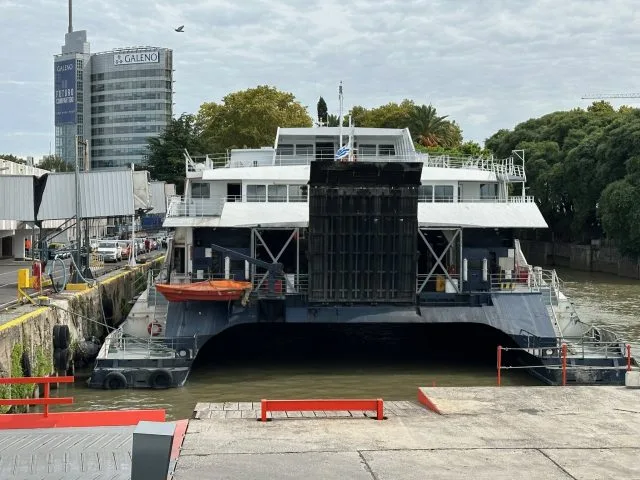
The ferry itself was modern, similar to ferries I have used elsewhere around the world. The other company is Buquebus also bookable via Direct Ferries.
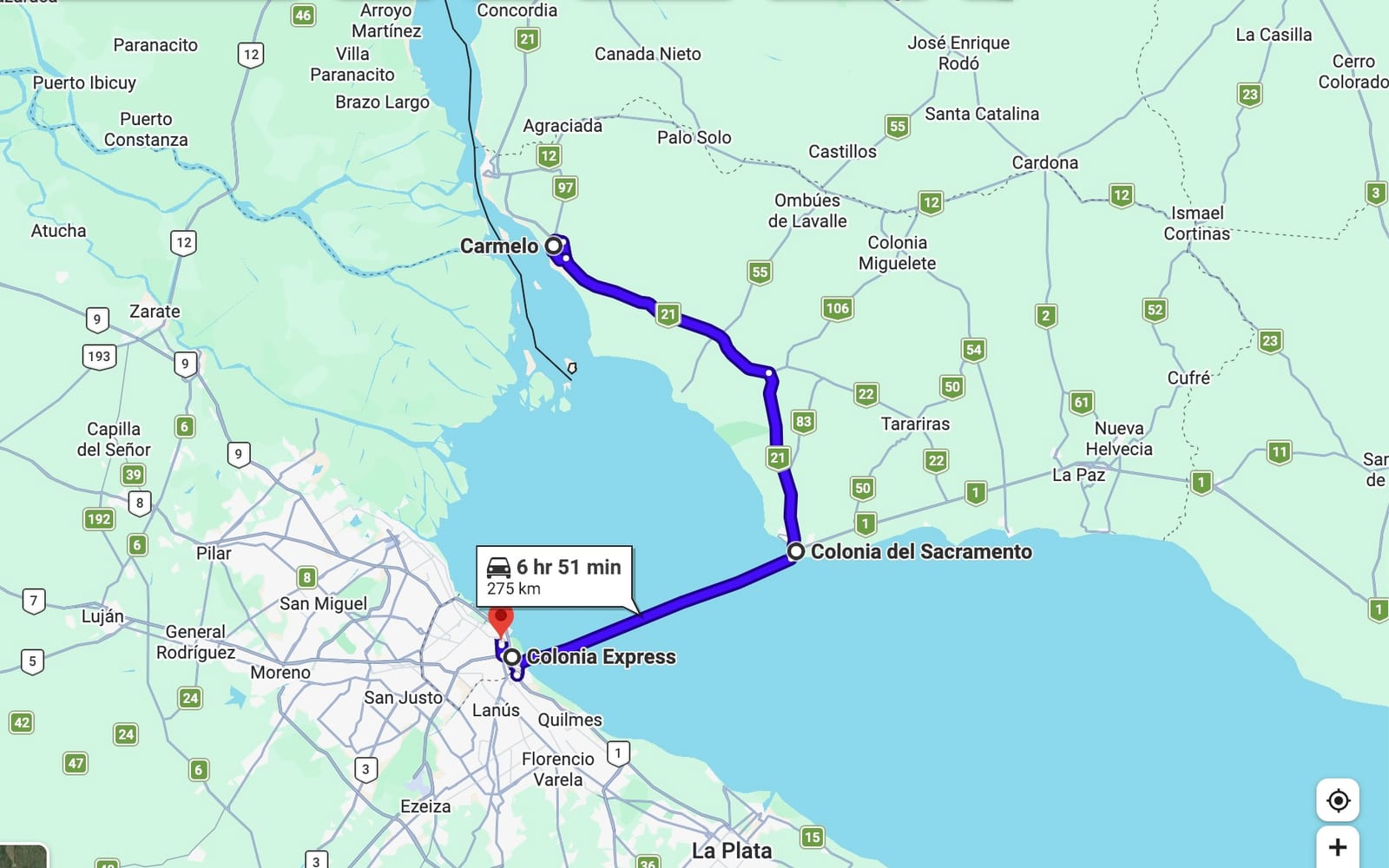
The ferry terminals are in the Puerto Madero district of Buenos Aires – just get a taxi from your hotel. From Palermo where we were staying, it was about a 20 minute ride. The map above shows the full 3-day route including the cross point from BA.
You can see that the drive from Colonia up to Carmelo is fairly short, and you're well away from bigger cities like Montevideo.
You must check in 2 hours before the departure time even though you have already bought your ticket on-line.
First, you will go through Argentinian customs and then Uruguay customs - both before you get on the ferry. It takes a little bit of time if you go at a weekend when hundreds of locals and tourists flood the small town, keen for a break from the ever-busy mega city they call home.
Therefore, I’d strongly recommend doing this trip during the week. We left Buenos Aires on a Wednesday around 1 pm and returned on a Saturday morning.
If the weather is decent, get on deck as you leave the port. You’ll pass by some odd but interesting sights, like the Buenos Aires Casino (an old paddle boat), and derelict tankers before reaching the mouth of the harbour with more of an industrial feel.
Crossing the Rio de La Plata
In Spanish, this means the River of Silver. There is quite a debate about what this is: some call it a tapering of the Atlantic Ocean, others view it as a marginal sea and then others describe it as an estuary of the Parana and Uruguay rivers. Regardless, it is big!
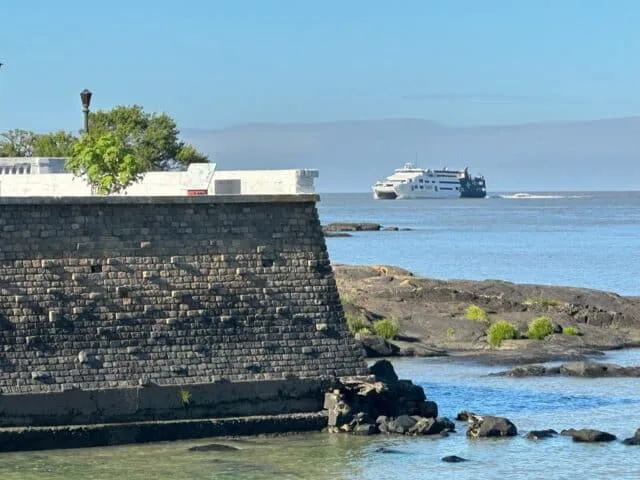
At its widest it is 180 miles (290 km). In fact those who call this a river, view it as the widest in the world, as it covers more than 13,000 square miles!
However, the crossing from Buenos Aires is only 31 miles (50km) so much more appealing for a short hop over. It’s perfect for a 3-day itinerary in Southwest Uruguay!
On arrival in Uruguay, the authorities will pass all luggage through an x-ray machine and then you’re free to go!
We decided to spend a night of our 3-day itinerary in Southwest Uruguay here to check it out. Then we would go further north west to the wine country the next day.
The town is literally off the ferry jetty/terminal area, so if you’re staying in the historical town, it’s no more than 15 mins walk to your hotel. Taxis are available if you have more luggage.
This city was founded originally by the Portuguese in the 1600s and in 1995 it became a UNESCO Heritage site.
If you walk, you’ll likely pass by the old train station with a sign proudly announcing you’ve made it to Colonia. Not operational any more, but a cute reminder of by-gone era of train travel here.
As soon as we stepped out of the small ferry terminal, it felt like we’d gone back in time and in a good way! Cobbled curved avenues lined with leafy trees gave us plenty of shade as we walked a little uphill from the water. It was tempting to pop into small colorful cafes straight away but we managed to save that until we had dropped off our bags.
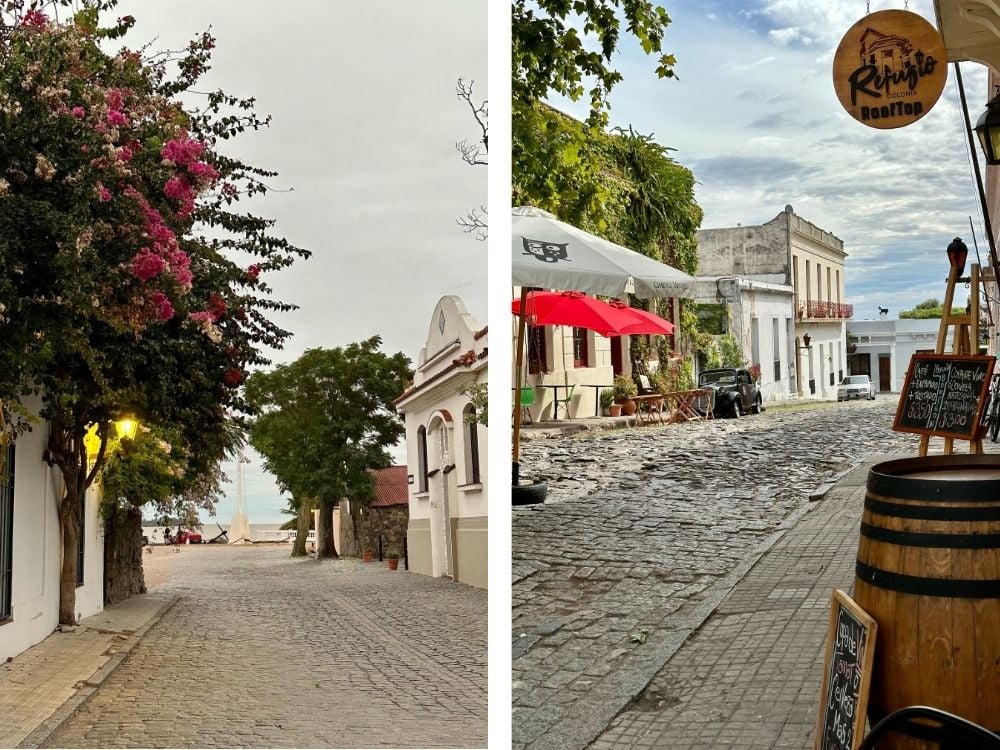
Our Recommended Activities in Colonia del Sacramento
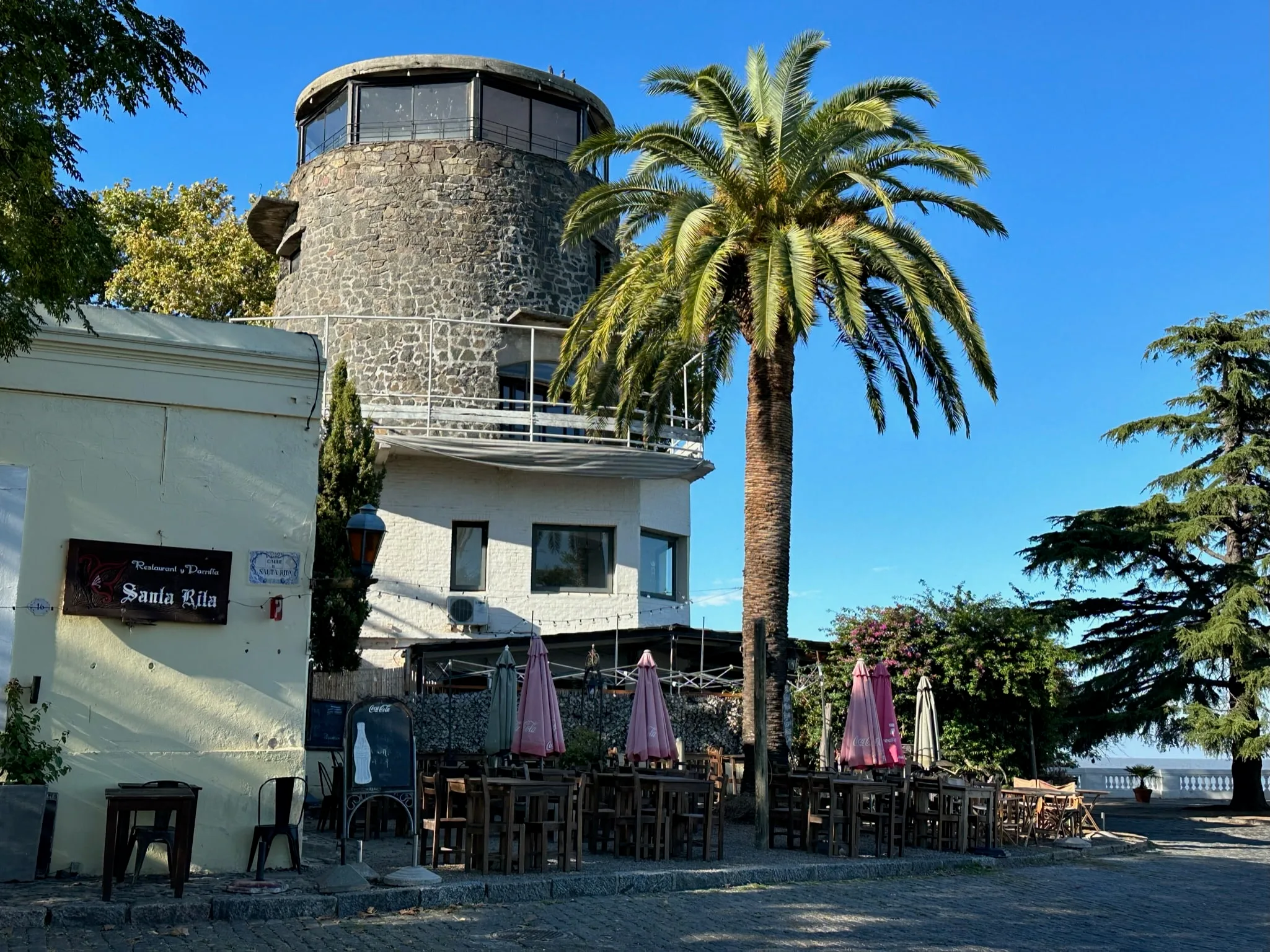
- Have a leisurely lunch at a street cafe in historic center – we liked Parrilla Santa Rita but there are many options. This family run restaurant is also perfect for watching sunsets!
- Climb the lighthouse for great views – its about 100 steps, so just a light work out!
- Discover the old town: San Francisco convent ruins, old lighthouses, small museums. Two showcase Spanish, Portuguese history while others are more specific like the Tile museum.
- Have a seat in the shade in Plaza de Armas next to Basilica del Santisimo. It’s the oldest church in Uruguay.
- Stroll down the ‘street of sighs’ – Calle de los Suspiros. The paving is original from the Portuguese days. It’s framed with colonial homes.
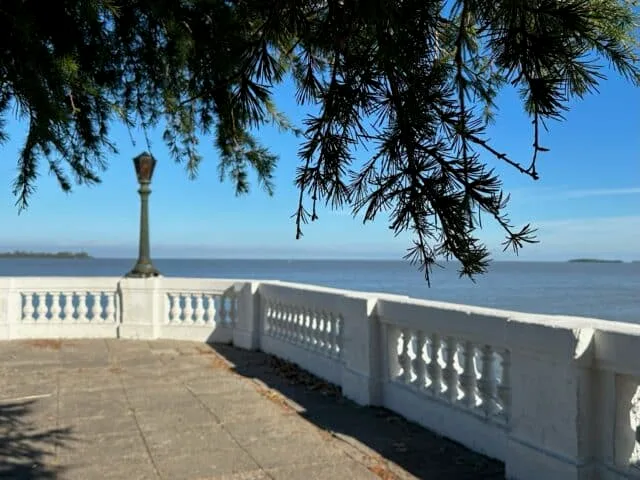
6. Walk the coastal promenade round to the marina where small boats bob casually in the harbour.
7. Have an Uruguayan ice-cream or if you prefer check out traditional barbecues for a meat feast.
8. Try mate – this is a team effort. This Yerba Mate based hot or cold drink is made for sharing and you will often see people across South America carrying a flask with their mate.
Traditionally it was served in cured squash gourd vessels like in the photos below but today ceramic ones are more practical and popular.
9.Soak in what’s going on in daily life – we came across a film shoot !
10. Take lots of photos and video. This town is so incredibly picturesque and perfect for putting our tips on how to take awesome photographs into practice!
Collect Rental Car, Afternoon Wineries in Carmelo
Rolling hills, vineyards and a warm welcome at our wine lodge
Drive North West to Carmelo
After a delicious breakfast and a couple of hours of more strolling around Colonia in the gorgeous morning light, it was off to our next destination: Carmelo. On the spur of the moment we decided to rent a car vs our original plan to take the bus.
There are buses every few hours but having chatted to other visitors and locals, it seemed a better use of our limited time to drive. We rented from a company called Cheap Car Rental in Colonia, near to the ferry terminal. You can find more options for car rental in Colonia here.
We just showed up and hired a small SUV on the spot - a low mileage, new vehicle. It was easy to sort out the documentation on the spot, and at the time it cost us around $150 (including insurance).
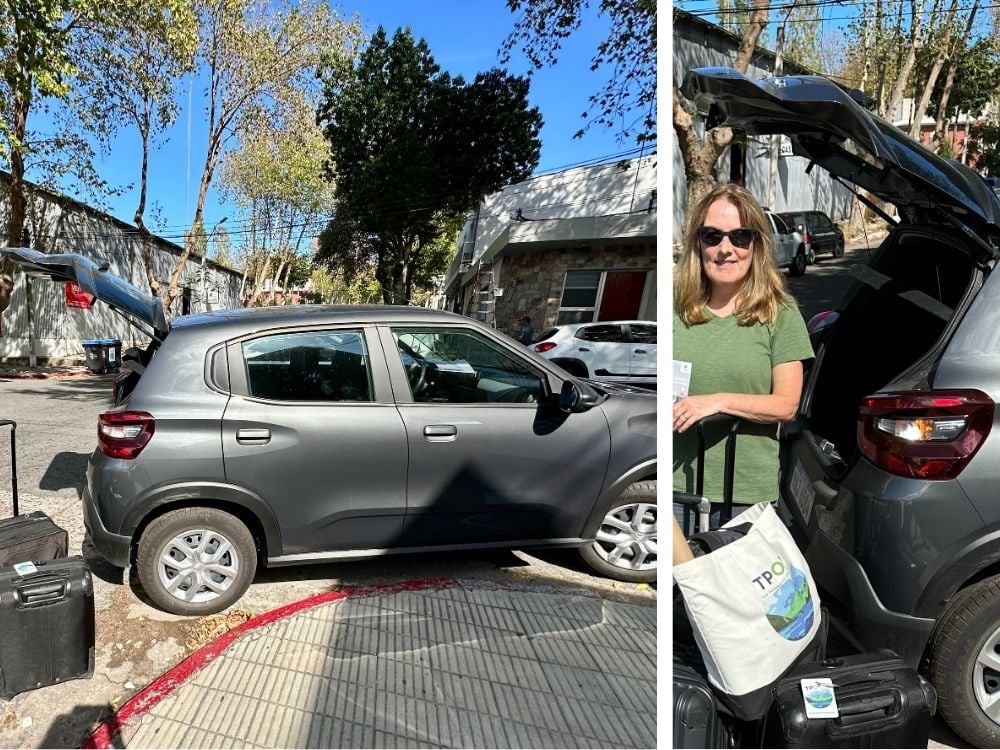
Our Route - Colonia to Carmelo
We followed route 21 out of Colonia del Sacramento and inland the landscape became more rural with rolling hills and small farms. If you drive non-stop to Carmelo it’s around 1.5 hours. It’s easy, well signed posted and a quiet road.
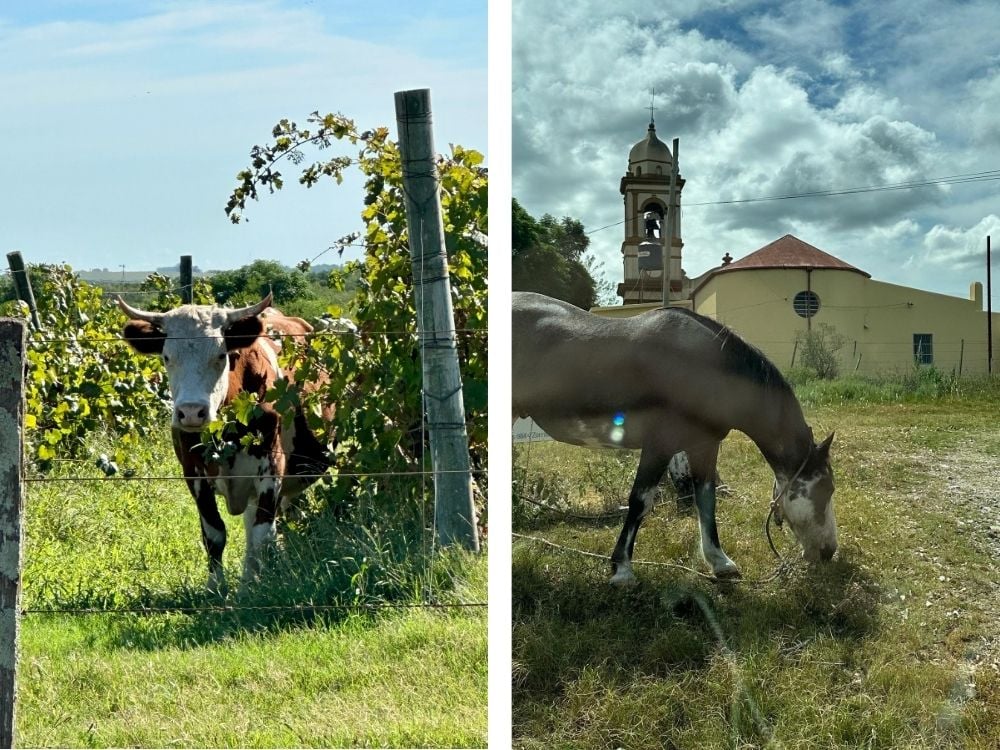
As we left built up areas, patches of vineyards soon appeared; a contrast from the huge valleys of vines we'd seen in other wine growing areas like France and New Zealand. Cattle and horses grazed luscious looking green grass contentedly, playing a key role in keeping it from growing too tall between the rows of vines.
As we look at the map, we were quite perplexed to see sign posts for Fray Bentos. Wasn’t that a brand of corn beef from the UK?
Well, thanks to Google, we discovered that there is a town called Fray Bentos and it was even a meat packing center back in the 1860s. When refrigeration took off, it expanded rapidly! And there’s more. This town was where corn beef (meat shipped from Argentina) was processed and exported.
Today, there is no more production of corned beef (that stopped in 1979), but UNESCO stepped in to protect the site and you can visit it, although check ahead of time as timings seem quite informal online.
As the site was a little further north than we wanted to drive during our short visit we passed on it, but it seems a cool unique thing to see if you have the time and love corn beef!
Arriving In Carmelo, Uruguay
On the coast, Carmelo is a town without any fancy tourist accessories but it’s jewel is a micro-climate that suits wine growing!
As we arrived and drove through the narrow streets, people were winding down for their afternoon siestas (typically 2-5pm). Shutters were closing, ‘abierto’ changed to ‘cerrado’ on shop front doors.
On the surface Carmelo is not a classic pretty postcard town, like Colonia. On first sight it feels more functional and the vibe I got is that it can be a tough life for some here.
We kept driving, passing through large central tree-lined squares, with the odd fountain, old trees for shade with more dogs than people making use of them.
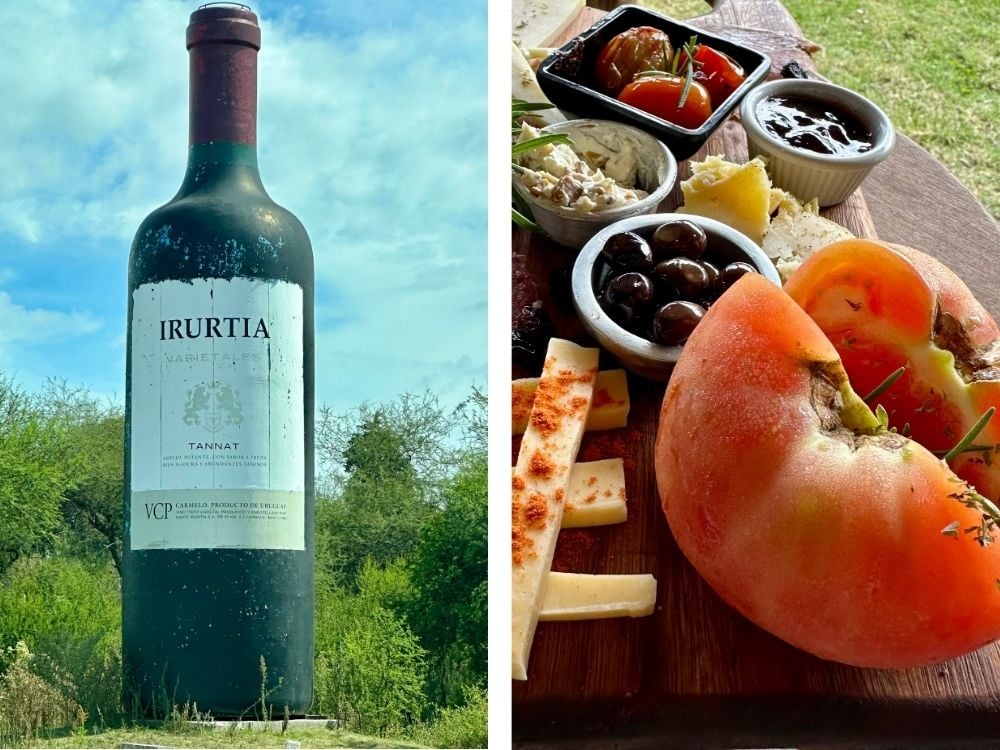
We then came across a gigantic bottle of wine at the end of a dirt road proudly announcing we’d arrived in the bodega area of town (the vineyards)!
Wineries to Visit in Carmelo
In fact, Carmelo is the largest wine producing area in Uruquay after Montevideo and Canelones in the more central part of the country.
There are currently 7 bodegas around Carmelo. Zubizareeta, Campotinto, Almaden de la Capilla, El Legado, Narbona and Finca Buena Vista. The latest one - Pueblo Tannat - opened in 2023. Some have accommodation but it’s limited, so book early to get your perfect lodge.
More recently the Carmelo Resort & Spa is another upmarket alternative and perfect for a touch of luxury.
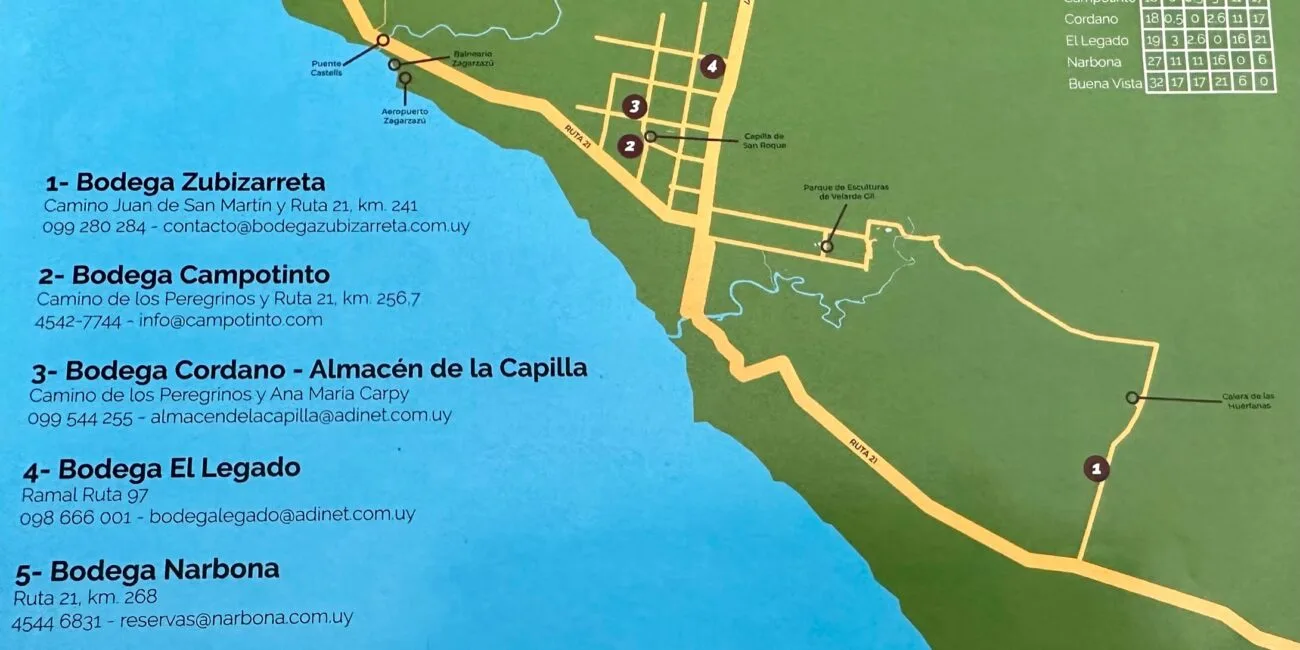
We had originally booked a room at Campotinto wine lodge but they cancelled on us a couple of months before we travelled. We did cycle by here during our visit and found out they are renovating the place.
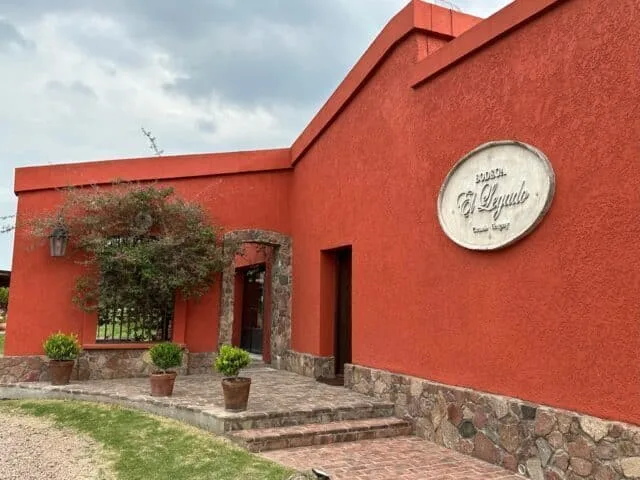
However, things happen for a reason and so we re-booked ourselves into another wine lodge called Bodega El Legado. It was absolutely wonderful.
During our time we also visited/did tastings at Bodega Campotinto, Almacen de la Capilla, and Bodega Narbona.
The History of Bodega El Legado
Bodega El Legado is a special spot. Maria and her sons welcomed us with open arms and clearly work hard to have guests feel like part of their family. Her story is also one of great perservance.
Back in 1968 her father-in-law bought the land with a dream (el legado in Spanish) to be a wine-maker. However he ran into financial challenges and had no choice but to abandon his dream.
But, Maria’s husband held onto the dream as the next generation of this incredible family. And in 2007 he bought the land back and slowly brick by brick, vine by vine, this humble hardworking family, made their long held dream a reality. Sadly he died in 2022 and despite suffering another loss, Maria and her sons made a promise to keep this achievement going.
They plan to add 2 more rooms in their next phase of development. Friendly and fun, Maria is a role model for entrepreneurship as well as being a wonderful host. She oversees the production of around 3000 bottles a year.
If you want to visit, expect to pay US$45 per person for a tour, tasting and sharing platter; US$75 with an asado lunch - a huge selection of local traditional dishes.
Carmelo Wine Tasting, Cycling & Sunset at the Beach
Generous tastings, quiet country lanes and a golden-hour finish
Bodega El Legado
We have tasted wines in many places and sure a lot of you have too! Quite often the sample is the size of a ‘wee nip’ as we Scots like to say. Ample to taste but wait – perhaps not quite enough to savour and linger over a fine wine with friends.
The tasting at Bodega El Legado was outstanding. First, a charcuterie board arrive overflowing with local meats, cheeses, fruits. This was followed by fresh from the oven empanadas as the wines were poured.
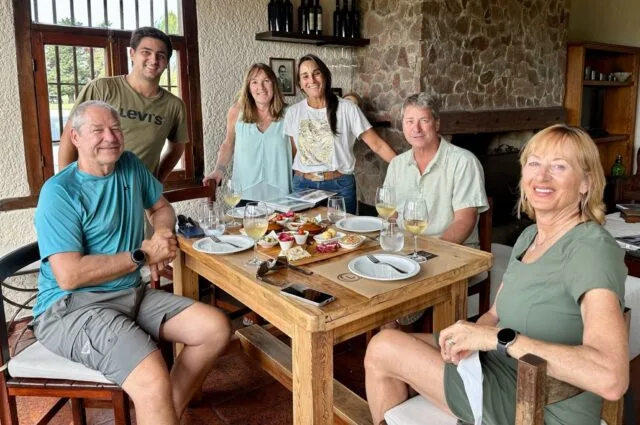
We enjoyed 5 different young wines from the Uruguay, including Tannat – a new taste to us. Others were Cab Franc, Merlot, Syrah, blends. Tannat wines are produced from old French vines originally and the wine is quite distinctive. But you have to visit to taste it – most of these wines are not exported.
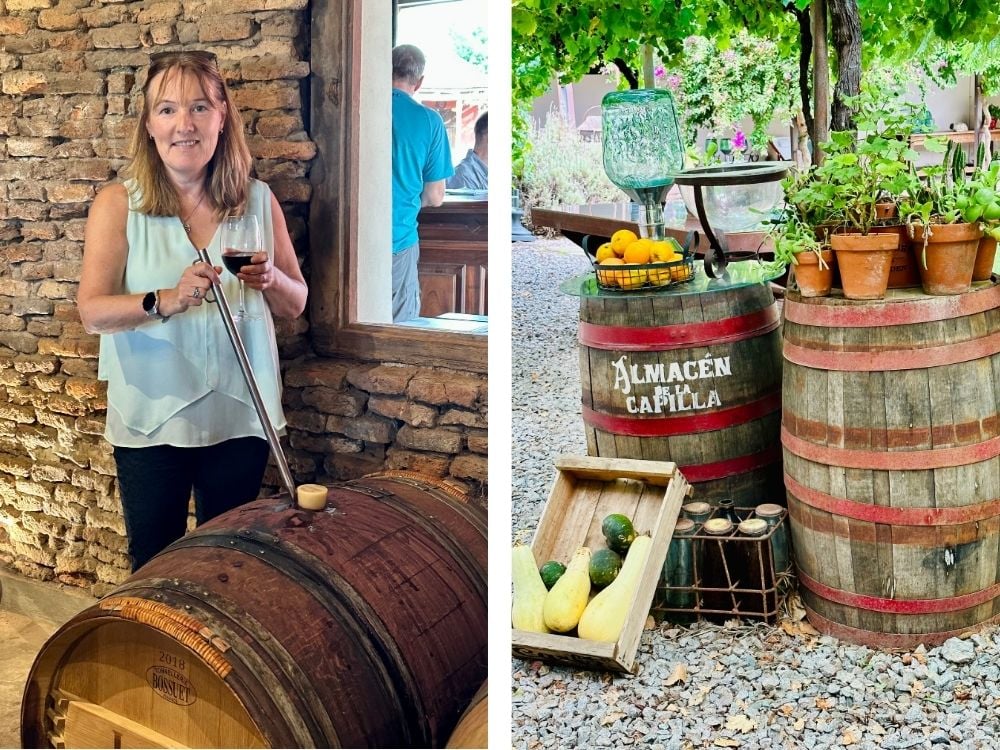
And when you’re done eating and tasting at the table in the original farm-house building which is so atmospheric, guests are invited to draw a glass (or two!) from the barrel in the adjoining room. That was so much fun and a wonderful finale to an exceptional tasting experience.
They also offer Uruguayan barbecue (with advance notice) and you can also be a guest and help out with harvesting their grapes!
Bodega Almacen de la Capilla
We dropped by another winery for a late lunchtime tasting and were welcomed by members of the Cordano family who descend from Italian immigrants back in the 1870s. However, I would definately say book in advance as it is popular. Expect to pay around US$50 wine tasting or US$90 three-course lunch. The shop opens daily 11am–6pm.
Again, the enthusiasm of our host was infectious. We even got invited to head into the small cellar where their wine ages and wander around their production site – so casual it was like visiting a friend!
We had a delicious lunch and tasting experience. The gazebo and deck area is situated to look out on their vines and it is so tranquil. They have a very well stocked shop with local produce like jams, the famous ‘Dulce de Leche’ caramel sauce.
It’s impossible to leave Bodega Almacen de la Capilla without buying something delicious: in my case a bottle of their organic olive oil.
The Chardonnay here was excellent and I am not a Chardonnay fan usually! That bottle didn’t last too long though 🙂
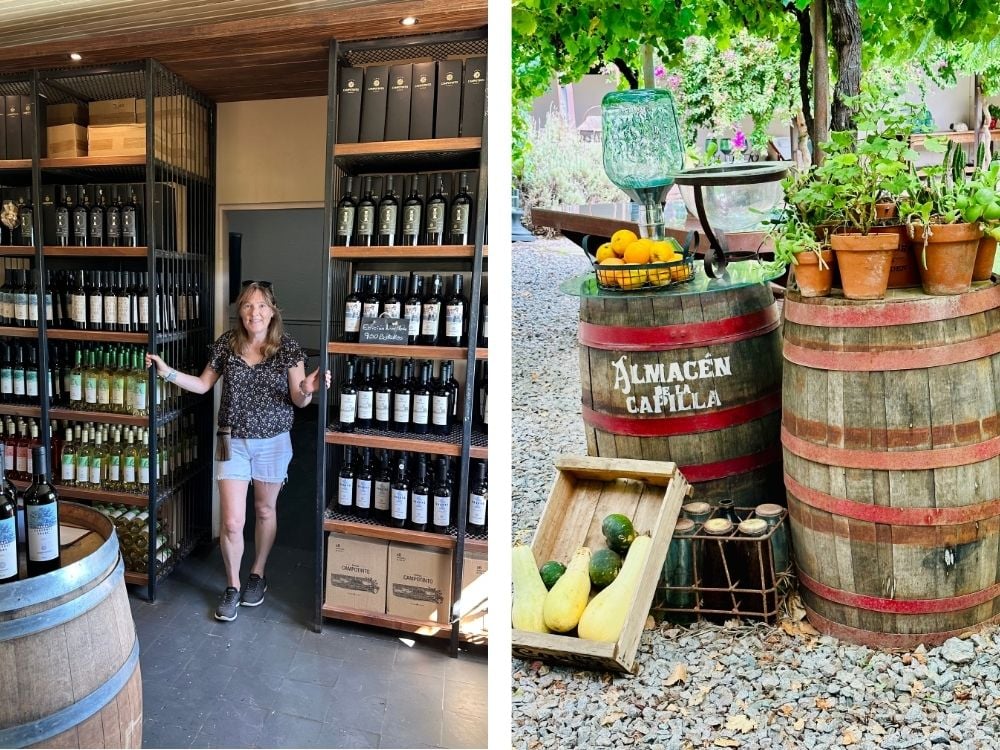
Bodega La Narbona
We stopped by this vine-yard although didn’t do a tasting. It is a beautiful spot and the gardens were stunning and I imagine a beautiful spot for a wedding. They also have a farm type shop laden with wines, cheeses, crackers and so much more. This was a dairy farm as long ago as 1909. They have a wine museum and each room is named after a wine – love that!
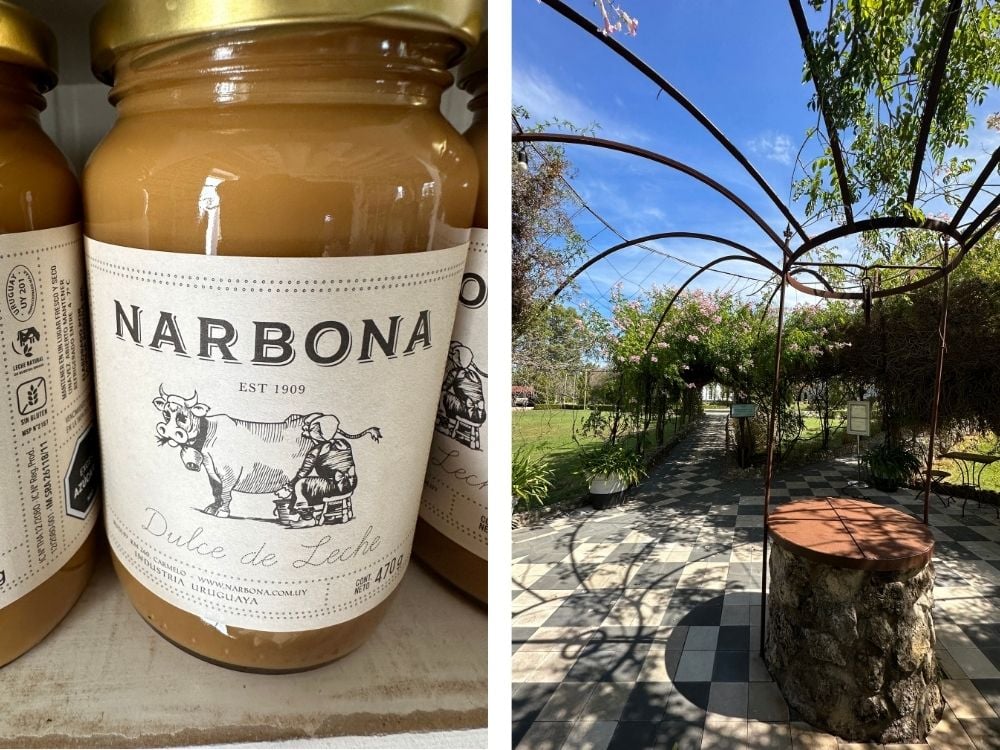
The only comment I would make is it’s location. It’s a bit further away from the cluster of others and so not as central for cycling around wineries. But equally it struck us as a wonderful lodge, full of history and fine wines to keep you very happy in a stay in Carmelo.
One interesting thing we learned is that there is no glass bottle production in Uruguay currently and this severely limits their ability to export. But for us tourists and the locals, it’s a bonus to taste the best of what is lovingly cultivated in these small, family run businesses.
Go Cycling Through Vineyards of Carmelo
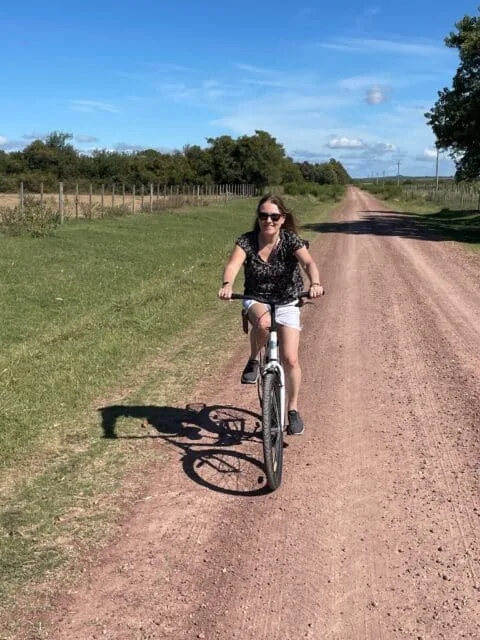
The resort provides bikes for guests. Off we went with a very basic map which we discarded pretty quickly. We had a wonderful cycle around the bodegas, passing local crofts, schools, churches.
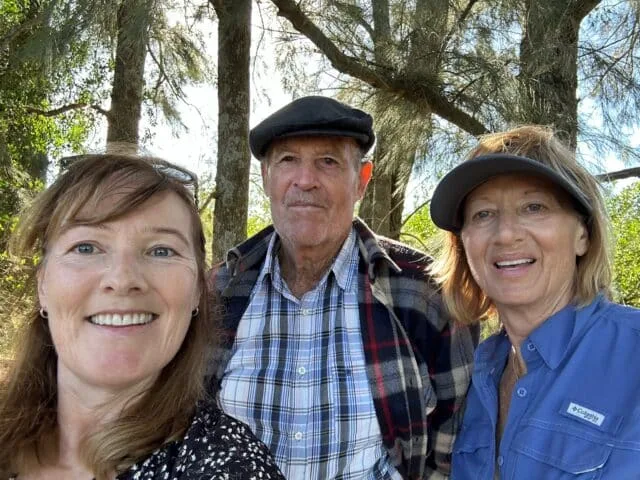
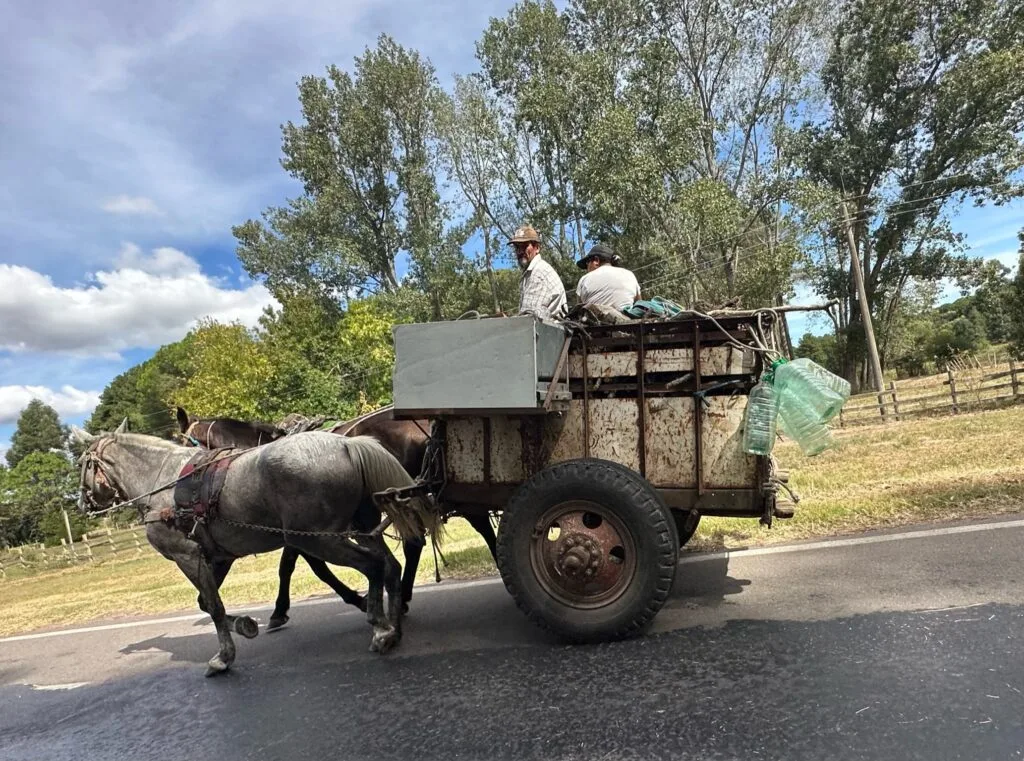
We stopped to talk with an older farmer patiently sitting under the shade of an old tree, as his cows munched on road-side grass. He was quiet, friendly, a man of hard work and tradition.
With his ‘farmers bonnet’ on his head, he reminded me a lot of our Dad. A moment that only really happens when we slow down on our travels.
It was quite warm but so pleasant as the roads were quiet (many unpaved) and butterflies, birds and bees were our main company.
It’s easy to do an hour or two cycle to burn off a few calories before getting down to business and tasting some of the young wine varieties of South Western Uruguay.
Carmelo Beach At Sunset
It’s possible to take a sun-set trip on the river; they leave from the marina Club del Faro. We decided to enjoy a simpler sunset and headed to the local beach one evening.
We were not disappointed with the sunset – it was beautiful. I would repeat that without a hire car getting around could be quite difficult as these distances are not walkable from the bodegas. There was little in the way of Uber services here!
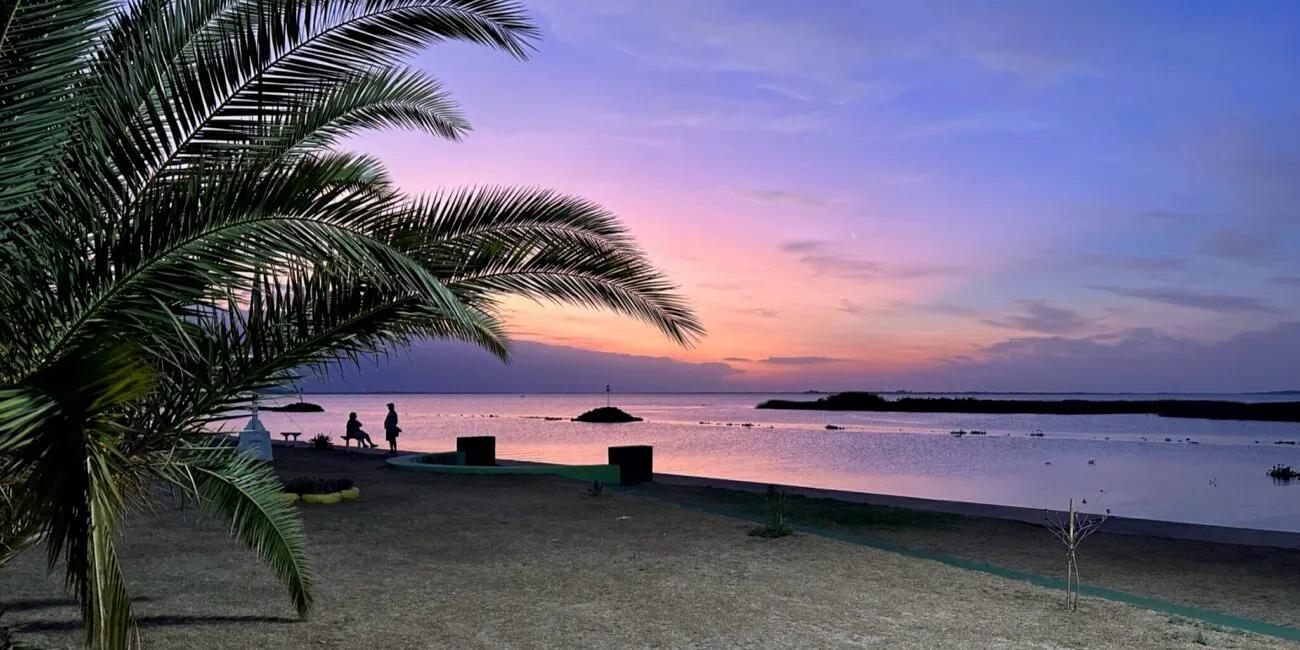
Carmelo beach is sandy and small but seems popular with locals and the odd tourist. There is an area that juts out a little and makes for a pleasant walk as the sun sinks. Then, it’s time to head back and perhaps go into Carmelo itself for dinner. We ate at a local restaurant just off the main square.
Again, eating dinner is typically a 9pm affair here, so if you’re here earlier it will feel empty. The food was good, the wine excellent and it was full of locals, enjoying a Friday night on the town!
Return to Buenos Aires
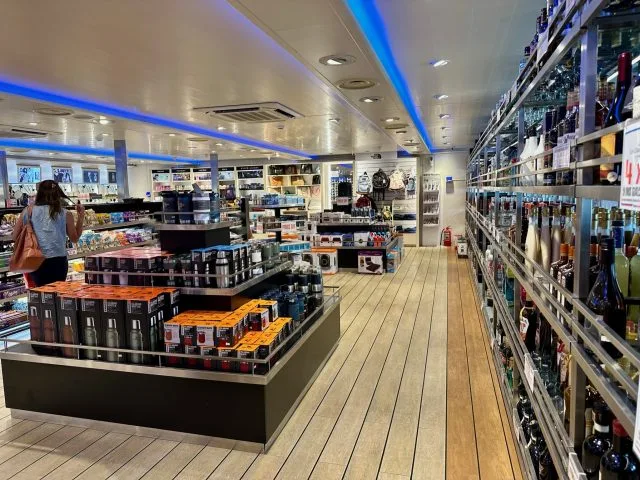
Our return back to Colonia was straightforward, and after dropping off our car, we walked down to the Ferry Terminal (literally 5 mins walk). We had time for a coffee and a last quick shop at their small gift store.
Where to Stay in Colonia and Carmelo
We split our three nights between a small hotel in Colonia’s historic centre and a wine lodge in the Carmelo countryside. Here’s where we stayed, plus a few alternatives at different price points.
Our picks are based on location, ease of getting here from the ferry and value for money. If you are staying longer you might check out more accommodation options but we enjoyed our hotel immensely.
📍 $
Located near old city, Hotel Perla Del Plata offers affordable central clean accommodation and 24 hour reception. Price & Availability
📍 $$
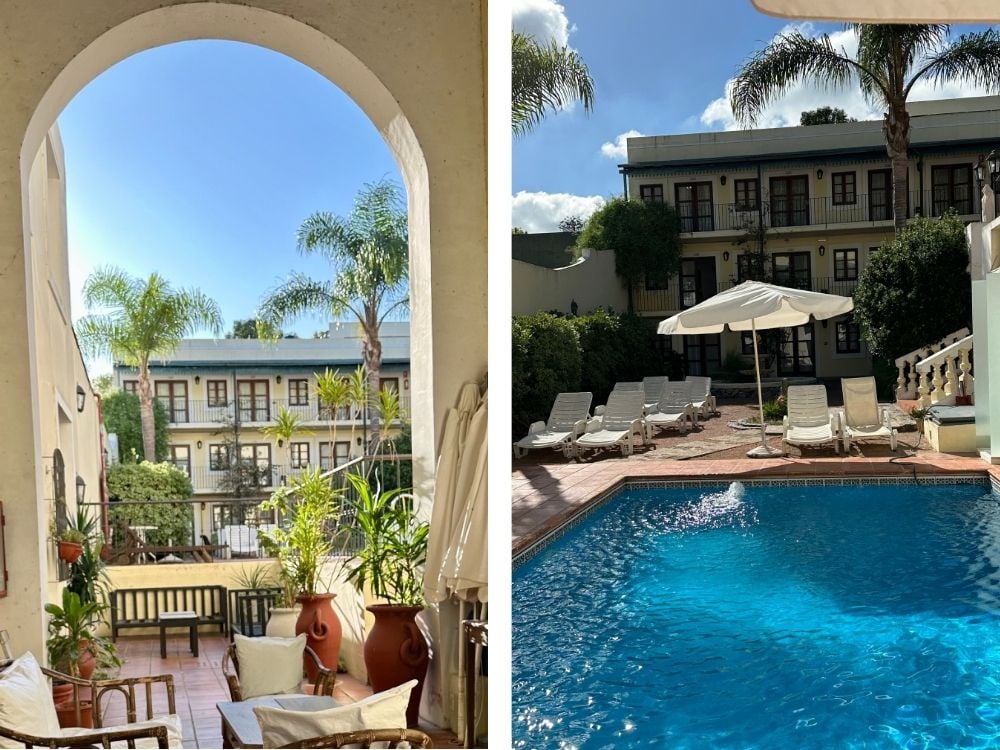
Don Antonio Posada where we stayed is in an ideal location 5 mins from town square, with a pool, a hearty breakfast included & friendly staff. Price & Availability
📍 $$$
A luxury home, with a restaurant worth raving about — Comarca Las Liebres Hotel is simply outstanding. Price & Availability
Where We Stayed at the Wine Lodge
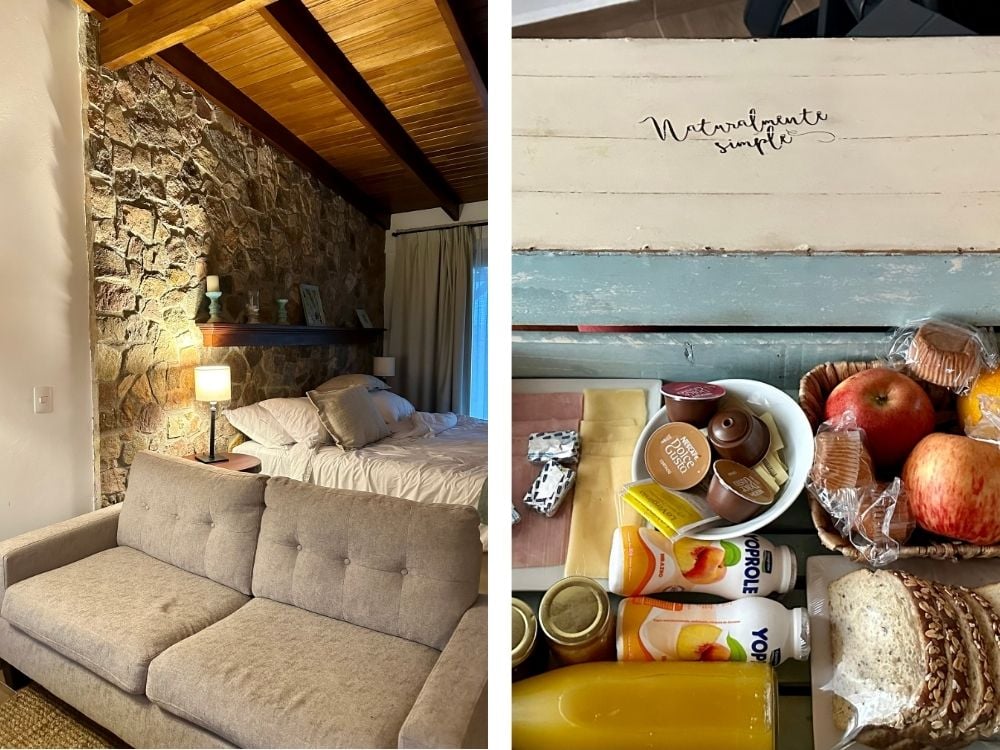
The rooms at El Legado were large, modern with all the facilities you’d expect in a 4 star quality of wine lodge.
Breakfasts were served the night before, brought in a large wooden box. Fresh and delicious.
A fridge in each room makes it easy to store anything perishable overnight.
Uruguay Quick Planning Guide
| Ideal stay | 3 days |
| Best for | Wine lovers, slow travel, short escapes |
| Ferry from Buenos Aires | 1 hr 15 mins |
| Car needed? | Useful for flexibility; private transfers are an alternative |
| Drive Colonia–Carmelo | Around 1.5 hours |
| Best months | Spring and autumn, midweek |
| Pace | Relaxed |
FAQs
Is three days enough in Uruguay?
Weekend and short trips are extremely popular due to the short ferry crossing from Buenos Aires and gives you ample time to experience Colonia and the wine region of Carmelo.
Can you visit Colonia and Carmelo from Buenos Aires?
Yes, the direct ferry between Buenos Aires and Colonia Del Sacramento means that you can easily come to Uruguay from here. A day trip would be limited to Colonia but stay a few days and explore the south western region, including some excellent vineyards.
Do you need a car to visit Carmelo’s wineries?
Although you can arrange private transport, it is much more flexible to drive from Colonia up to Carmelo and renting a car off the ferry is easy. This way you can stop off as you wish en route and be able to visit wineries on your own schedule.
Do you need to book wine tastings in advance?
Carmelo’s wineries get busy over weekends when maybe locals travel over from Argentina. For example, El Legado offers walk-in tasting but has reservation-only lunches, while Almacén de la Capilla requests advance booking for its experiences.
Start Planning
After our time in Uruguay, we returned to Buenos Aires (by ferry) with a real affection this small part of the country. Memories of family winemakers, chatting (in my poor Spanish) with local farmers we met while cycling around will stay with me.
Carmelo and Southwestern Uruguay may not be as flashy or bold as many other places on our planet, but for me, that’s precisely what makes it so special. I can’t wait to return and discover more of this understated South American country!