
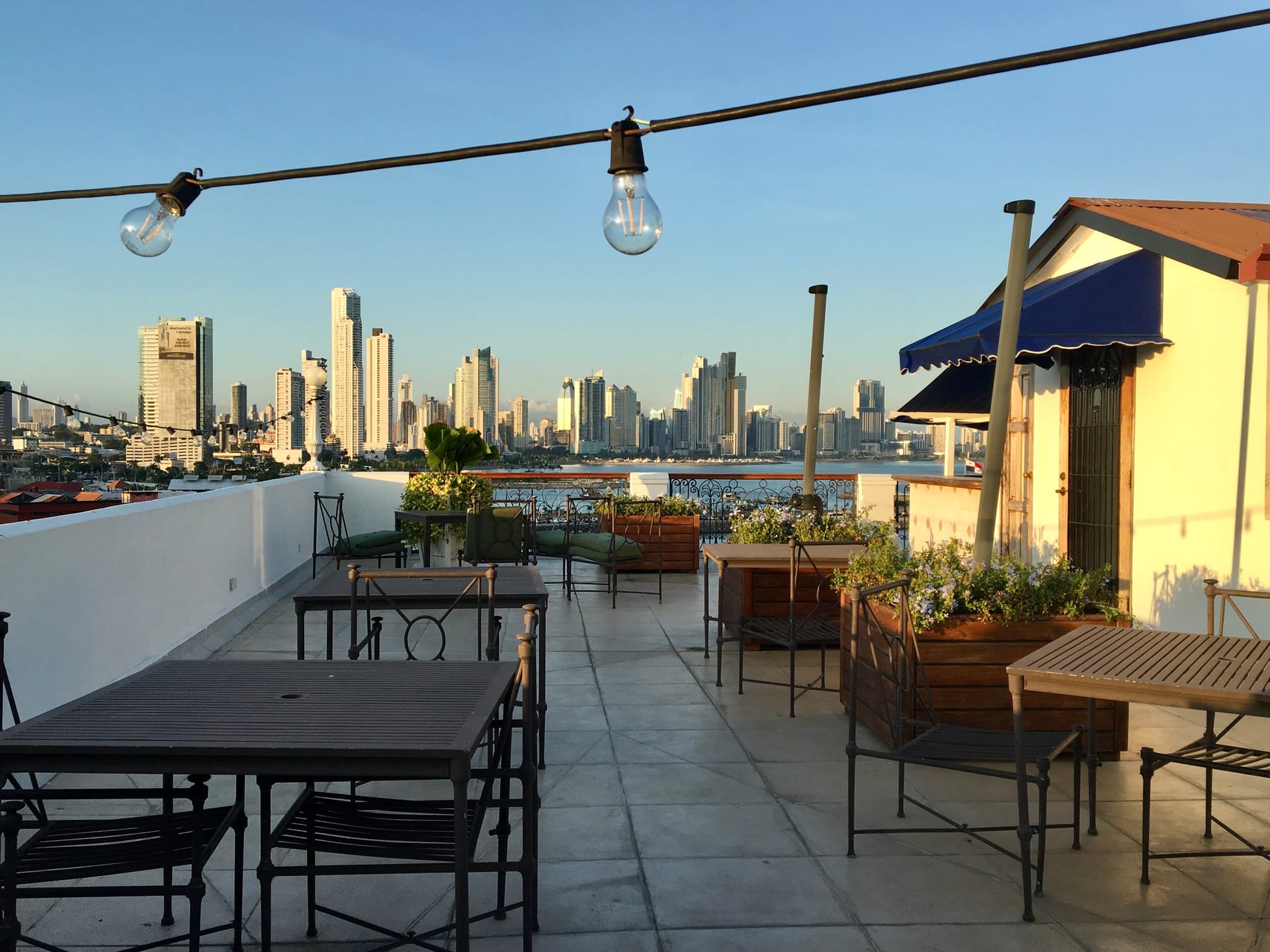
We spent five days in Panama City, giving us ample time to explore the heart of the city, take trips further afield to see more of the country, and on our 5th day squeezed in last minute shopping before we caught our flight home.
Our Panama City 5-day itinerary included a dome-car train journey, exploring the wild Caribbean coast, where we arranged for a guided fort visit, and sailing through part of the Panama Canal. My personal highlights were a canoe journey up river to meet the Embera people and sloth/monkey spotting. Our overall pace was leisurely with plenty of time for a cocktail and relaxing dinners.
Our family group of four on this trip ranged from ages twenty-something (my niece) to my 84 year-old dad. We felt it important to plan taking into account our group’s comfort with walking in the heat, uneven ground and getting in and out of narrow canoe style boats.
Here’s how we organized the trip, what we enjoyed and the practical details to help you plan your own first visit.
This Itinerary is Ideal For People Who:
◦ are visiting Panama for the first time as a couple, with friends, or as a multi-generational group.
◦ appreciate history from exploring the early capital site to the iconic Panama Canal.
◦ enjoy meeting and interacting with different cultures like the Embera who live along the Chagres River.
◦ want to spend their days at a leisurely pace without missing out on top experiences.
Our Favourite Panama Moments
- ✓ Sailing on the Panama Canal seeing massive ships up close inching through lock systems
- ✓ Meeting Embera village hosts and enjoying a local lunch and dancing with them (such fun)
- ✓ Exploring historic streets of old city searching for the perfect Panama Hat
- ✓ Learning Captain Morgan was a real pirate and from Wales
- ✓ Stopping to watch a sloth we spotted hanging out in roadside trees
Itinerary Overview
We based ourselves in Casco Viejo for five nights, with four full days to explore without moving hotels. Here’s how our 5 days in Panama City were spent:
- Day 1: Old Panama City - Panama Viejo & Casco Viejo
- Day 2: Train to the Caribbean, Historic Forts & Agua Clara
- Day 3: A Boat Trip Through the Panama Canal
- Day 4: River Canoe Journey and an Emberá Village Visit
- Day 5: Souvenir Shopping Before Departure
Old Panama City: Panama Viejo & Casco Viejo
Morning: Start in Panamá Viejo
Starting your first day exploring the historic districts of Panama’s capital will give you a real feel for the country's history past and present. Start in the oldest district - Panama Viejo, where you will find almost 30 acres of ancient life in a city founded in 1519. But by 1671, pirating had decimated almost everything and a new city Casco Viejo succeeded it.
It is around 6 miles between Casco Viejo where we were staying and the old town of Panama. So, if you are also staying in this same area, it makes sense to head out to the older district first, then return to your hotel for a break, before starting a second round of exploring in the afternoon. Have your hotel arrange a taxi or use your Uber App.
Head to the Museo de la Plaza Mayor first (The Visitor Museum) for an overview of the original city - the little mock up is helpful to see before you walk through the largely ruined site.
The 30-meter (98-foot) stone bell Cathedral Tower is pretty much all that is left from a Cathedral, but there is a staircase inside where you can climb up for uninterrupted views bringing old and new into one.
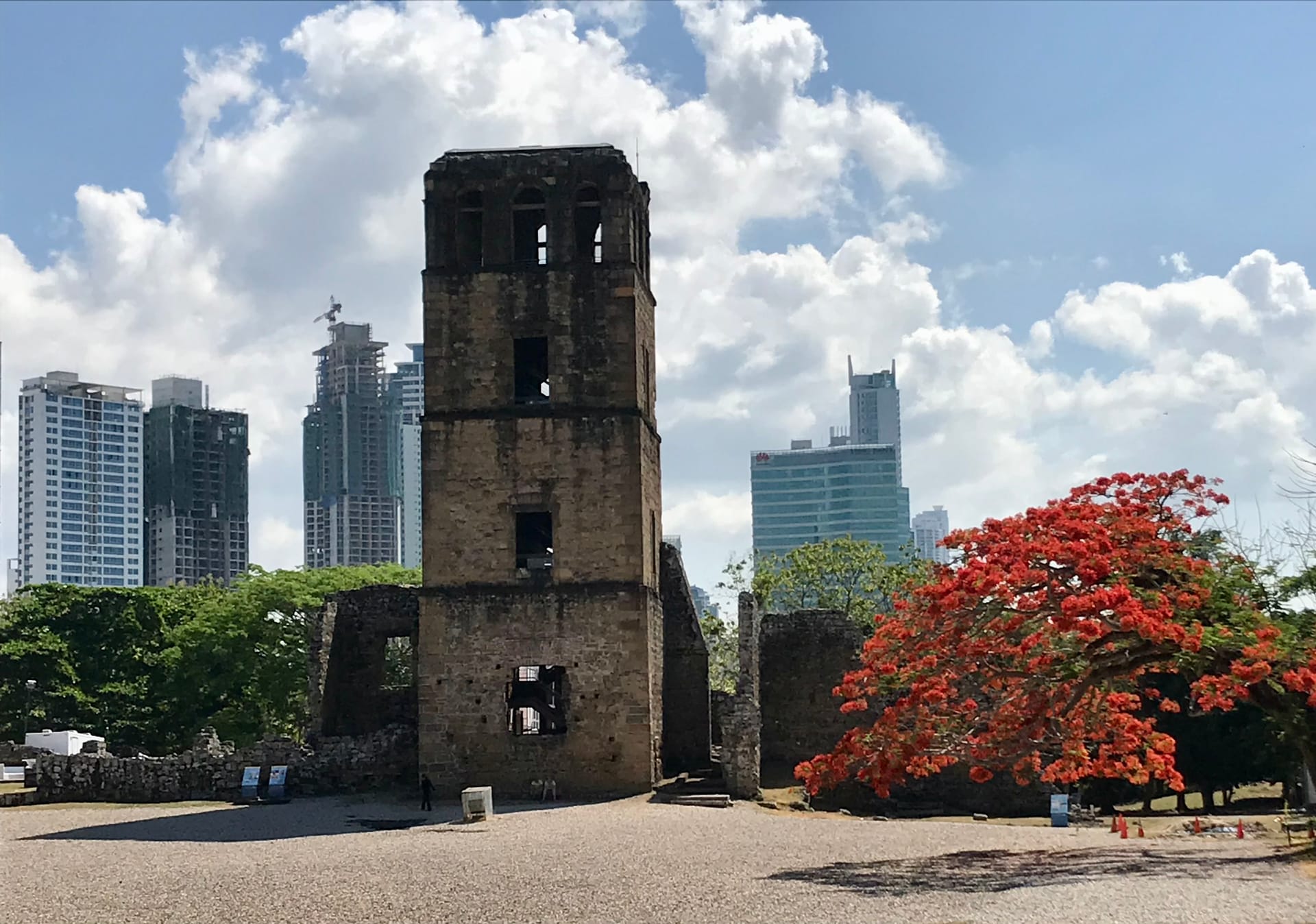
It’s easy and safe to wander around on your own in this area during the day and its likely you will see archaeologists at work around the site. It is open air so come earlier in the morning to avoid the heat. There aren't cafes right next to the site, so when you're ready, we suggest returning to Casco Viejo for lunch. Cafe Sucre was our choice.
Afternoon: Stroll Through Casco Viejo District
We booked with Guru Walks Panama City which is free. You are asked to give a tip to the guide at the end of your time together, based on how you found the experience. We also recommend GetYourGuide if you would like a private guided walk.
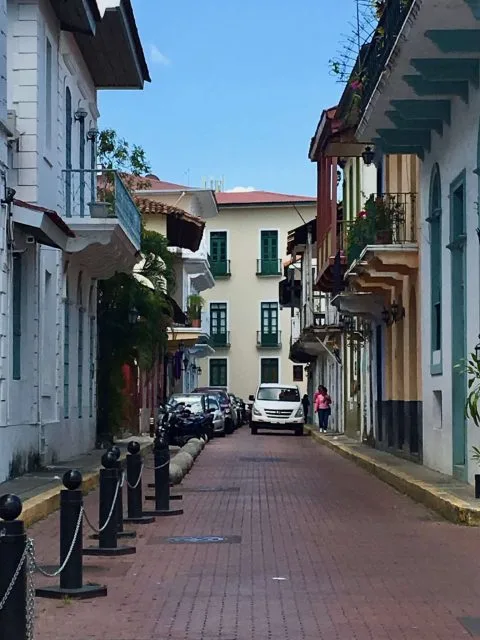
When you’re exploring the old city's cobbled streets and pretty plazas, you will likely walk by the Convent Santo Domingo and its Flat Arch. What’s so special about this, you might ask?
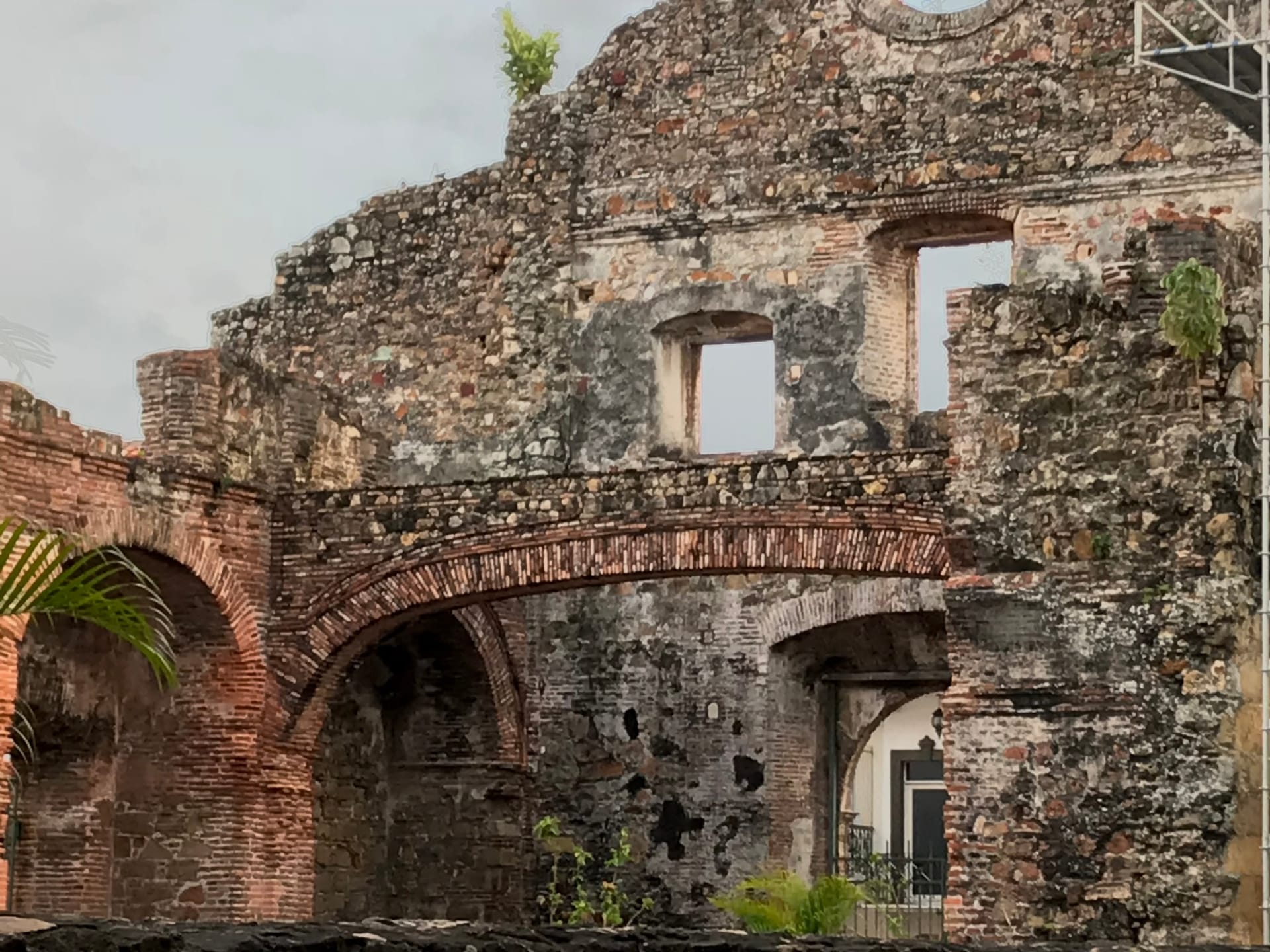
Well, built in the 17th century, its unsupported 50 feet arch was supposedly a factor in deciding that Panama (not Nicaragua) was the best country to build the canal in. Why? Back then, no earthquakes of any scale had caused it damage in centuries years. However, it did collapse subsequently and is now reinforced so who knows how true this story actually is.
If it's a little hot, this is a good time to take an hour and visit the fascinating Interoceanic Canal Museum, where we had a great introduction to what it took to construct this project. It's also great to do this before you see and sail through part of it.
🎒Our Tip: The museum is closed on Mondays. Tickets can be bought on line at the link above and their site is useful to check out any guided tours or special events that might be happening when you visit the city.
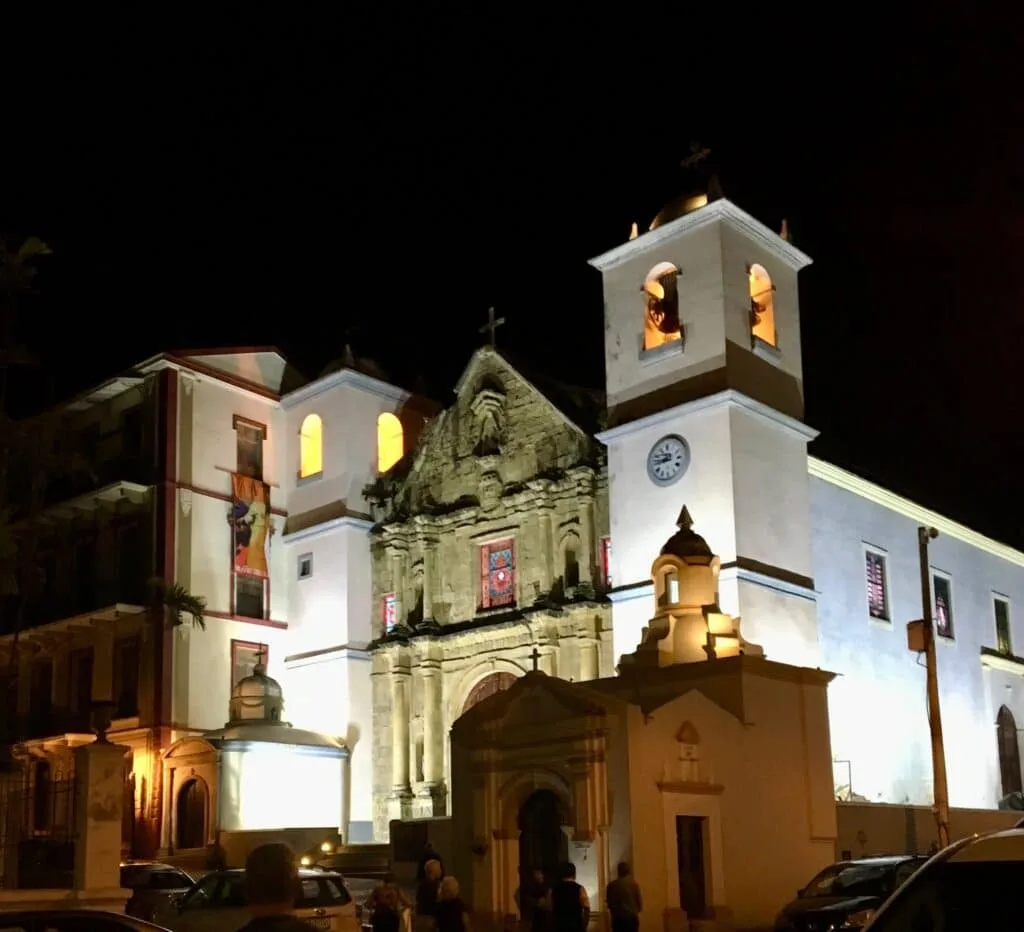
All walking tours will take you along the main avenues of the city like Independence full of historic buildings, and past the Iglesia de San José (The Golden Altar) which was apparently painted black to disguise its riches from the one and only Captain Henry Morgan. Another favourite of mine was the Cathedral, which was even more stunning when we returned in the evening and saw it lit up.
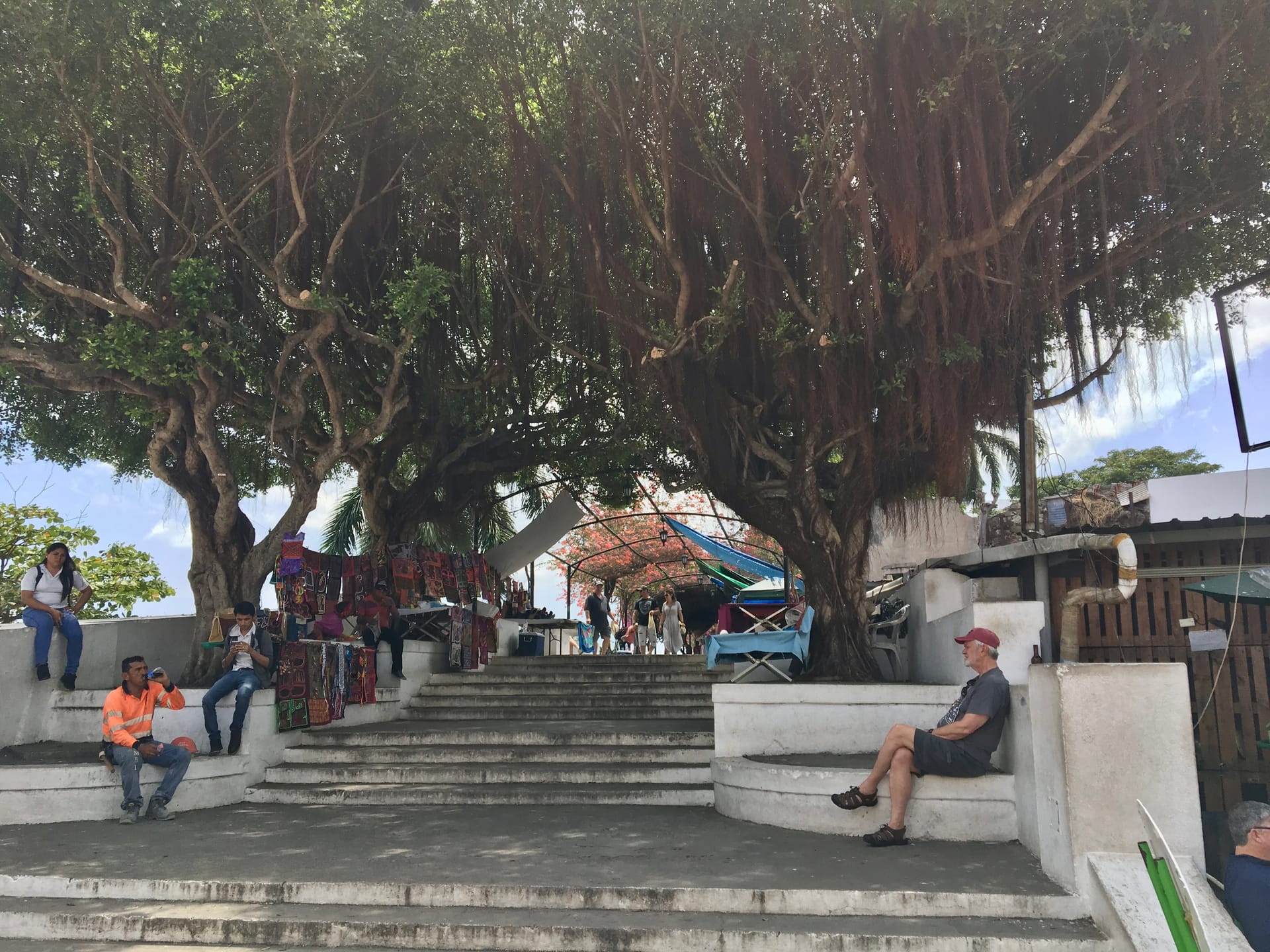
If you're ready for some sunshine and maybe a refreshment, head towards the Paseo Las Bovedas Seawall. We loved strolling along the waterfront promenade, full of stalls, refreshment stands and enjoying the views over the pacific ocean. It can be very breezy so if you've got long hair, bring a hat or hair-tie or it can be annoying :)
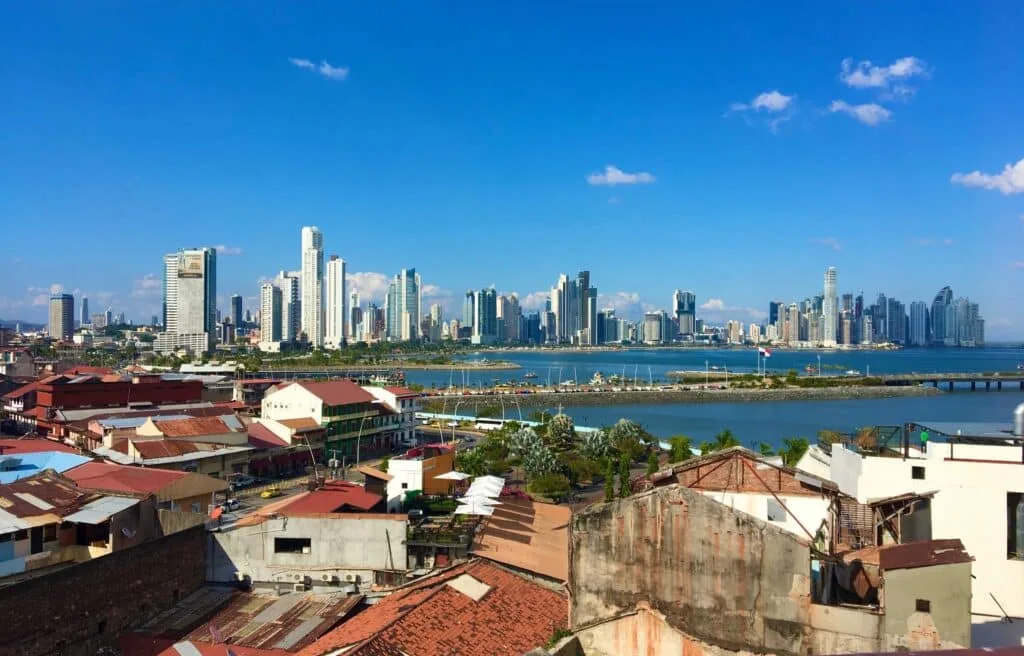
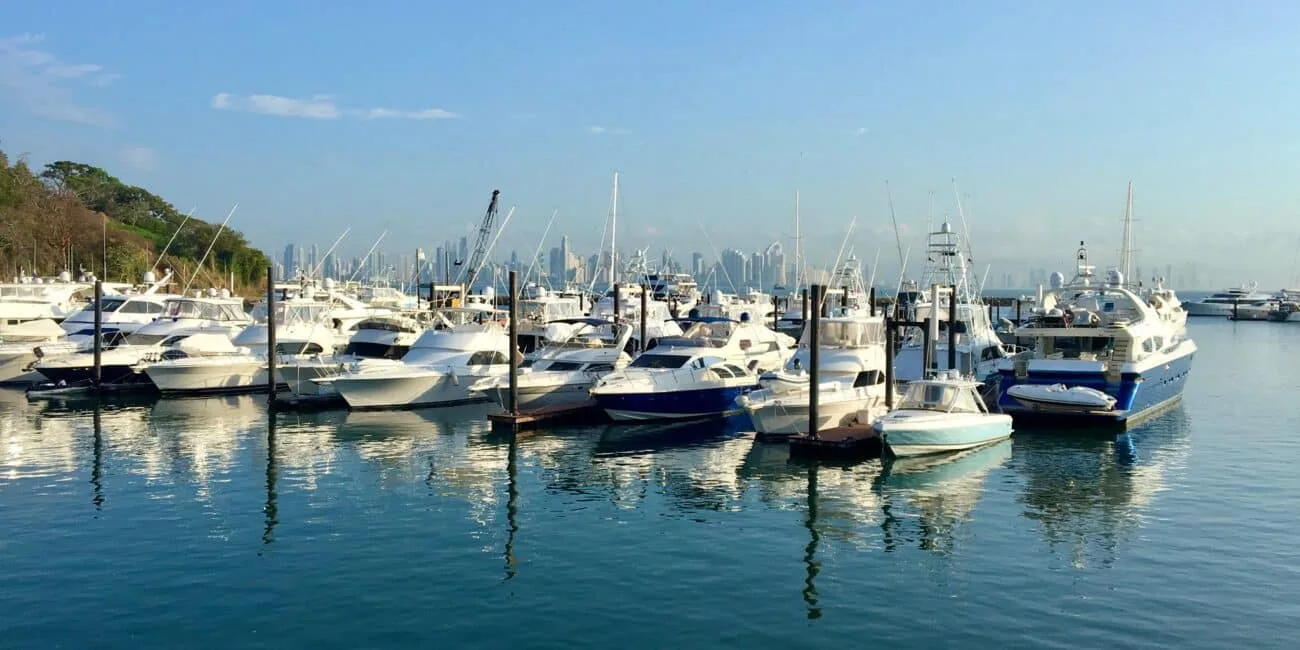
This is also the spot to enjoy sunsets with views also over to the new city high rises as well as the glow over the ocean. Alternatively find yourself a rooftop cocktail bar and watch the show.
After a full day, it's time to check out the city at night. In Casco Viejo, you will be surrounded by lounge bars with stunning views over the water to the skyscraper buildings of the newer city and beach areas. If you’re staying in the more modern part of town, many hotels have equally amazing private rooftop terraces.
We ate at La Estrella - Barra Local which was delicious and would highly recommend but reserve a table.
Train to the Caribbean, Historic Forts & Agua Clara
Morning: Train Journey Panama City (Corozal Station) to Colon
The train journey from Panama City to Colon has got mixed reviews on line but our personal experience was really positive. Clearly, this is not the Orient Express and yes it is full of tourists, but it's a unique and relaxing journey, taking a couple of hours.
Here’s how we organized the trip, what we enjoyed and the practical details to help you plan your own first visit.
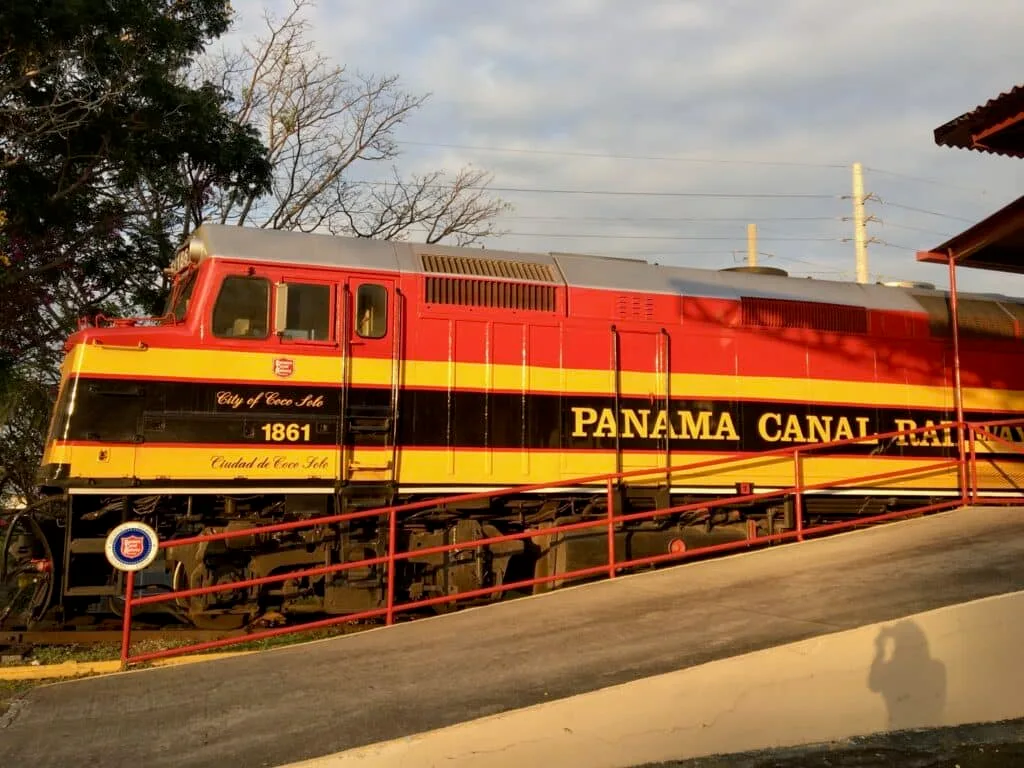
Panama Train Ride
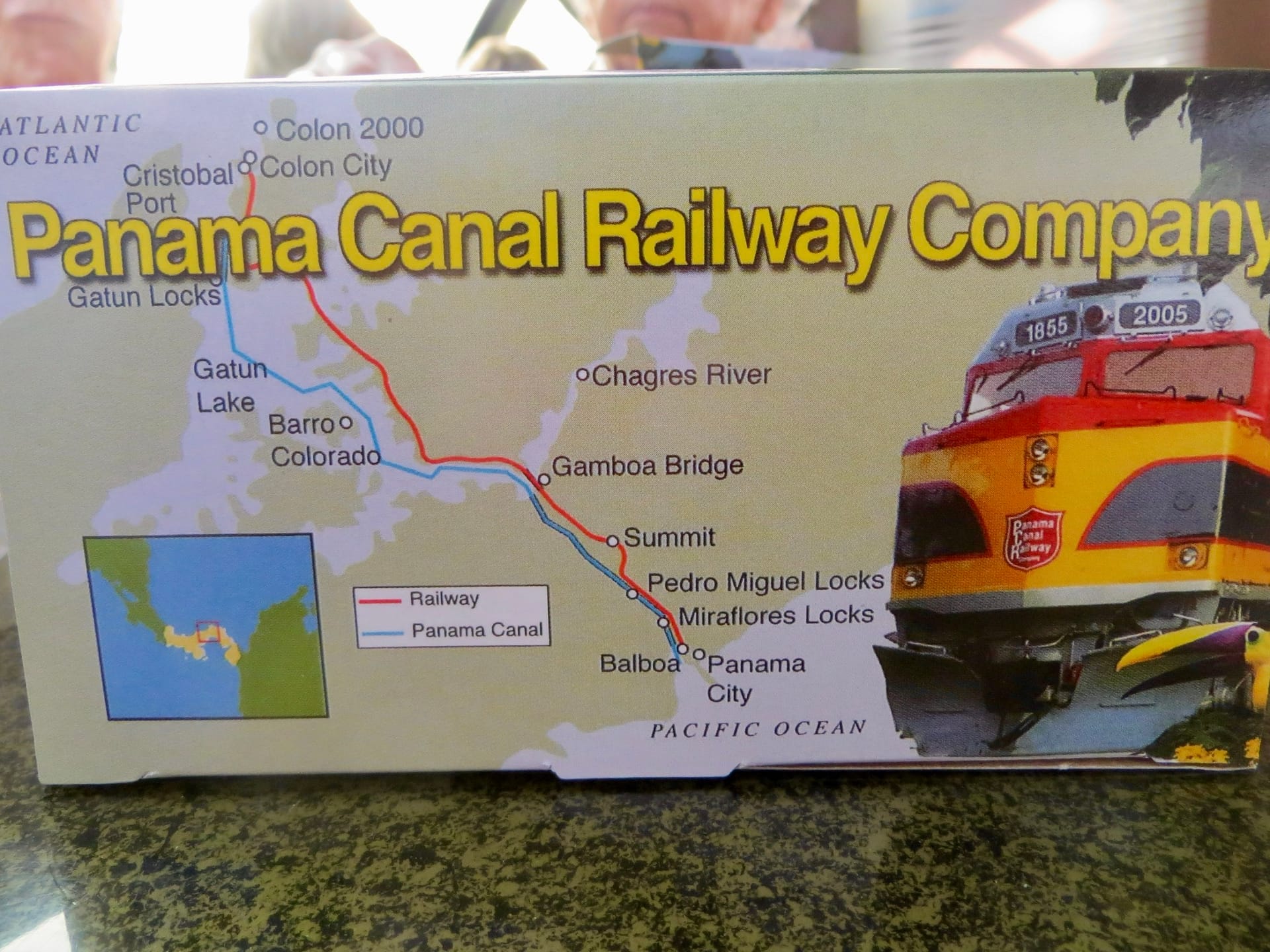
The route (shown above on our souvenir snack box) shows how we traveled pretty much right next to the canal leaving Panama City Corozal Station. It's quite surreal seeing these huge ships next to you and reminded me of a similar sight when on a bus between Alexandria and Cairo in Egypt.
After the Miraflores and Pedro Miguel Locks the tracks shift a little and ultimately you pass over Gatun Lake into Colon City. We had organized a guide on arrival, and also transport back to Panama City via a stop at one of the locks.
Fort San Lorenzo and Portobelo National Park
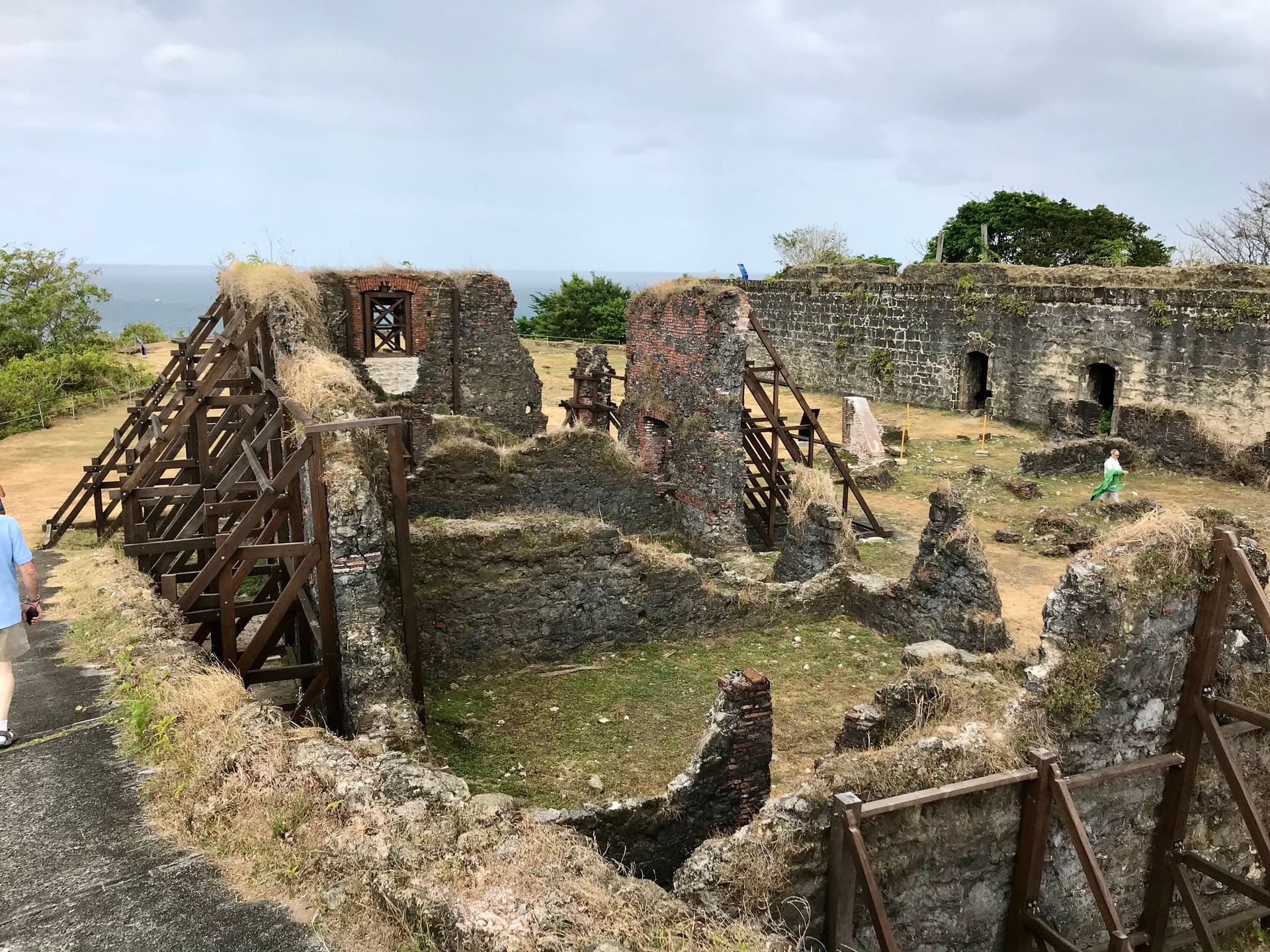
This is a complete change from Day 1. In fact, after disembarking from the train, the tranquility when we arrived at Fort San Lorenzo was a surprise. We were able to wander through the well preserved remains from this 17th century defense system - a UNESCO heritage site - at our leisure. I was surprised to learn that this was built from coral blocks (similar to what we saw in Cadiz, Spain) and it's really high up over the bay!
Soaking in views over the Caribbean waters below while standing next to original cannons, I wondered how different this headland must have been back in the day of daring pirates and competing armadas. Between Henry (Captain) Morgan and Sir Francis Drake, there must have been a lot of action in and around these waters.
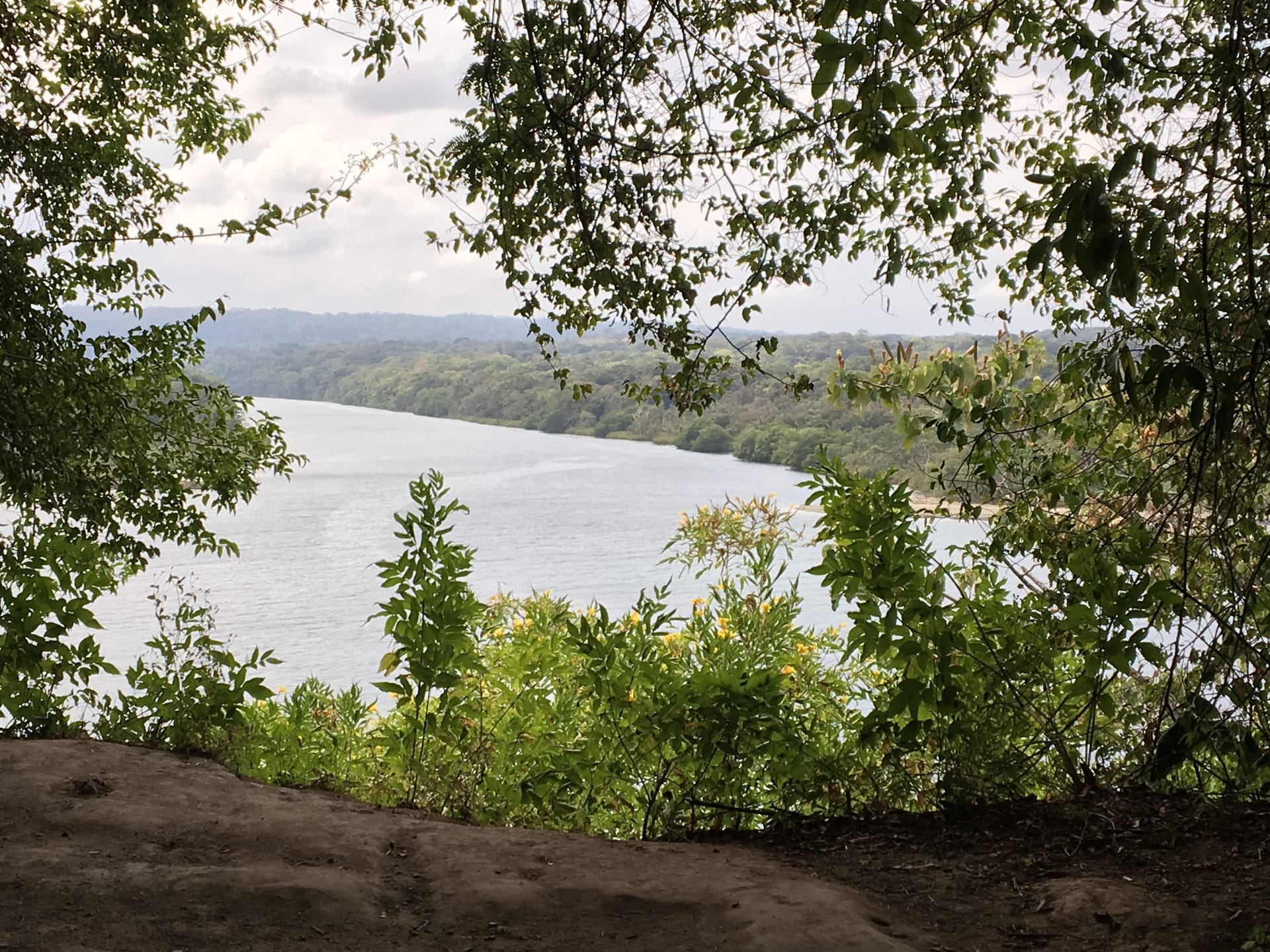
Continue on to Portobelo where we had a short stop although in my view there was less here to see, but it was fine to wander around for 20 minutes or so before we headed for lunch.
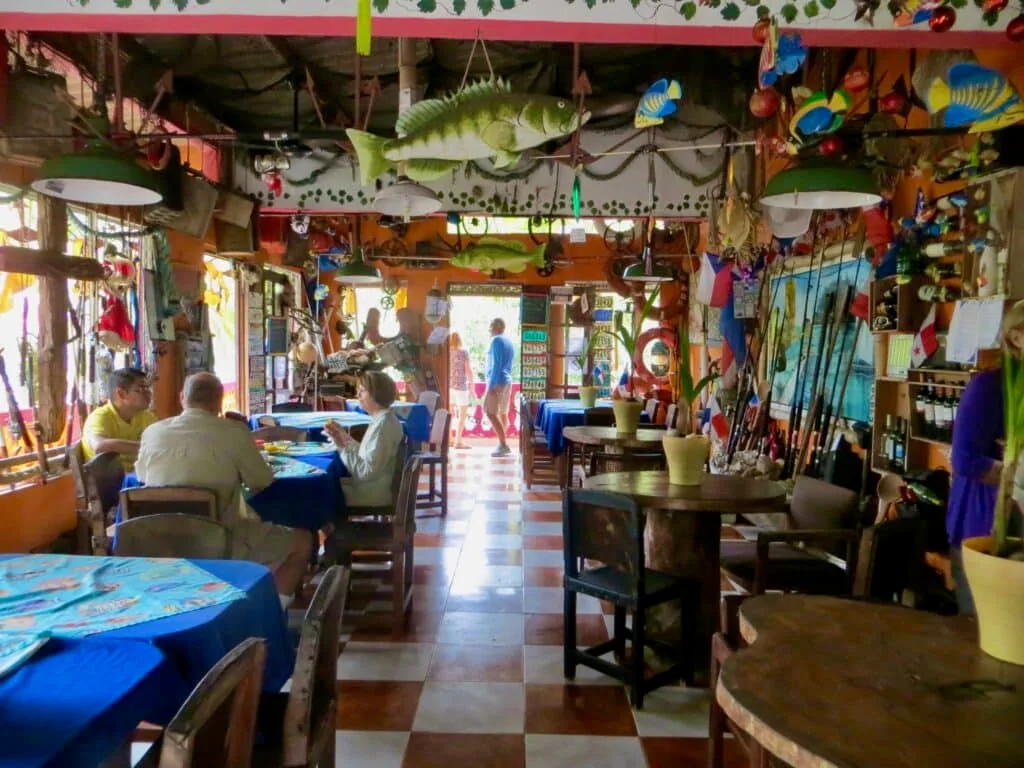
If you can, stop at Casa Congo, a seafood restaurant on the water. It's got an over the top marine decor but the food and atmosphere was party like, and we had a hearty lunch after all our morning walking.
AFTERNOON : Return by Car to Panama (with Stop at Locks)
Our final stop of the afternoon was at Agua Clara. There is a fee to enter which is $5 up to $10 (Oct 2026) and it's open until 5pm.
Back in town, we were still full from lunch so skipped dinner and enjoyed a stroll around our hotel area, checking out the panama hats and other local shops before an early night ahead of our partial canal sail tomorrow.
A Boat Trip Through the Panama Canal
Partial Sail On Panama Canal
Having had our appetites whetted over the previous 2 days, we were excited to get onto the canal ourselves. It's really the only way to personally appreciate its sheer scale and importance to Panama and the world. Not only is this one of top places to visit in Panama, it’s a world top destination!
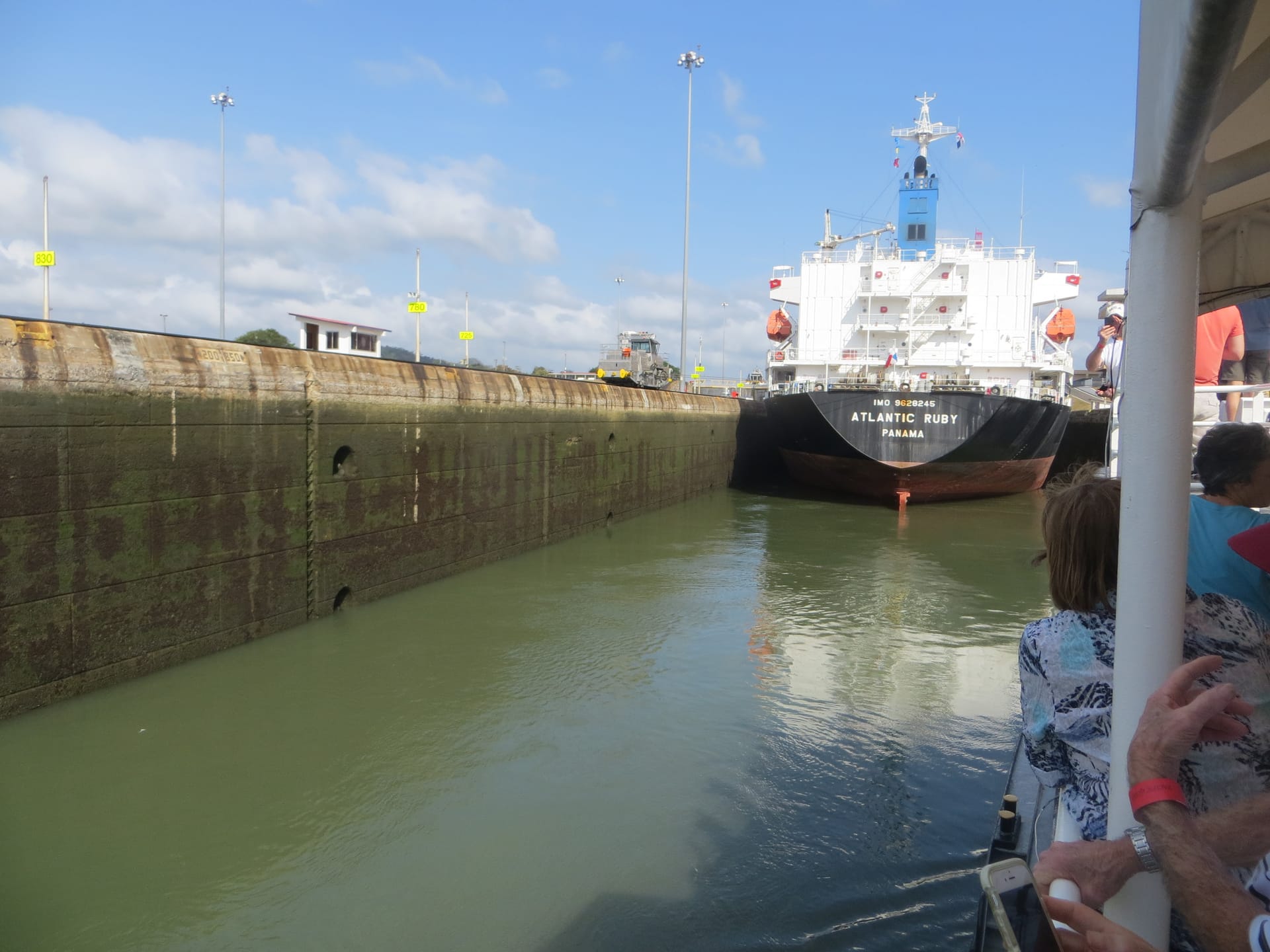
The point of embarkation is actually in Gamboa and it was about a 40 minute drive from town. Our vessel was spacious although full but we had no problem finding spots to sit, or snap our photos at each lock.
We went through 2 locks - Pedro Miguel and Miraflores. What struck me is how quickly these huge volumes of water rise and fall. We also got pretty close to these gigantic ships and saw flags from all over the world. Truly an international highway of commerce.
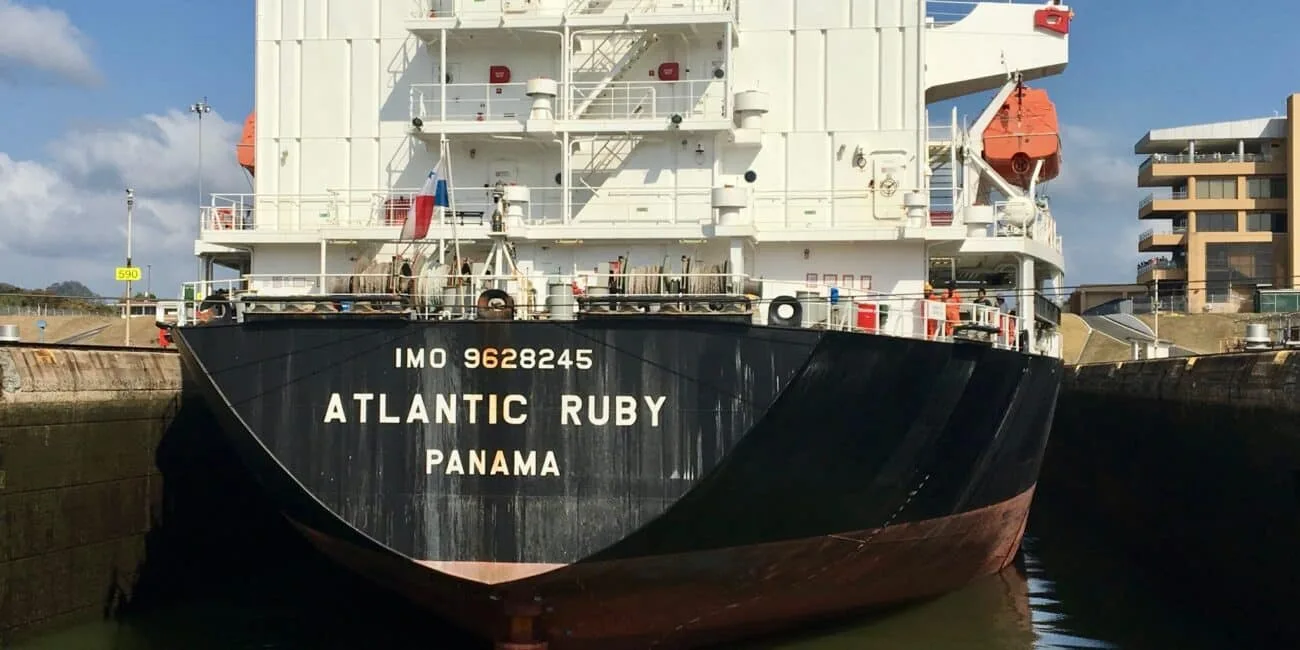
You can buy drinks on board and a lunch is provided. It wasn't bad, although i didn't eat much as I'm often a bit seasick (the cruise was totally smooth!). The cruise boats follow other ships so you'll notice my photos are of the same vessel as it was in front of us the entire time we were sailing.
Overall, this is around a 6 hour activity, so once you are dropped back off at your hotel (or find your own way back if you're coming independently), it's time to lounge by the pool and soak up the sunset with a cocktail.
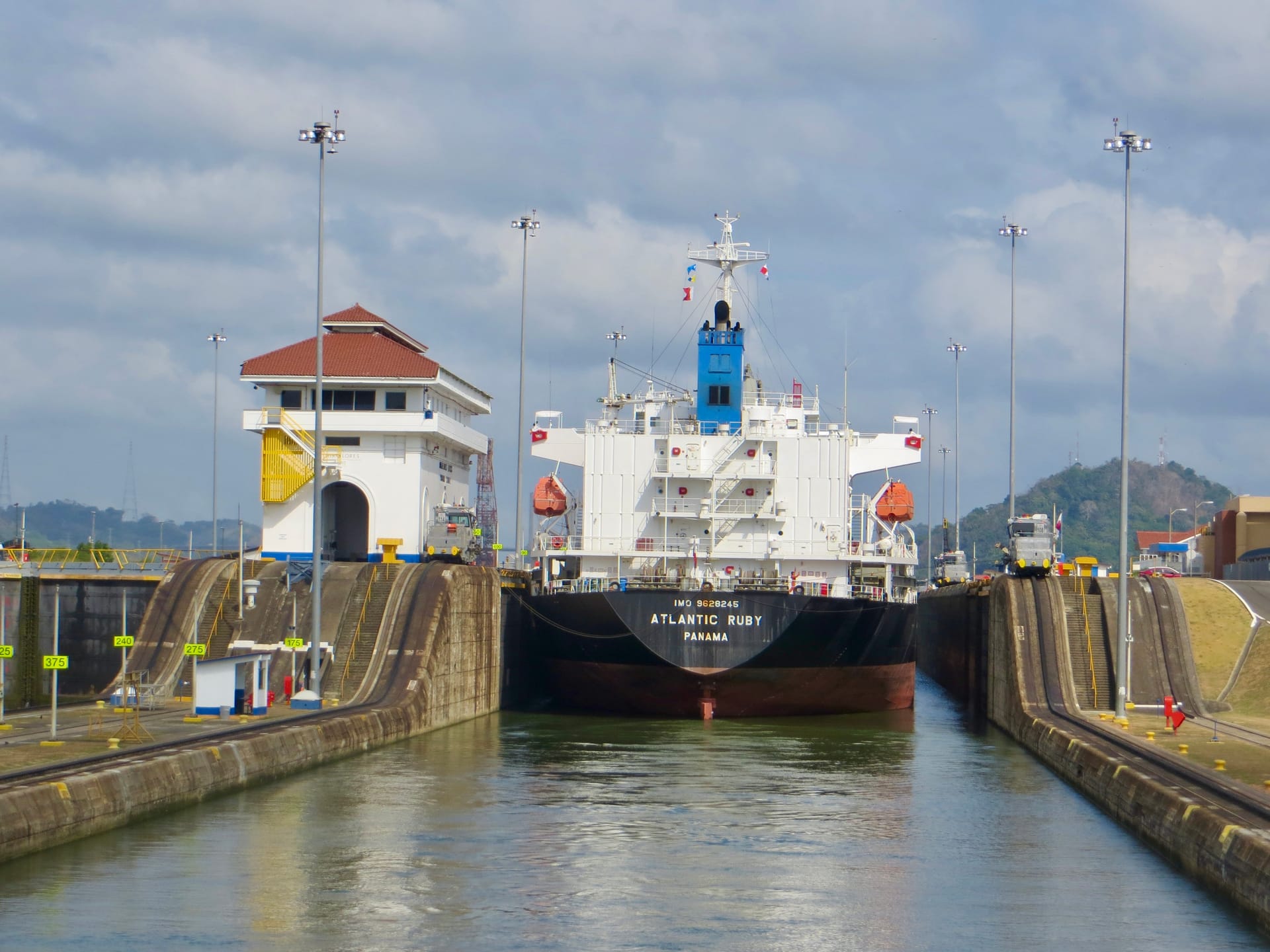
➡️ Check Availability of this popular Panama Canal Transit Cruise Tour.
It’s incredible to imagine that if the canal wasn’t here, ships would have to sail around South America or transfer goods across by rail or road to get from A to B. Think about the difference between a journey of 48 miles (77km) vs. about 8,000 miles (12,875km).
Our Tip: Don't Forget to Bring a Hat! There is shade on the boat, but standing on the open deck you're in the sun.
River Canoe Journey and an Emberá Village Visit
Paddle the Chagres River
This is a real contrast to spending time in the city, or around the water. Panama’s Chagres National Park is an easy day trip although best done via an organised tour as the logistics require some planning.
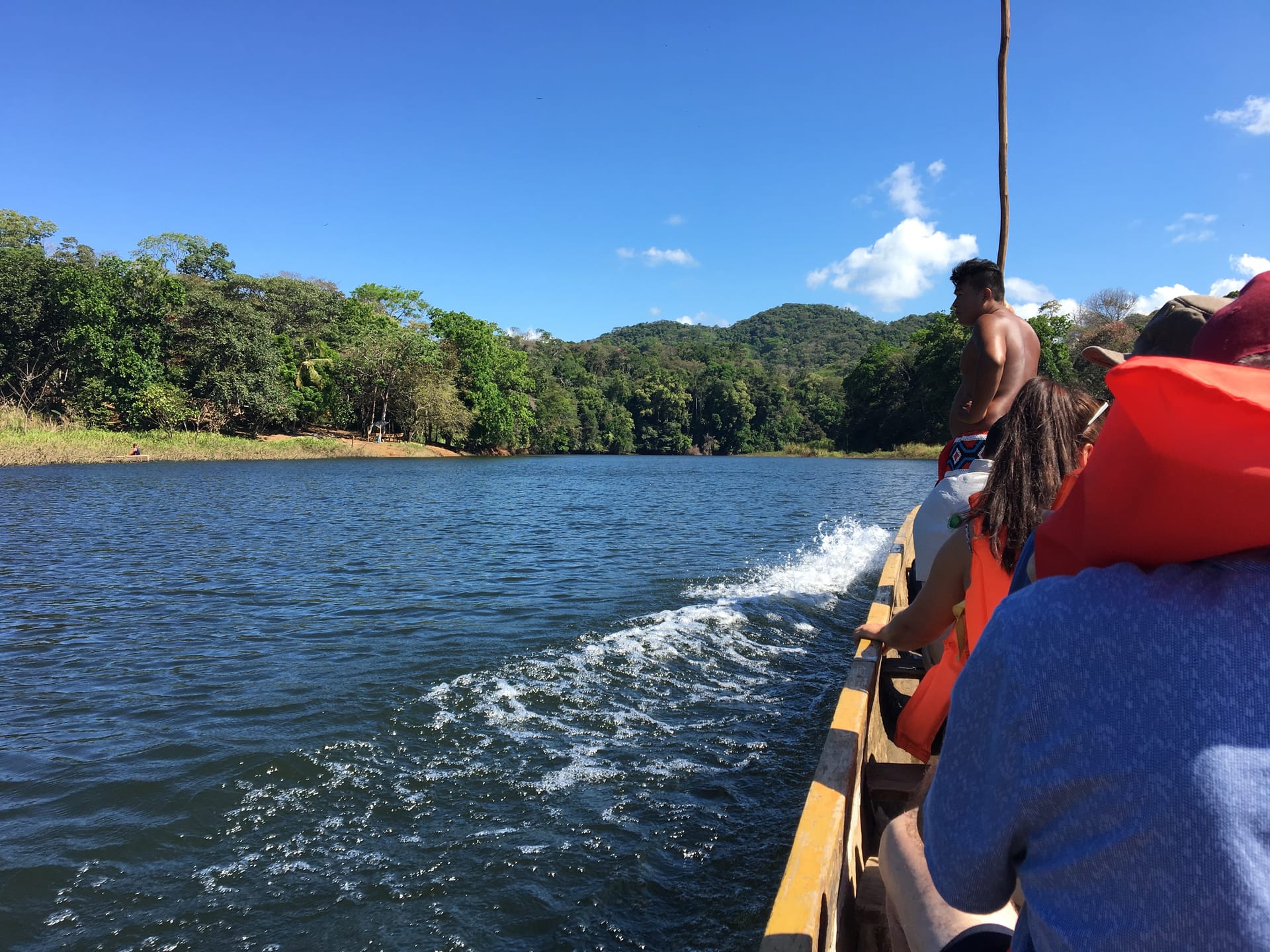
With a guide and driver, we travelled through outskirts of town and several small villages towards Lake Alajuela, stopping for some delicious fresh pineapple and watermelon at a roadside stand. Once, at the riverside, we transferred into traditional dug out canoes to travel up the river towards the village.
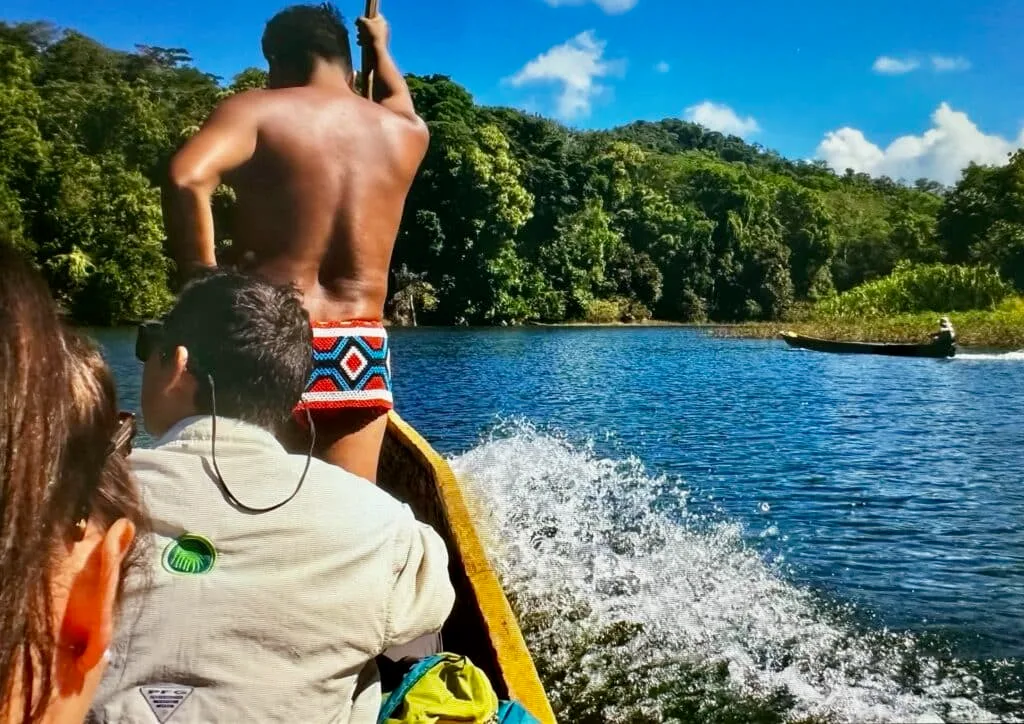
The journey was such fun as we threaded our way through rocks jutting out of lower waters whilst surrounded by thick, lush, green forest growth. Our guides were so skillful and fun – to be honest we had it easy!
At times, the current flowed fast, ebbing and flowing in different directions and then it went calm and was like a pond. On arrival, we pulled onto a pebbled beach and hiked a short distance to an Embera village.
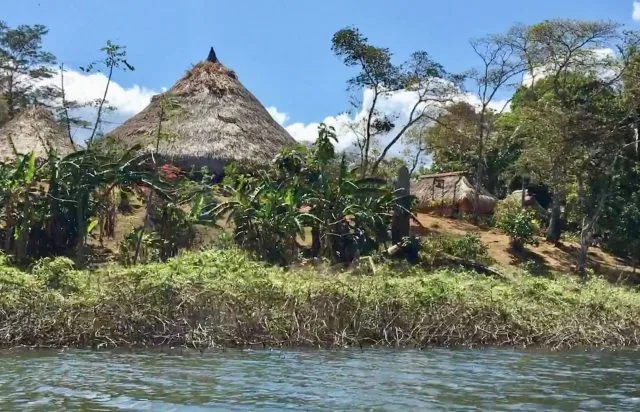
Lunch at the village
This is a popular tour so don’t expect a wilderness experience but we thoroughly enjoyed it. We were guided up to the main village and then had a tour around with one of the leaders.
Housing was simple, open and each family had a small garden. There was activity everywhere from children at school to artisans making unique pieces from wood mainly. Being able to visit the school and meet the children was a real highlight. It was a basic set up, but vibrant!
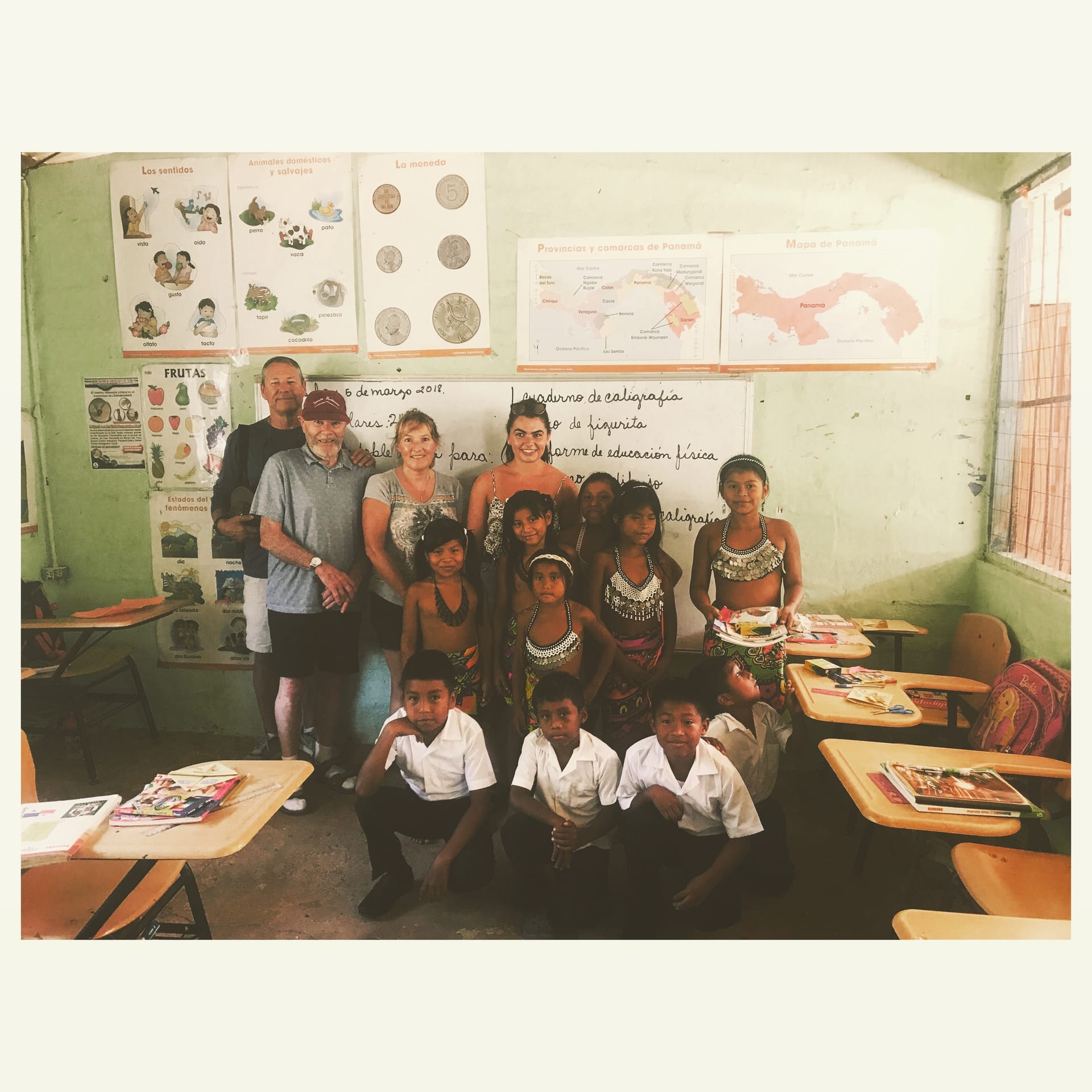
Following our time meeting villagers, we were invited to join other guests for a traditional lunch. Everything was home caught or home grown – fish, vegetables, drinks and it was delicious.
To work off all that food we were then entertained by a group of village musicians and encouraged to dance. It was pretty humid and hot so definitely worked off a few of the calories from lunch before we headed back to the canoe and shore of the lake.
AFTERNOON: Explore Chagres National Park
As we drove back from the lake to Panama City we spent more time in this national park. This is also a great spot for hiking, white water rafting as well as enjoying the abundant wildlife from jaguars, monkeys to the national bird of Panama – the harpy eagle!
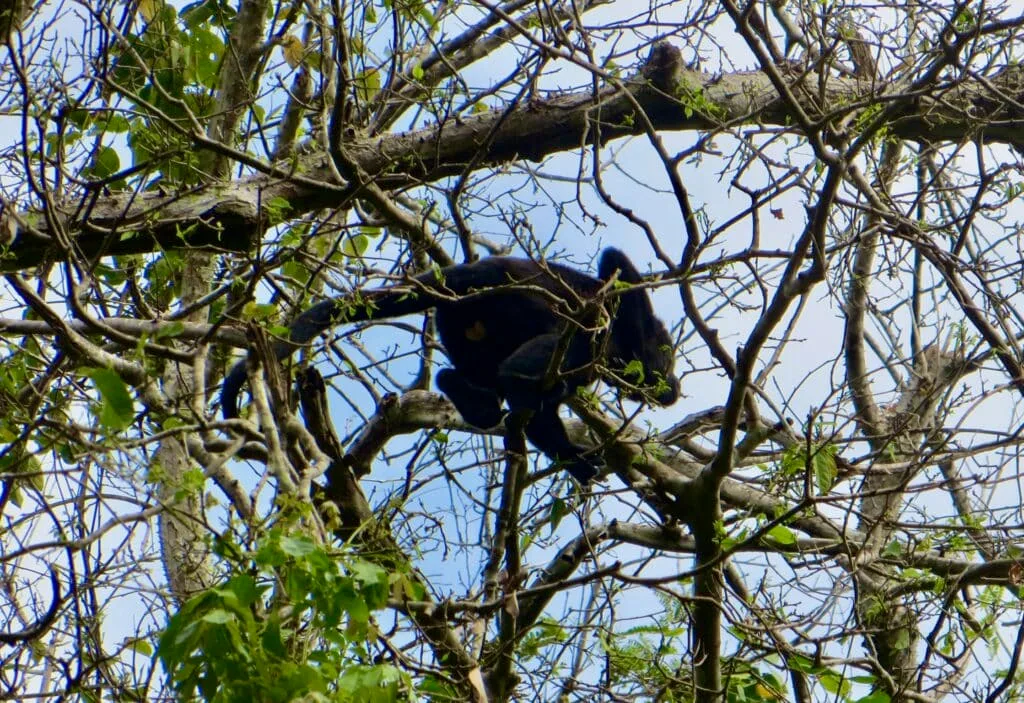
We only saw the monkeys out of this list but we did have an encounter with a sloth! It was up a tree and it’s not the best photograph but as predictable as ever, it didn’t really move, just hung around 🙂
Such a contrast between the chattering noisy monkeys and the silent sloths – guess they make it work!
Souvenir Shopping Before Departure
Find a Perfect Panama Hat
Panama City has its fair share of shopping! For us ‘browsers’ it’s great fun strolling around in the early evening, checking out the array of goods on offer. Why not treat yourself to a hand made Panama Hat? The fun fact here is that the Panama Hat actually originated in Ecuador and is still made there in large numbers.
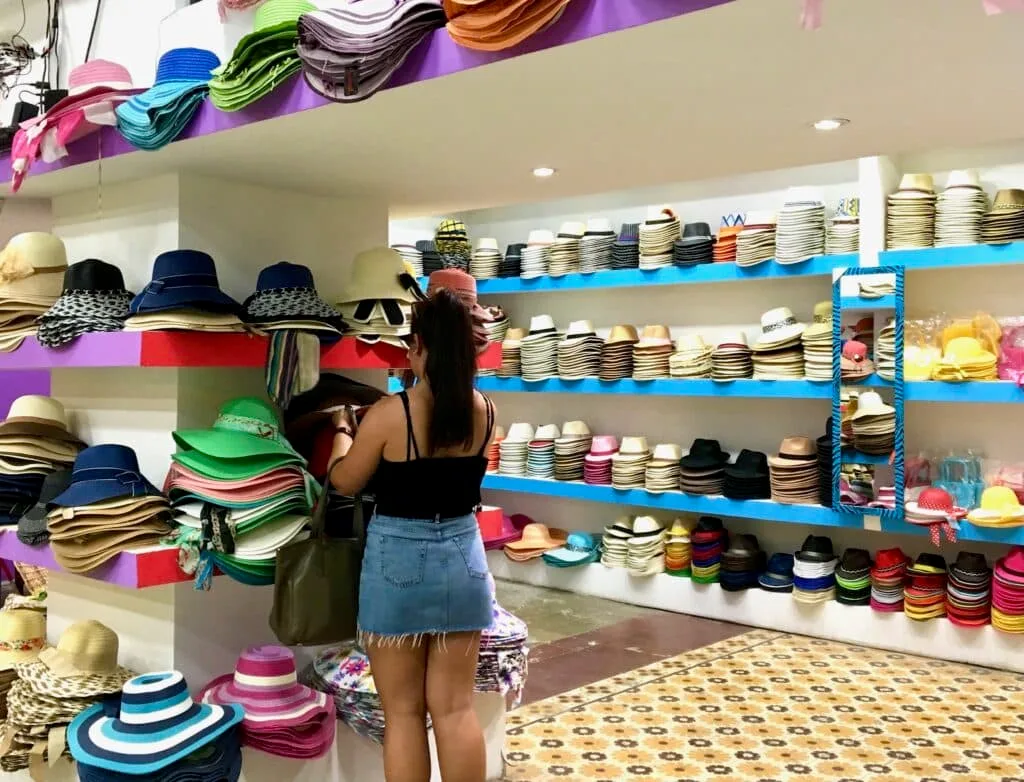
But, a US President was seen wearing such a hat in Panama and the name just stuck! This doesn’t change the fun experience of searching for the perfect hat for you as your Panama souvenir 🙂
It's an easy transfer back to the airport, but check with your hotel on timings, if your flight times are during rush hour as traffic does get heavy.
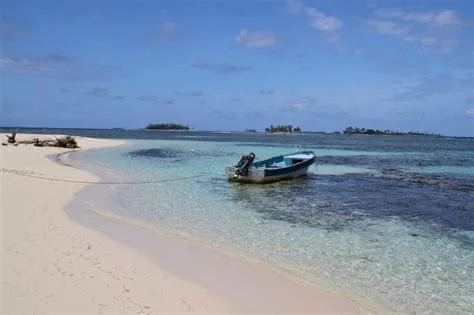
If you have more time, do consider extending your stay by heading to the San Blas Islands to soak up the sun. The picture postcard perfect sands of Guna Yala are world class and that’s saying something! Although we didn't do this it's firmly on our next visit list.
This San Blas Islands site has all the resources to help you decide how to get here.
Quick Booking Links
- Flights & Accommodation: Expedia & Booking.com
- Local Tours: Get Your Guide & Viator
- Travel Insurance: Visitors Coverage
- Airport Transfers: Welcome Transfers
Planning Your Panama City Trip
How to get to Panama City
For 5 days in Panama City you really want to fly there directly to Tocumen International Airport. Numerous flights arrive daily from Houston, Miami, and Atlanta. There are a few also from Madrid, Paris, Istanbul and Amsterdam if you’re looking to fly direct from a European hub.
We flew non stop with Copa Airlines from Tampa (USA) which is a short flight of 3 hours!
Onward transport links into the heart of Panama City from the airport are private transfer, taxi, metro or bus. It’s a 22 kilometres / 13.7 mile journey and takes 30 minutes on average.
🎒 Our Tip: We strongly suggest you book an airport transfer. Other options are not easy with luggage especially if you’re tired after a long flight as they take a good bit longer. Explore Panama City Airport to City transfer options is a useful resource site.
Getting Around
The metro system in Panama City is excellent for getting around more of the metropolitan independently. There are 2 main lines. Simply buy a metro card at any of the stations and off you go! They don’t accept cash so get your card before you board. Single trip costs range from 35 cents to 50 cents, depending on the line you take.
Uber is the other easy reliable way to navigate the city. It’s cheap and safe. Your hotel or Air B&B Host can advise if there are other options based on your itinerary and location.
Where to Stay in Panama City
Casco Viejo (the old city) is home to many of Panama’s historical sights. Because of that and only having 5 days, it’s where we chose to stay. The rooftop pool area was an oasis at the end of a busy day and breakfast fueled us for the day ahead.
You want to be close by the top places to visit in Panama City and be able to easily connect to the canal, train etc. The Central Hotel is in the heart of the Independence Plaza district and only 600 or so feet from the Presidential Palace.
If you are looking to stay in the more modern part of Panama city, there are numerous apartments and hotels. So we suggest first decide your itinerary and how you plan to get around, then select a location that’s right for you. Pop over to booking.com to check the different modern city options.
What to Pack for a Trip to Panama
The climate is tropical in Panama so be prepared for hot, sticky, humid weather. Pack light clothes that are ideally breathable. Loose dresses, skorts and t-shirts will work well for our Panama City Itinerary and for sailing on the Panama Canal.
You’ll find more tips on our free Panama Travel Planning & Packing Checklist.
Panama City Geography
You’re going to be near the equator when you visit Panama. It sits just 9 degrees above it!
As a country, it’s quite small but growing fast! The country’s population is c. 4.6 million in Panama and 1.2 million live in the capital. It’s small in comparison to many major cities of the world.
But don’t be put off by the size, as its geography means you can take a vacation here and in the course of a day, travel between the Caribbean Sea and the Pacific Ocean.
A Quick History Lesson
Panama City was founded back in 1519. Before long its unique location solidified it as a main highway for 16th/17th century inter-continent transportation. It perhaps was a bit like one of the huge Amazon fulfillment centers today. Goods came in from the region – Costa Rica, Peru, Nicaragua, Ecuador etc, and were shipped on from Panama City elsewhere.
Like Istanbul, Panama City was a crossroads of trade. In particular, silver from America and gold from Peru were brought through Panama and on to Spain after the Spanish took control.
The city grew from simple huts to more elaborate stone homes and buildings as wealth increased. But a Welsh pirate by the name of Captain Morgan (Henry Morgan) attacked Panama in 1671 (yes, the same name as the rum 🙂
Sadly, Panama City was decimated and abandoned for many years with the capital moving elsewhere. Work continues now to reconstruct more of the original old city to its former splendor but it remains one of the top places to visit in Panama for most visitors.
The Panama Canal’s Arrival
Turmoil continued over the centuries, bringing many changes to the country. Finally, in 1903, Panama got its independence, and a year later the building of the incredible Panama Canal kicked off. A failed French attempt resulted in the US taking over. For $352 million (in the day), the canal was fully operational in 1914.
It was handed back to Panama on 31 December 1999.
So, now let’s delve into a few helpful basics as you plan a trip to Panama.
FAQs
How many days do you need in Panama City?
Four days gives you time to absorb the city highlights, sail on the Canal, experience cultural spots like Chagres National Park and also relax around your hotel pool.
Where is the best area to stay in Panama City for a first visit?
Casco Viejo is ideal for a first visit to Panama City with walkable sights and easy transportation links. If you prefer more modern accommodation, maybe check out a glass skyscraper with ocean views.
Do you need a rental car in Panama City?
No. Driving is not straightforward and for a few days you can easily see top sights by walking, booking Uber or taxi transfers and using guided excursions.
When is the best time to visit Panama City?
In our experience January to April is the best time to visit with sunny, warm days. Be aware that hurricane season runs from June to early November.
Ready to Explore?
If you enjoy the cosmopolitan feel of a capital city, but love one that is compact enough to get to know a little over a short stay, we feel this destination is a perfect option. The bonus is how easy it is to explore way beyond downtown!
Central America capitals like Panama City are perhaps sometimes overlooked in favor of larger Central & South American neighbours like Buenos Aires or Mexico City.
However, with a small country capital, it’s easier to travel around the country and absorb more of the culture in a shorter period of time. Panama City offers an enticing mix of centuries old culture along with its engineering marvels.
Costa Rica is another Central American gem and perfect for a first-time visit. Check out our Costa Rica Road Trip Itinerary to start planning.

