
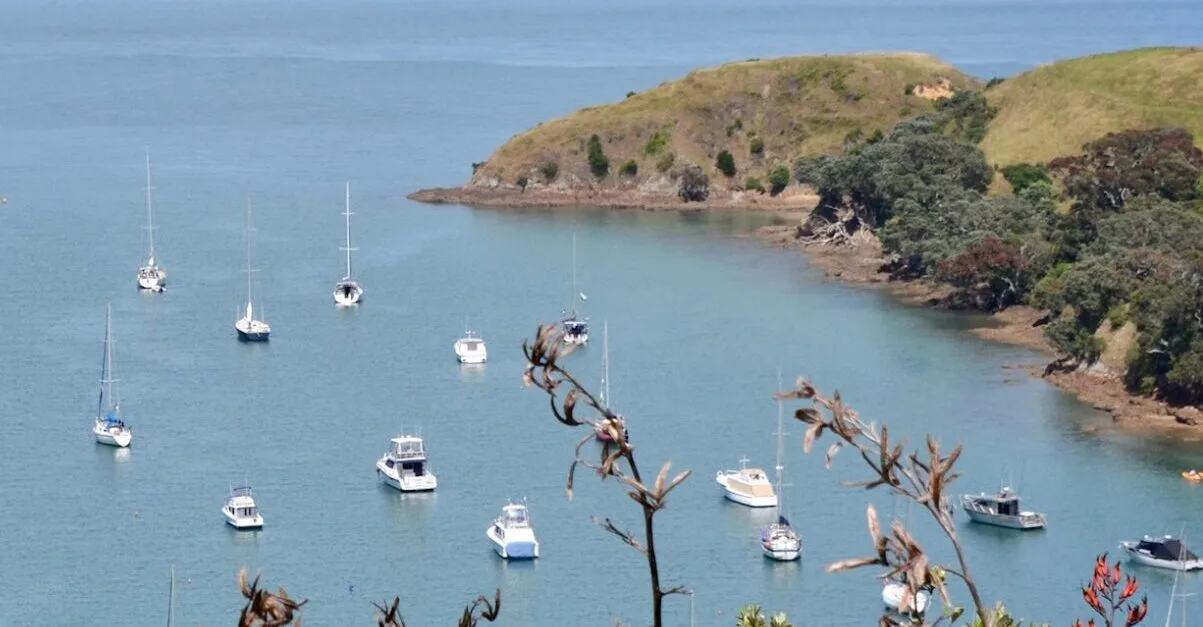
Quick Booking Links
- Flights & Accommodation: Expedia & Booking.com
- Local Tours: Get Your Guide & Viator
- Travel Insurance: Visitors Coverage
- Airport Transfers: Welcome Transfers
Planning a New Zealand road trip for the first time and wondering how long you really need, what driving is like, and which stops are actually worth your time?
This relaxed 3 week New Zealand self-drive itinerary is designed for couples and independent midlife travelers who enjoy dramatic scenery, coastal walks, wine regions, and memorable small hotels and bed-and-breakfast stays.
After exploring both islands by car, we found the perfect balance between iconic highlights and quieter, less touristy regions, including Marlborough wine country, Abel Tasman National Park, Kaikoura, Milford Sound, and Queenstown.
In this guide, we share our exact route, driving times, realistic pacing, where to stay, and what we’d do differently.
New Zealand Road Trip: Quick Overview
Here’s a short summary of our 3 weeks in New Zealand self-drive itinerary. We planned this trip mid December to early January because generally the weather is more comfortable for driving and walking around.
We rented a standard car rather than a camper van (RV) because it was more relaxing to drive a smaller vehicle and we wanted to experience local boutique hotels and coastal bed and breakfast hospitality.
Our New Zealand Road Trip Route
This route is great for midlife travellers who enjoy slowing down and stopping as the moment grabs you between nightly accommodation. Overall, you’ll drive around 1500 miles (2,400km), likely more, as there are so many hard to resist short detours to tempt us.
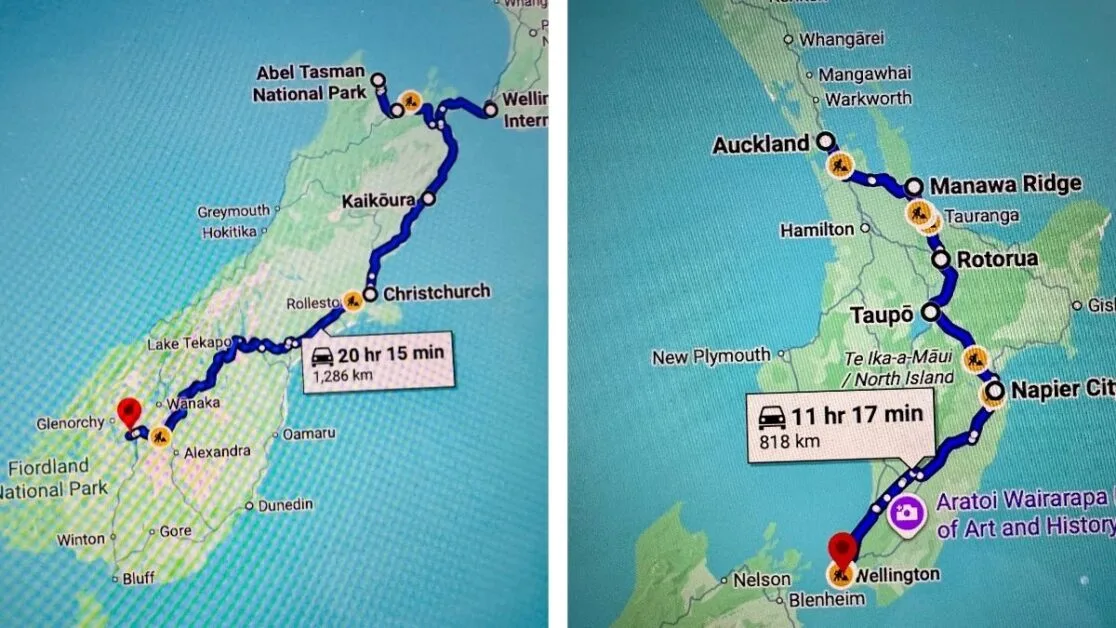
We flew between North and South Islands (Wellington to Nelson), picking up a second vehicle at the airport. If you’d prefer a water crossing, take the ferry between the islands. It takes around 3-3.5 hours.
3 Week New Zealand Itinerary at a Glance
Days 1-3: Arrive & Explore Auckland
Days 4-6: Coromandel Peninsula – coastal hike and relax
Day 7-8: Rotorua and Hawkes’ Bay Wineries
Days 9-11: Abel Tasman National Park – Kayak, Walks, Nelson
Day 12-15: Malborough Wine Region, Blenheim
Day 16: Overnight in Christchurch
Day 17-20: Queenstown – Central Otago, Milford Sound, Lake Wanaka
🎒Our Tip: If you are coming to New Zealand from Australia, you might want to reverse this route, ending in Auckland to fly home.
Days 1–3: Auckland and Waiheke Island
Why Start Your New Zealand Road Trip in Auckland?
Auckland is New Zealand’s main international flight gateway, making it the easiest and most practical place to begin a self-drive itinerary.
The good news is that when you finally land in Auckland, it’s only around 20km to the city center. A taxi is the easiest option to get from the airport or prebook with Welcome Pickups.
🎒Our Tip: Collect your hire car on Day 3 as you don’t need it in town.
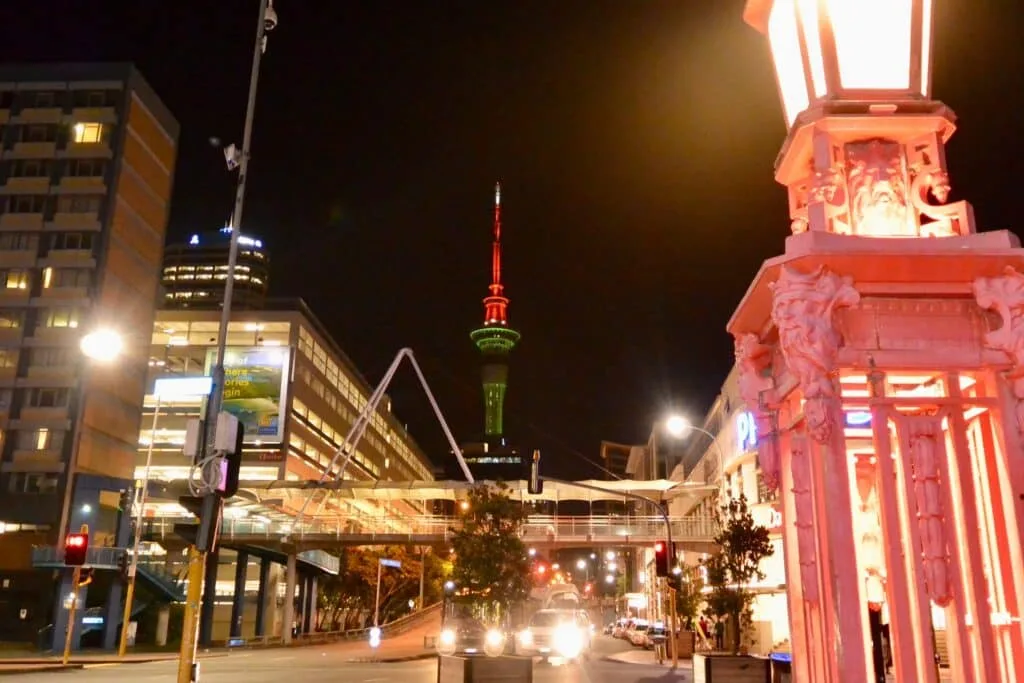
After a long flight, we needed to get some steps in and Auckland was perfect for stretching our legs! The compact downtown area makes it easy to explore at your own pace while recovering from jet lag.
Enjoy a light meal early evening on your first night. We ate at Dr Rudis which has a brewery and rooftop bar, then meandered through Queens Street as we tried to stay awake until 9pm 🙂
Best Things To Do in Auckland
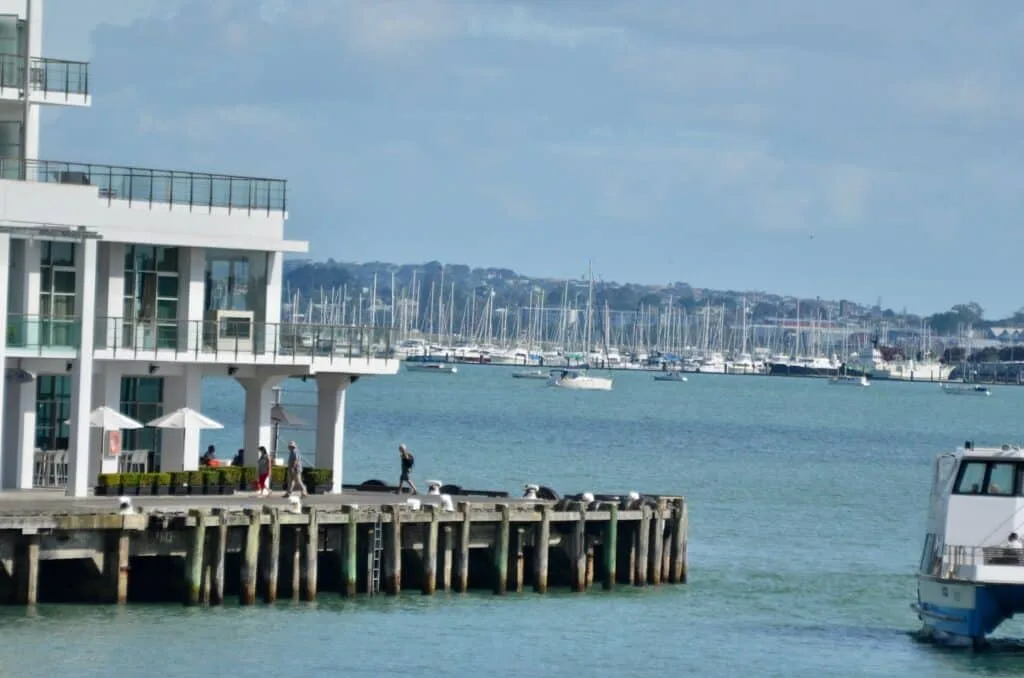
The Viaduct Harbour area was ideal for easing into New Zealand life, with waterfront walks, plenty of places to stop for coffee, lunch & dinner.
Walk a little further to Auckland Museum for a quality introduction to Māori and regional culture. The museum also runs a rooftop tour with panoramic views across the city skyline and harbour.
The route to the museum passes through a 200 acre public park called the ‘Domain’ – formed as a result of volcanic activity over 140,000 years ago!
If you prefer a guided introduction to your first stop in New Zealand, this private half-day Auckland tour includes transport and panoramic views from the Sky Tower.
Is Waiheke Island Worth Visiting?
We hopped aboard a local ferry to Waiheke Island on our second morning. It’s an easy day trip from Auckland and in my view more interesting than just cruising around the city harbour.
The 40 mins or so ferry ride offers impressive coastal views and sitting on the open deck, the breeze wiped away my cobwebs.
Once you’re on Waiheke, we checked out a beach, and then walked around town, enjoying lunch at a local cafe. It really is a beautiful way to unwind after a long flight and before starting your New Zealand drive.
Once back in Auckland, explore Mission Bay for dinner, where you can find top rated yet casual restaurants along the shoreline.
Where To Stay in Auckland
Stay close to Viaduct Harbour for an easy stroll around the main sights. You don’t need to collect your hire car until Day 3 of the trip. We recommend:
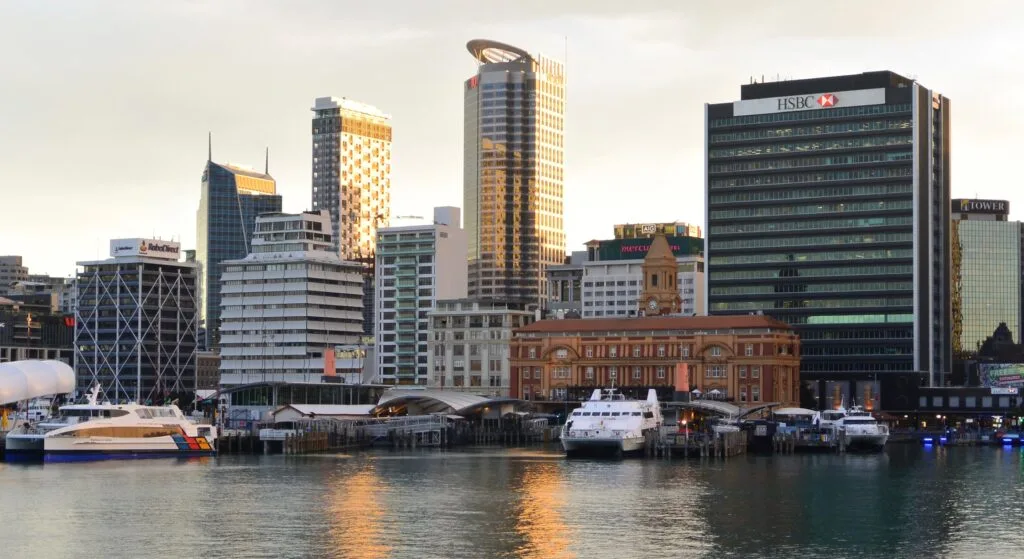
Sofitel Auckland Viaduct Harbour – excellent waterfront location and walkability to city sights. We stayed here and found it very comfortable.
Park Hyatt Auckland – a luxury stay with highly rated dining.
How Long To Stay Before Driving?
After 3 nights – two full days – adjusting to New Zealand time, we collected our rental car and headed towards Coromandel Peninsula. This is one of the North Island’s most scenic coastal drives, famous for its rugged coastline trails.
Days 4–6: Coromandel Peninsula Coastal Drive
Driving Distance: 88 miles (142 km)
Driving Time: 2 hours on SH1 and SH2 (highways); no stops
Overnight: Waihi, Coromandel
We pre-booked our hire car with Hertz – it was a short walk from our hotel to the depot. For more options on renting a car in New Zealand DiscoverCars is a useful site.
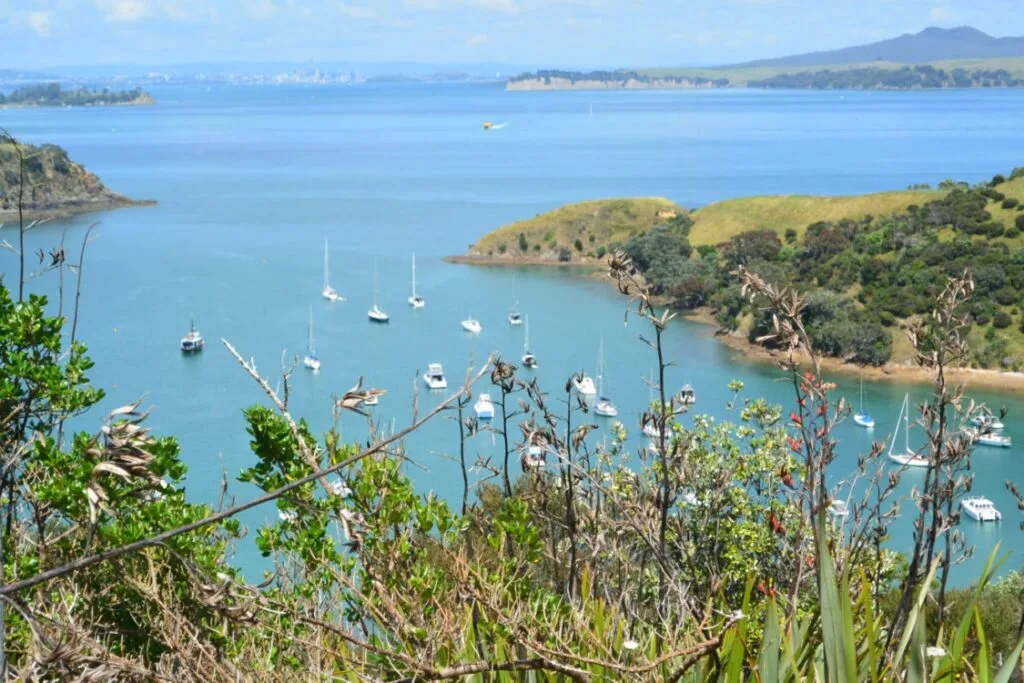
Driving the scenic (slower) route from Papakura that goes along the Firth of Thames is a must with such incredible views that were everything I’d imaged.
We visited during New Zealand’s summer peak season, although the beaches and walking trails we spent time at still felt surprisingly uncrowded.
From Kawakawa Bay, the road climbed into forested hills before narrowing into winding coastal roads through the Coromandel mountains. By late afternoon, we arrived at Manawa Ridge on a grassy cliff overlooking Waihi Beach.
Best Coastal Walks and Beaches
The best way to experience Coromandel is on foot, whether that means a short coastal walk or a full day hike.
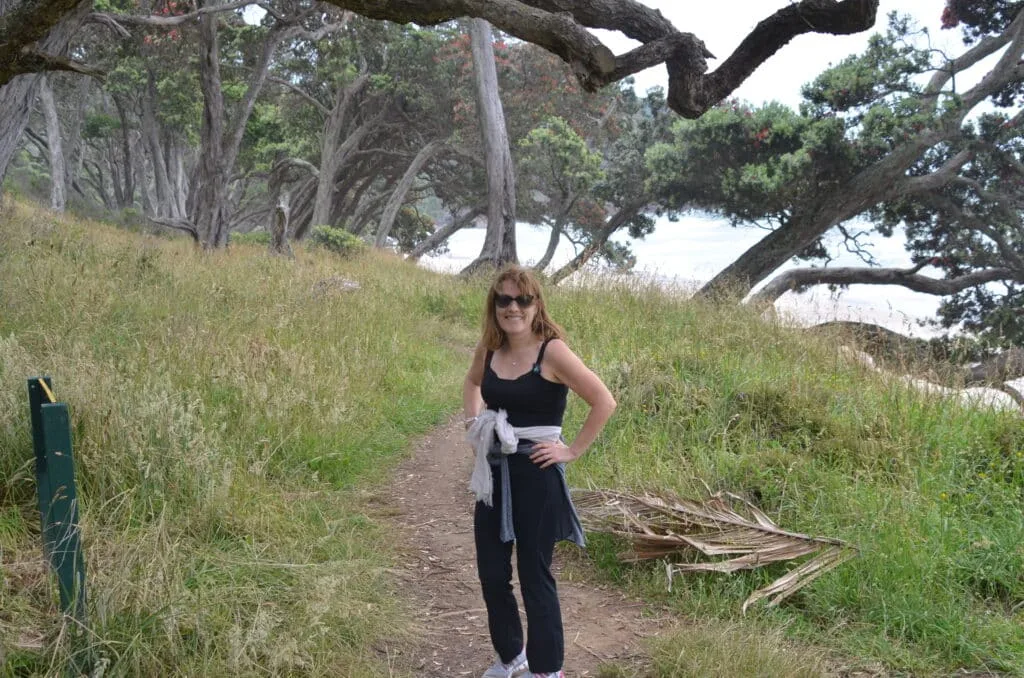
Pack a picnic lunch and follow the pathways along the coast, enjoying the freshest of coastal air. We didn’t come here to try and tick off boxes of ‘must see’ sights.
We came here for the quieter side of New Zealand — coastal trails, open landscapes, and long stretches where we barely passed another person.
Is Hot Water Beach Worth It?
Hot Water Beach is a tourist pull because in low tide you can get your spade out and dig. The hole then fills up with hot water as there is a thermal feed below.
We asked our hosts their view of whether we should make the drive to this beach the morning we left, and they suggested it was not worth the drive, and a bit hyped via Instagram these days. Also, be prepared for very slow traffic as it’s definitely on the tourist trail these days!
Where To Stay in Coromandel
Manawa Ridge Luxury Guest House, Waihi – we spent Christmas here and it was perfect, on a wild bluff above Waihi Beach, only 3 luxury suites. We had the freshest of food, drank too much wine from their underground cellar (with a hobbit like garden entrance) and hosts were like friends, kind, fun and really helpful.
Why We Loved This Region
This peninsula is wild ruggedness at its best. At times, the rugged coastline and winding roads reminded me of parts of my native Scotland — although thankfully much warmer. It was hard to believe this was only a couple of hours drive from the buzz of Auckland.
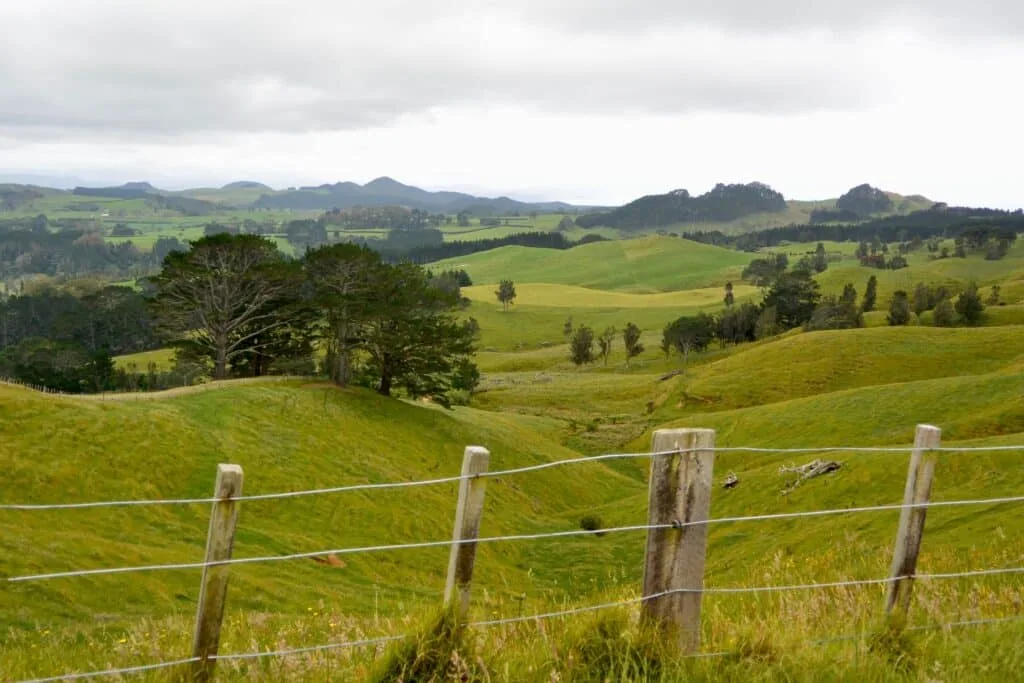
Periodically, we saw an old hut or buildings that dotted the landscape away from the sea. We learned these were from the gold mining rush in Waihi in the late 1800s. Today, it’s more appealing to those who want a quieter lifestyle and to that agenda, it absolutely delivered!
Driving distances in Coromandel may look short on a map, but winding coastal roads make journeys slower than expected. We quickly learned not to over-plan our days in New Zealand.
Days 7-8: Rotorua and Hawke’s Bay
Driving Distance: 88 miles (142 km)
Driving Time: 2 hours to Rotorua, + 3 hours via Taupo to Napier
Overnight: Hawke’s Bay
As you continue south, there are several worthwhile stops across the North Island. We combined Rotorua and Hawke’s Bay into one overnight section of the trip, although places like Tongariro National Park deserve an additional 1–2 days if you plan to hike there.
Rotorua for Geothermal Landscapes and Maori Culture
My parents came here decades before me and loved the culture and geology, so it was definitely going to be our first stop of the day.
If you arrive early and it’s sunny, make a quick stop at Rotorua Lake but only if there are not lines of tour buses parked up. Expect a lot of activities on the lake, and large tour groups.
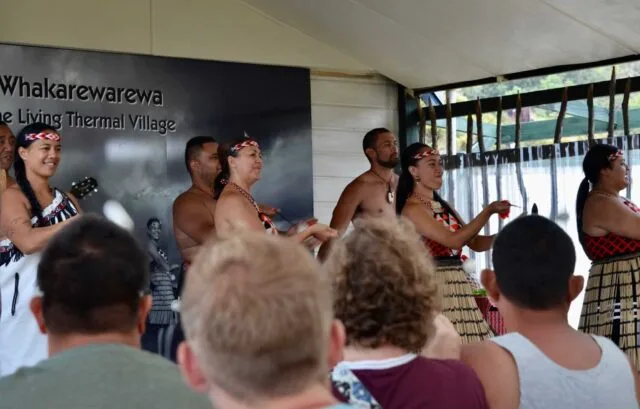
If you have visited the geo-thermal areas of Iceland, you’ll know what to expect from the geysers. But the culture of New Zealand is totally unique so we took a tour to learn more about how this site was revered by local Maori peoples as well as viewing the geysers.
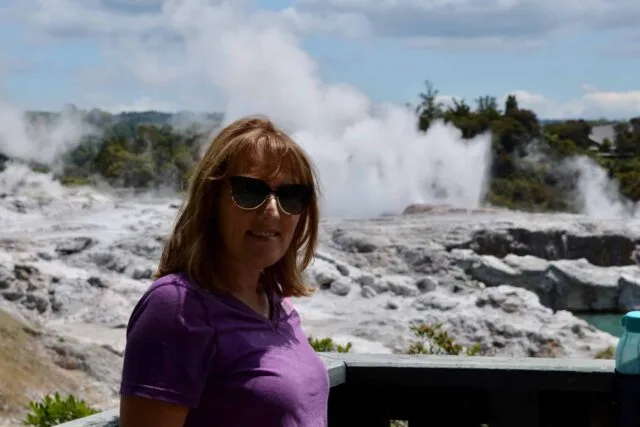
Talking with them was enthralling both from a historical perspective and they also performed traditional dances at the end. If you have experienced the All Blacks ‘The Haka’ in person before a rugby game – you know what we mean. Amazing passion and energy.
Be ready for the strong sulphur scent around many of the geothermal areas.
Napier and Hawke’s Bay Wine Region
From Rotorua, we continued south-east through Taupo toward Napier and the Hawke’s Bay wine region, a 3 hour drive, arriving around 3pm. An Art Deco delight, the town is located in a celebrated wine making region of the North Island.
We pre-booked onto a tour and I would recommend this because you can visit 2-3 different vineyards and no-one needs to worry about driving.
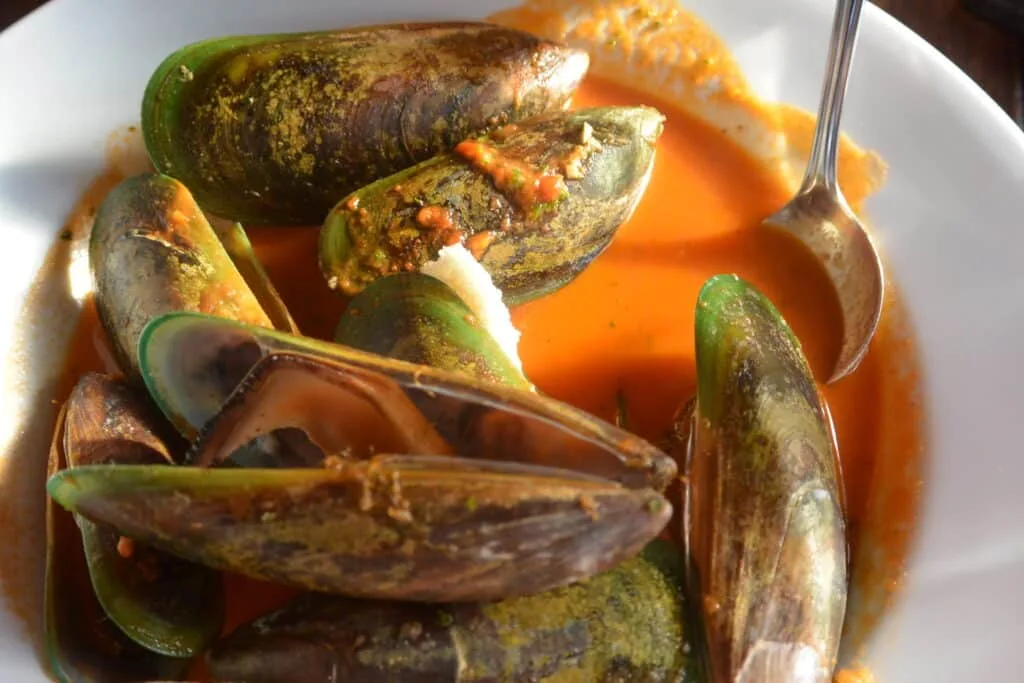
It easy to incorporate a late afternoon/early dinner while you are wine tasting as many wineries offer local dishes from green mussels, to local cheese, fruits and dips, all carefully selected to accompany their wines.
Tongariro Crossing for Serious Hikers
Situated in a World UNESCO Heritage Park this 12 mile (19.4km) trek is ranked in the Top 10 of Day Treks and crosses over an active volcano.
Here’s Tongararia National Park’s Site online booking form with more information for visitors.
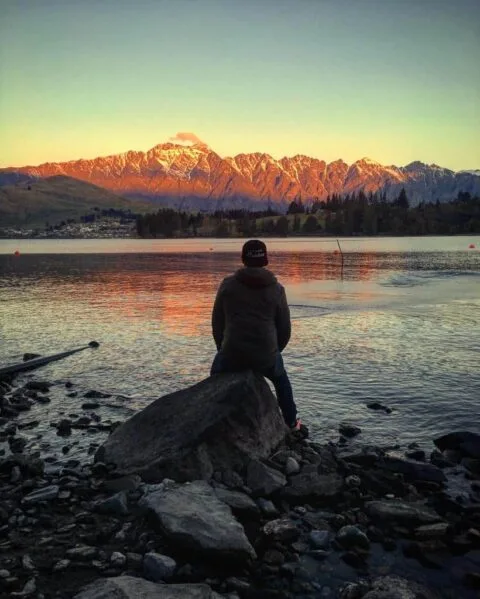
We simply didn’t have time to include this experience, but my nephew did when he spent 6 months in New Zealand. It’s on our list for a future visit.
Day 9: Wellington & Flight to Nelson, South Island
Driving Distance: 195 miles (315 km)
Driving Time: 4 hours to Rotorua +
Overnight: Abel Tasman
We had a little time downtown before catching an early evening flight to Nelson, on the South Island and so we explored downtown.
Wellington felt creative, relaxed, and compact — a contrast to larger capital cities – refreshingly unpretentious. Even with only a few hours before our flight south, we enjoyed wandering the café-lined streets and waterfront areas. Wellington has a strong café culture and some excellent independent coffee shop.
Fueled with more than usual caffeine levels, we set off and walked around the main streets, taking in the city life. It felt very bohemian and artsy although we didn’t do more than scratch the surface.
Unfortunately, we had a flight to catch so it was a fleeting visit (like I said, we had to prioritize our stops!).
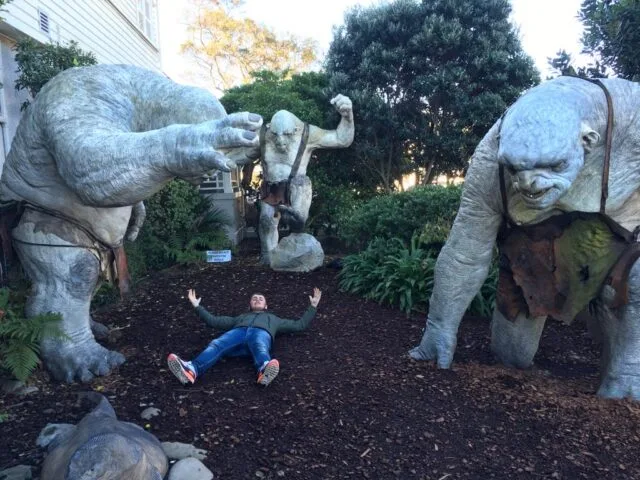
But if you have more time, stay a night here, and make a stop off at the Weta Workshop for all things Lord of the Rings!
Flying to New Zealand’s South Island
Why We Chose To Fly Instead of The Ferry Crossing
We flew between islands because we were tight on time – 3 weeks is barely long enough in New Zealand!
However, our flight to Nelson from Wellington was quite an experience! Having tasted some great wines in Napier we were advised by folks “ in the know”, that we would be able to take a crate (12 bottles) with us onto the flight.
At the airport, we checked in our bags, and an agent took a cursory glance at our wines. We were expecting him to ask us to re-package them, or insist we left them, but no. It was, “Got any good wines in here? Let’s have a look 🙂
In the departure lounge, we sat and waited. Then a small turbo prop plane taxied up and parked right outside the window we were sat next to. A wheelbarrow was pulled up next to the plane and a few bags unloaded. Then came our call to board – the pilot popped his head into the waiting room to say hello!
Our plane had 4 seats across and perhaps 14 rows. The overhead bins were probably big enough for a coat and a really small backpack. There was no way our wine or bags would fit. “Don’t worry, just hold the wine on your knees. Keep a tight hold while we take off!”
Arriving at Nelson Airport – What To Expect (or Not)!
Forty minutes later, we landed in Nelson, South Island. The pilot offloaded our checked bags into a wheelbarrow cart. Once the bags were at the terminal doorway, he signaled for us to disembark. It was so casual and relaxed!
Wine intact, off we simply walked across the room to the car rental desk. Honestly, five minutes later we were on our way.
Renting a Car on Both Islands
Just a few words about renting a car in New Zealand. It’s very straightforward and if you use a travel company, they will take care of the booking for you.
Rates tend to be higher during December to February as it’s peak season, so you’ll save if you travel in less popular months. Automatic cars can book out quickly during peak summer months, so reserve early if you prefer not to drive manual.
If you decide to keep the car and take the ferry you’ll enjoy the same vehicle for your entire stay.
Remember driving is on the left in New Zealand and there are strict drinking and driving legal limits.
Days 10–13: Abel Tasman National Park and Nelson
Driving Distance: Minimal
Driving Time: 1-2 hours (local wineries)
Overnight: Abel Tasman
Why Abel Tasman Was One of Our Favorite Stops
The smallest of all the national parks in New Zealand, this park has 23,000 hectares of stunning coastline. It’s certainly worth planning to spend a few days here.
Best Things To Do in Abel Tasman National Park
If you are a serious hiker, trek part of the Abel Tasman Coastal track (3-5 days). Kayaking here also gets you into the nooks and crannies that are impossible by road. There are great picnic areas where you can simply pack a lunch, sit, munch and enjoy nature.
Where To Stay Near Abel Tasman
The Resurgence – rated one of the Top 25 eco lodges in the world by National Geographic.
Best Places To Eat in the Area
We had delicious breakfasts at our lodge, and opted for a light lunch out and about during our day’s activities.
The Jelly Fish Restaurant is a great spot to eat within the park for the views alone – the food was good too. We were pleasantly surprised to hear the bagpipes playing here on New Year’s Eve. I was blown away to find out the piper came from the same village in Scotland where I went to primary school.
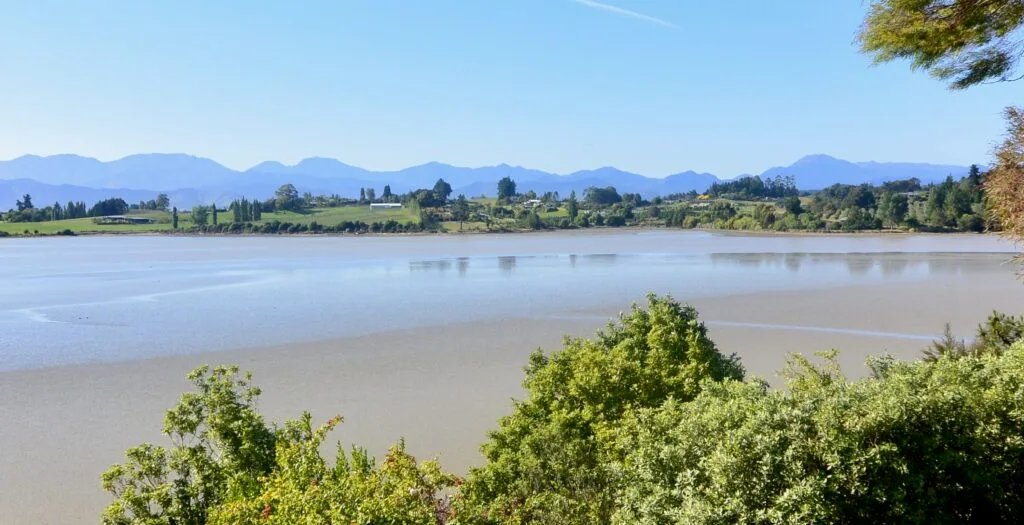
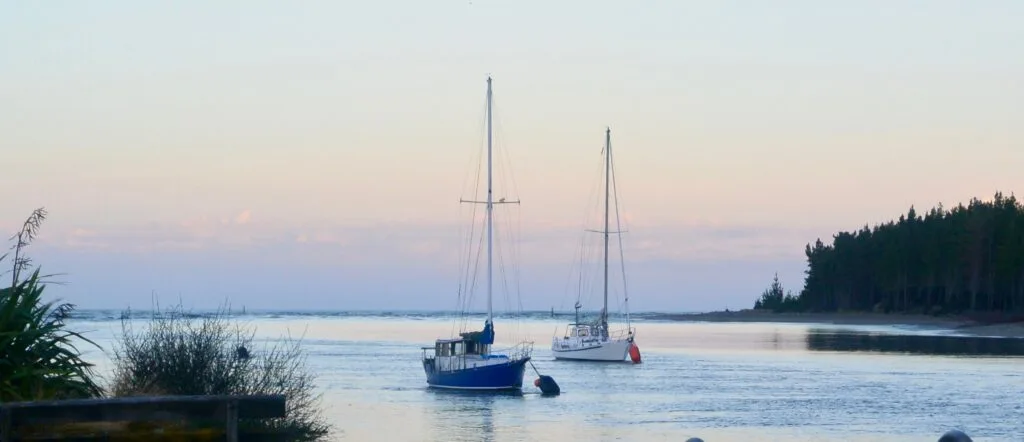
After a night of festivities around the waterfront seeing in the New Year, we had a quiet morning before continuing our New Zealand drive.
Days 12–15: Abel Tasman to Blenheim
Driving Distance: 64 km (little longer via Charlotte Drive)
Driving Time: 1 hour
Overnight: Blenheim
Continue to Blenheim (vs Queen Charlotte Drive)
From Abel Tasman, it was a gentle drive of around 2 hours to Blenheim detouring via Queen Charlotte Drive, which runs from Havelock to Blenheim via Picton and is a very picturesque trip.
Although it’s not possible to drive to Captain Cook’s landing site it’s easy to book a boat trip from here to make the visit.
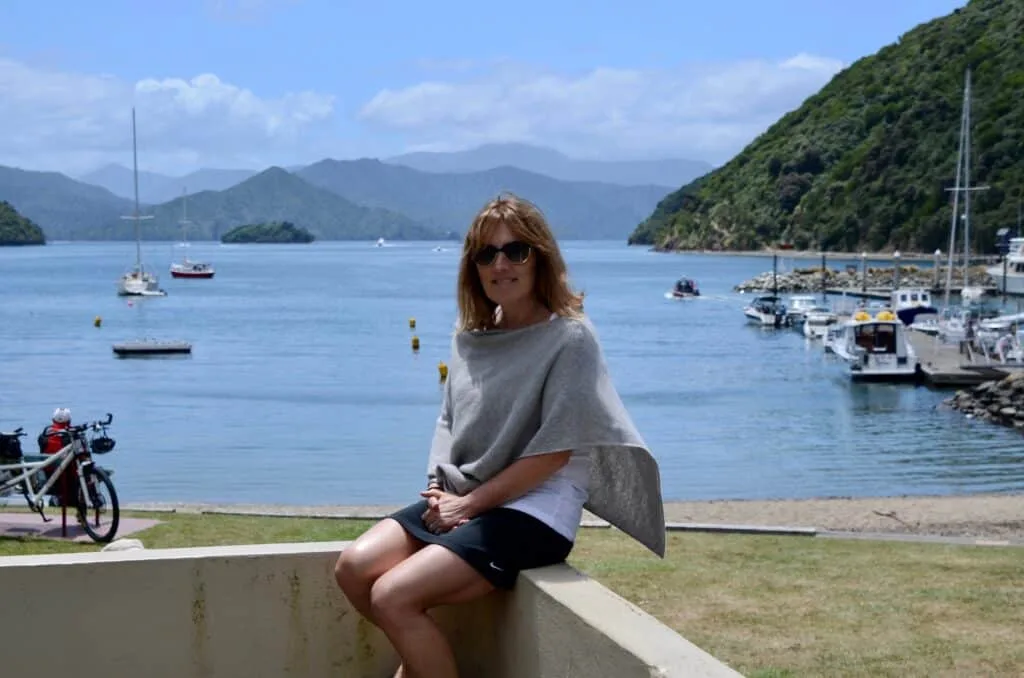
The tour boat takes you to the Meretoto/Ship Cove which was a favourite stopping point for Captain James Cook and where he first landed in 1770. It is also an important Maori site and was a landing point for Polynesian sailors in past centuries.
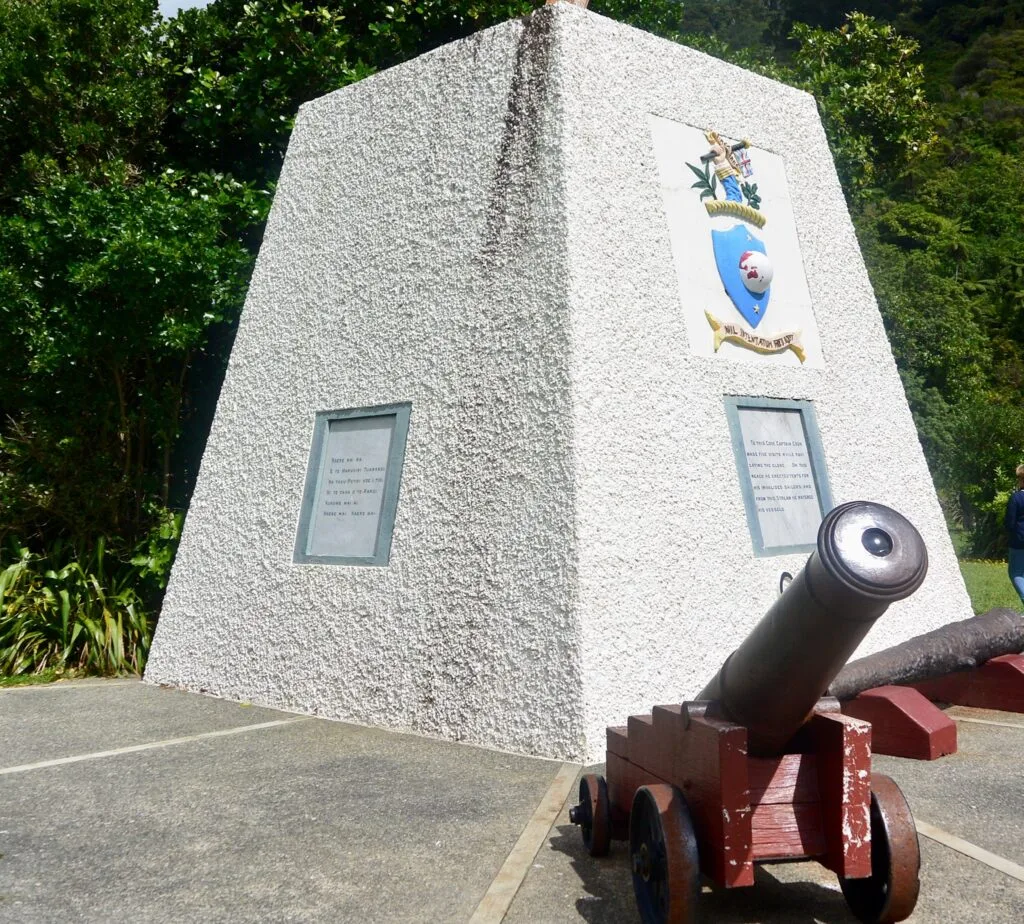
This area is also inviting for short hikes and the weather was perfect for being outdoors. There’s not a huge amount to see at the actual landing site other than this granite feature, but it’s part of history, and the boat ride was scenic.
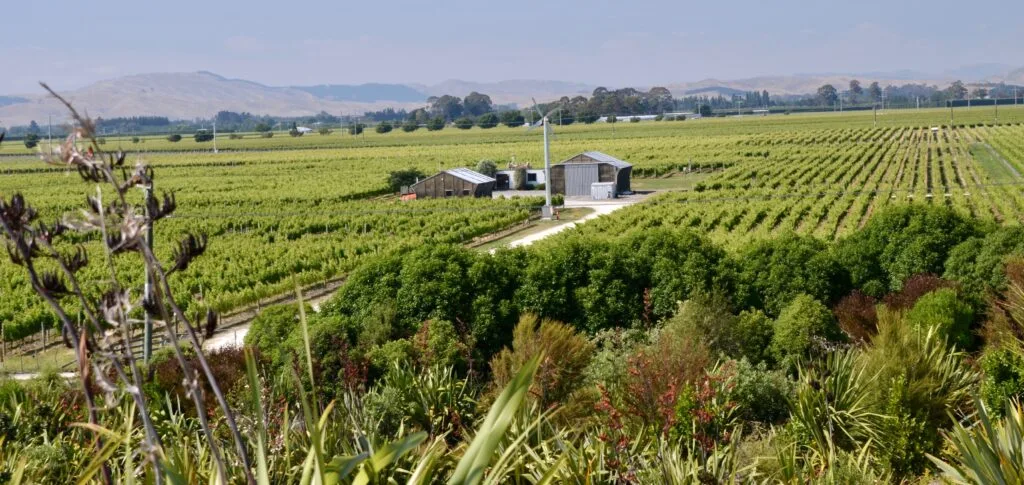
Back in the car, as we got closer to Blenheim and the Wairau Valley, vineyard signs started appearing. Green lush farming and wine growing landscapes filled in around us. Which to visit first is probably your biggest challenge 🙂
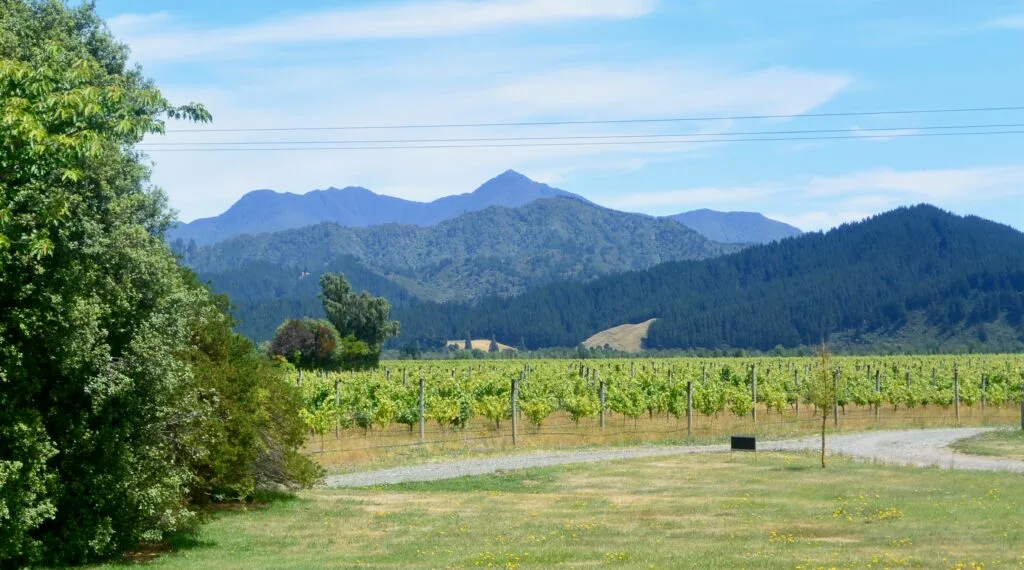
Wine Tasting in Marlborough
Blenheim is a small town but the entryway to New Zealand’s largest wine making area, the well known and much loved, Sauvignon Blanc. This is time to park up your car, and spend a few days exploring the wineries, stunning scenery and generally doing very little!
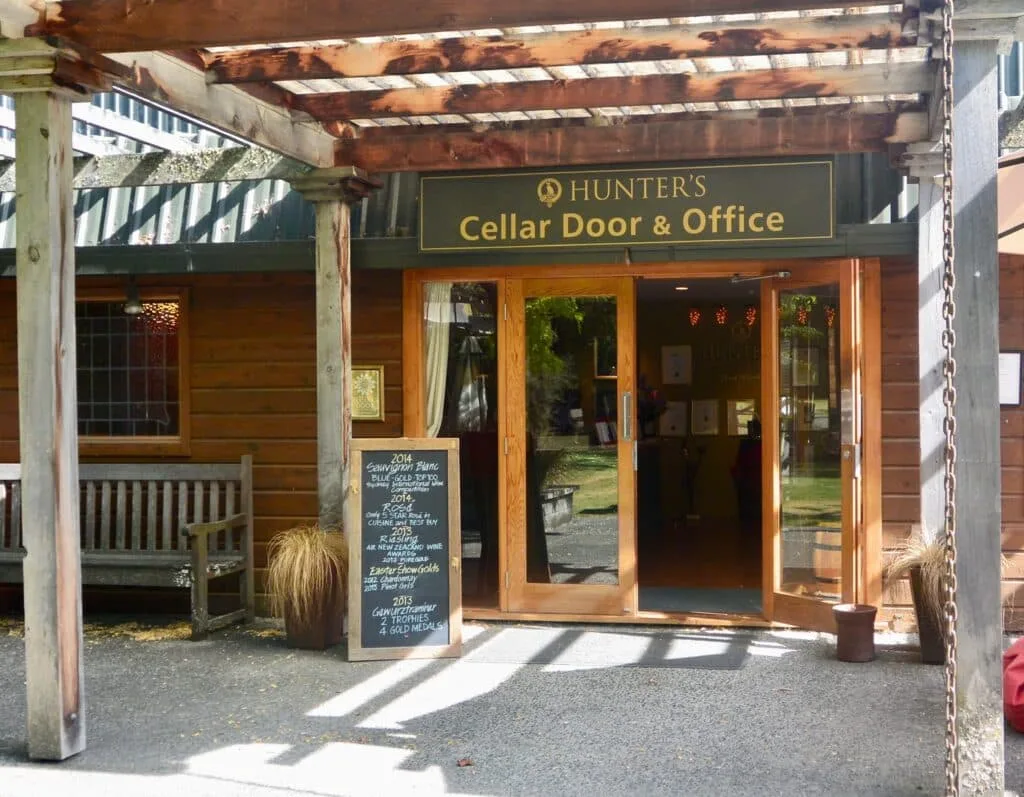
We headed to the Brancott Visitor Center first to get a bit of an education on the history and local ways of cultivation. With over 80 wineries in this valley, it’s a hard choice on which to visit.
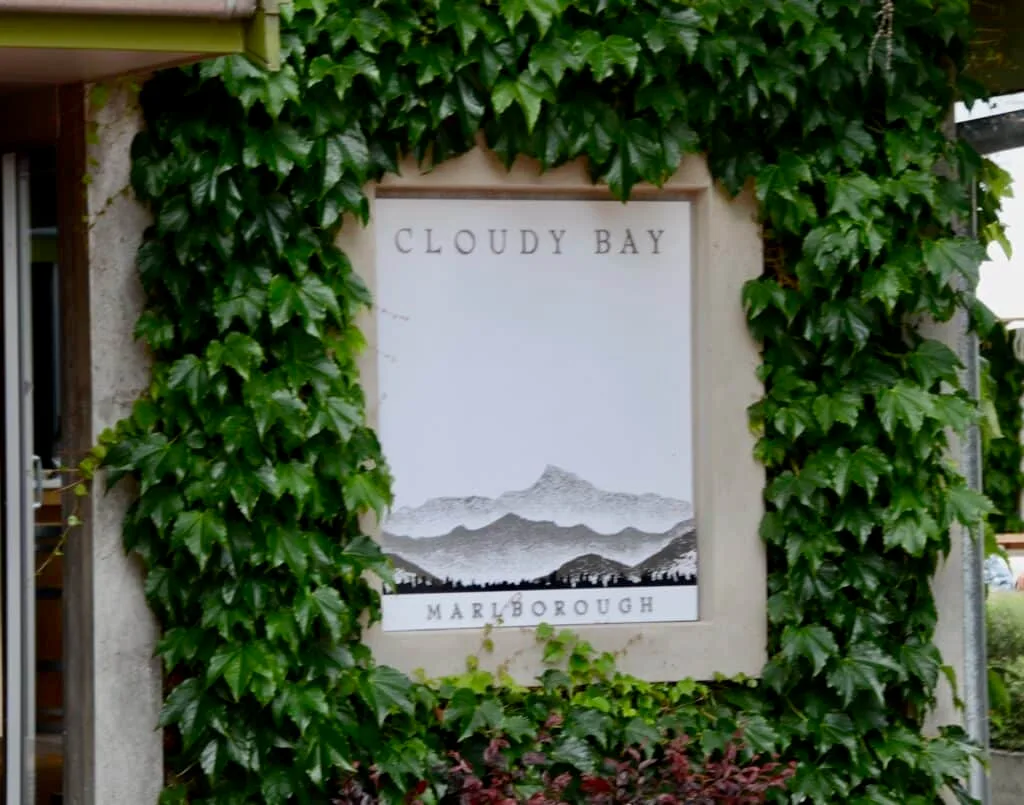
We settled on a range that included Cloudy Bay, Highfield Estate and Villa Maria. Our favourite was Cloudy Bay Winery. The setting was simply stunning and as you sit in their gardens sipping on a chilled glass, the peaks in the distance were suddenly recognizable from the bottle label I’d admired in London’s Waitrose.
Day 16 – Kaikoura Coast and Overnight in Christchurch
Driving Distance: 190 miles (308 km)
Driving Time: 4 hours (plan for an hour or for lunch en route)
Overnight: Christchurch
Kaikoura and Coastal Scenery
After some excellent tastings and purchasing a few bottles we pulled ourselves away from indulging in Blenheim to carry on our drive down the east coast to Kaikoura. This drive passes by many road side caravans that offer cooked crayfish.
We decided not to stay in Kaikoura although it is renown for whale watching as we’d done this in several other places, and wanted to get to Christchurch for the night.
Seafood is what this region is famous for. Being between the mountains and the Pacific Ocean, Kaikoura in Maori – Kai (food) and koura (crayfish).
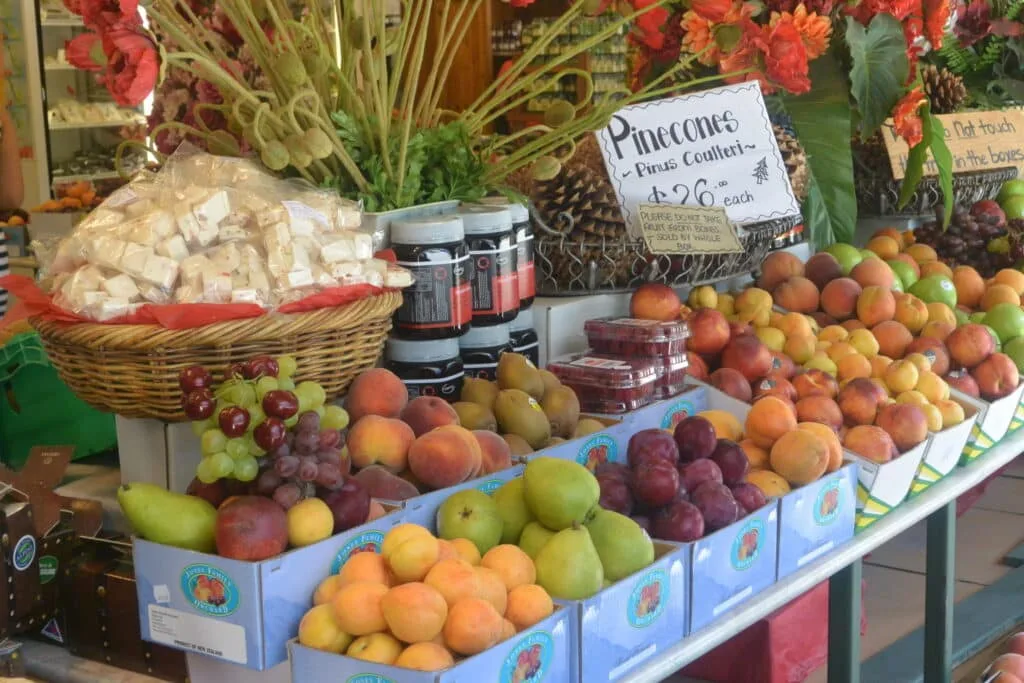
Throughout our trip we also munched our fair share of home-made jams and preserves, reflecting a culture of locally grown food. Do taste and treat yourself to Manuka Honey – it’s pricey but so worth it.
Where To Stay in Christchurch
If you set off earlier than we did, you could enjoy half a day in Christchurch. We decided to stay just off the main route to break up our journey to Central Otago and Queenstown (our final stop).
Alternatively extend your stay here, and reduce a night in Queenstown.
The Novotel is well located to see a little of the city, with modern facilities and friendly staff.
Option to Drive West to Fox and Franz Joseph Glaciers
We decided not to take the drive to these glaciers as we’ve lived in Alaska, been to Chile so seen a lot of glaciers up close.
However, if you haven’t seen a glacier, then I would suggest you put this on your itinerary. Spend at least a couple of nights on the South Island’s west coast. You could swap out Abel Tasman or one of the wine regions to create space for the glaciers.
Days 17–20: Queenstown & Final South Island Stops
Driving Distance: 300 miles (480 km)
Driving Time: 6-7 hours
Overnight: Queenstown
This world renowned town was our last port of call before heading to Australia. It is known as the ‘adventure capital of the world’ and is always buzzing with backpackers.
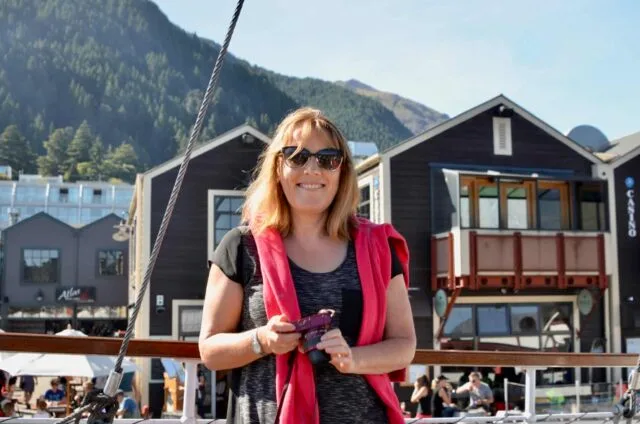
After a long drive here, we decided had 3 final days (4nights) in the ‘adventure capital of the world’. It’s always buzzing with backpackers and thrill seekers but be assured there’s much more to enjoy.
Why Queenstown Is More Than an Adventure Destination
Its location on the shores of Lake Wakatipu is serene as you stroll the waterfront and look out at the marvel of the ‘Remarkables’ mountains. The town is small enough to get around on foot, and the harbour area is perfect to linger with a coffee any time of day.
What To Expect on the Drive to Cruising Milford Sound
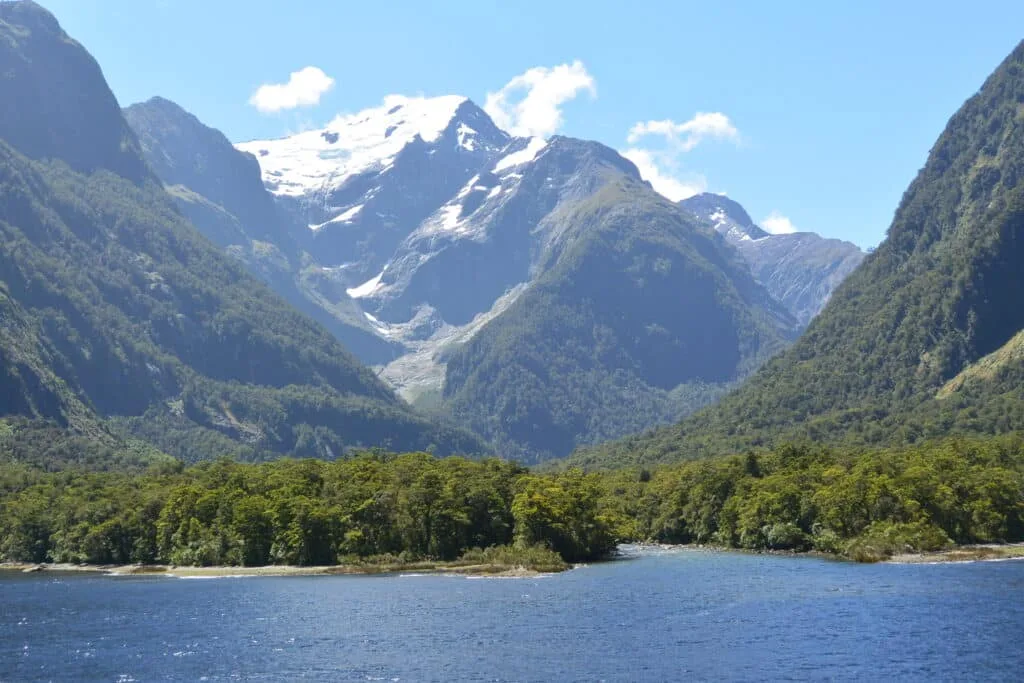
We took a bus (part of the cruise ticket) from Queenstown and drove through some of the most gorgeous scenery of our trip. The water is crystal clear meaning the reflections of mountains, trees and foliage are stunning.
It took around 4 hours with a couple of stops for photos and a bathroom break. Time passed quickly – try and get a window seat!
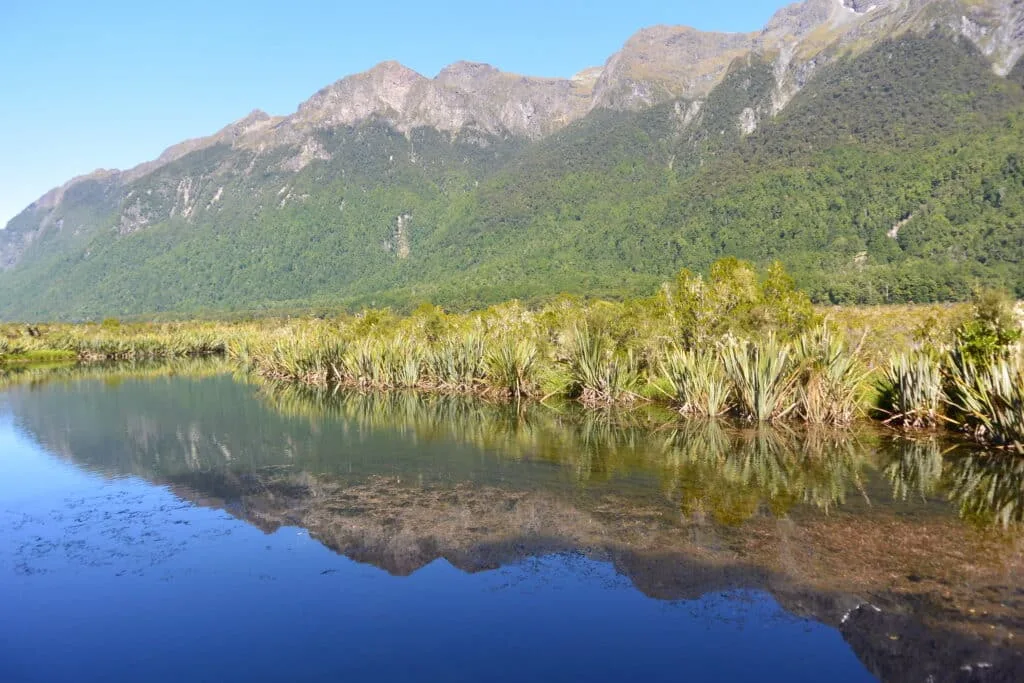
Milford Sound Fjord Cruise – What To Expect
No sky diving, jet boat racing or bungee jumping (sorry adrenaline junkies!). But we did have an outdoor adventure in Milford Sound, experiencing the wild beauty of Fjordland National Park.
We took a bus (part of the cruise ticket) from Queenstown and drove through some of the most gorgeous scenery of our trip. The water is crystal clear meaning the reflections of mountains, trees and foliage are stunning. Try and get a window seat!
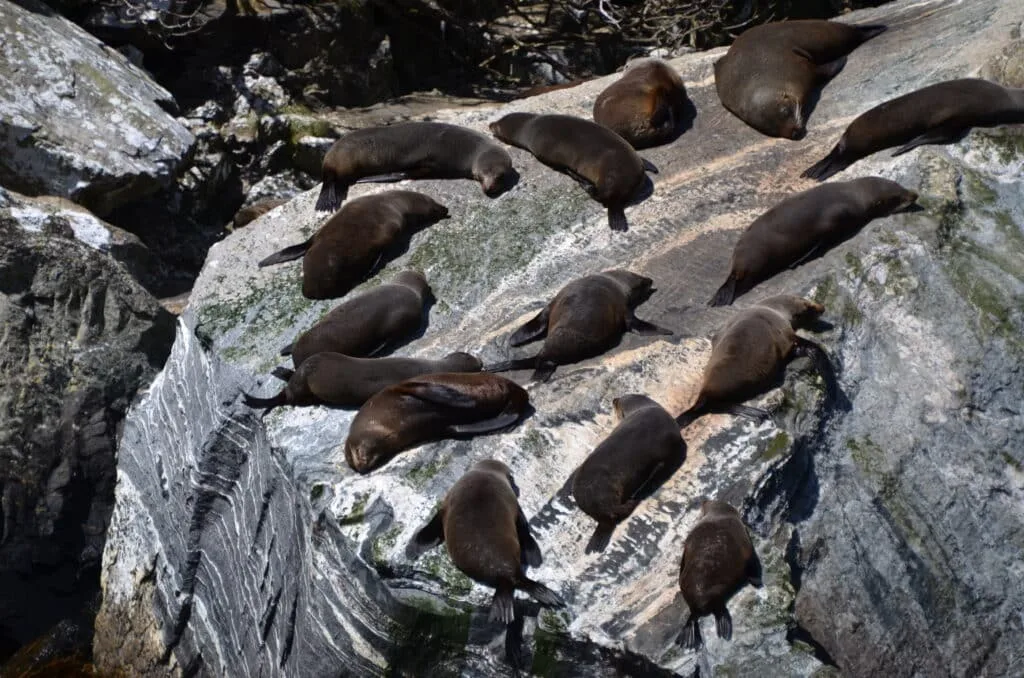
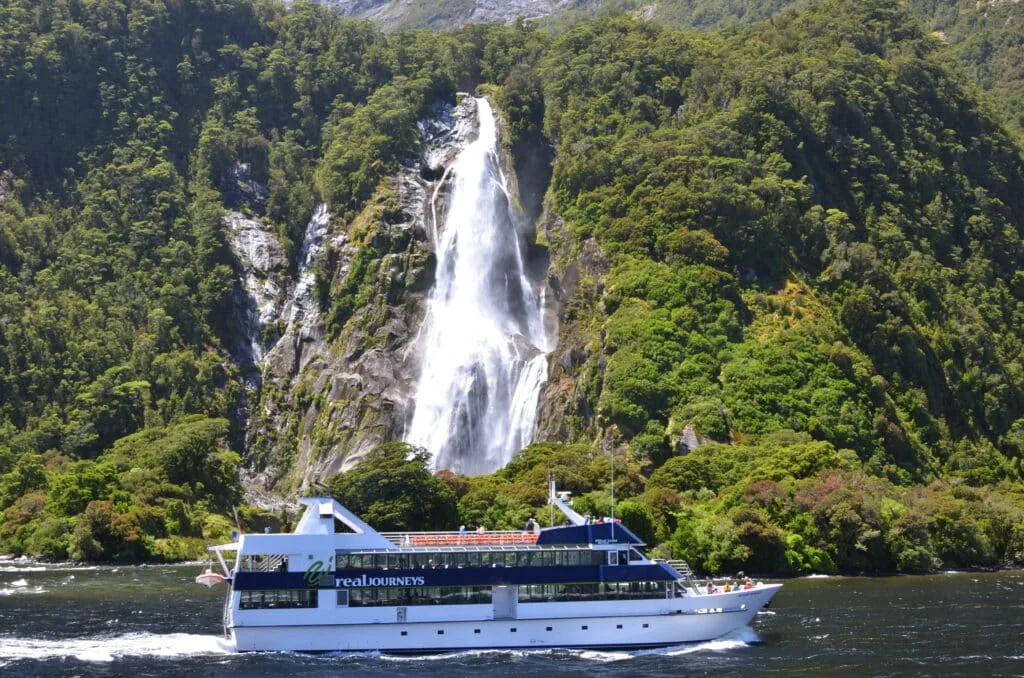
During our 3 hour cruise, we spotted sea life, seabirds, crashing waterfalls and towering peaks rising up from the banks. This photo below shows the type of vessel you typically sail on.
The open deck is great for sightseeing, but bring a wind-breaker or rainjacket. We had a brief shower or too, but it didn’t take long for the sun to reappear.
Milford Sound Cruise vs Scenic Flight
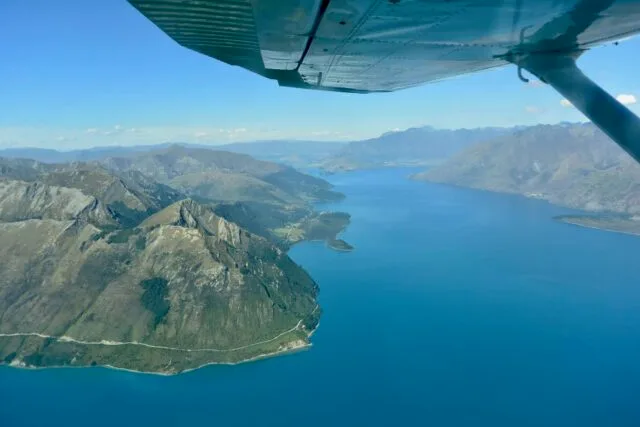
As we were in Queenstown we felt a need to tip our toes into an adrenaline rush activity. Our choice was a ‘tiny’ plane ride back from Milford Sound Fjords to Queenstown over glaciers, glacial lakes and mountain peaks.
Yes, it was us two and the pilot! I was sat in the back and Bruce up front next to the pilot. The take off was fast and we curved close to sheer mountains before rising above this stunning range.
What a treat as we got a birds eye view, finally descending through valleys, following rivers until we returned to Queenstown airport. I did hold my breath now and again as we bumped around a little, but honestly it was a highlight of our trip, and a change from driving.
It’s easy to do both logistically (weather permitting) and if your budget stretches to it. Your tour operator can pre-book this (important if you are here at peak times) or write to your hotel in Queenstown for a recommendation. There are plenty of tour operators in town too.
Central Otago Wineries
We spent a memorable day in Central Otago renowned for its Pinot Noir and we were not disappointed.
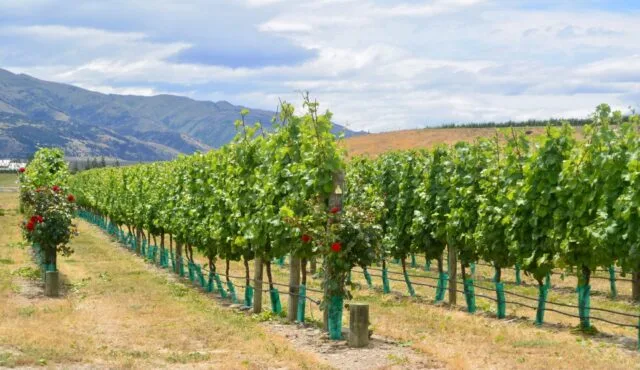
We decided to bike to a few vineyards, have lunch and then return to our guest house just a little uphill from the harbour’s edge. What were we thinking? After two stops, it was clear that wine and cycling were not a match. We should have learned from our Northern Island escapades!
Luckily, we called up the bike rental company and a lovely chap came to meet up and ushered us to our final stop with the bikes firmly secured in the back.
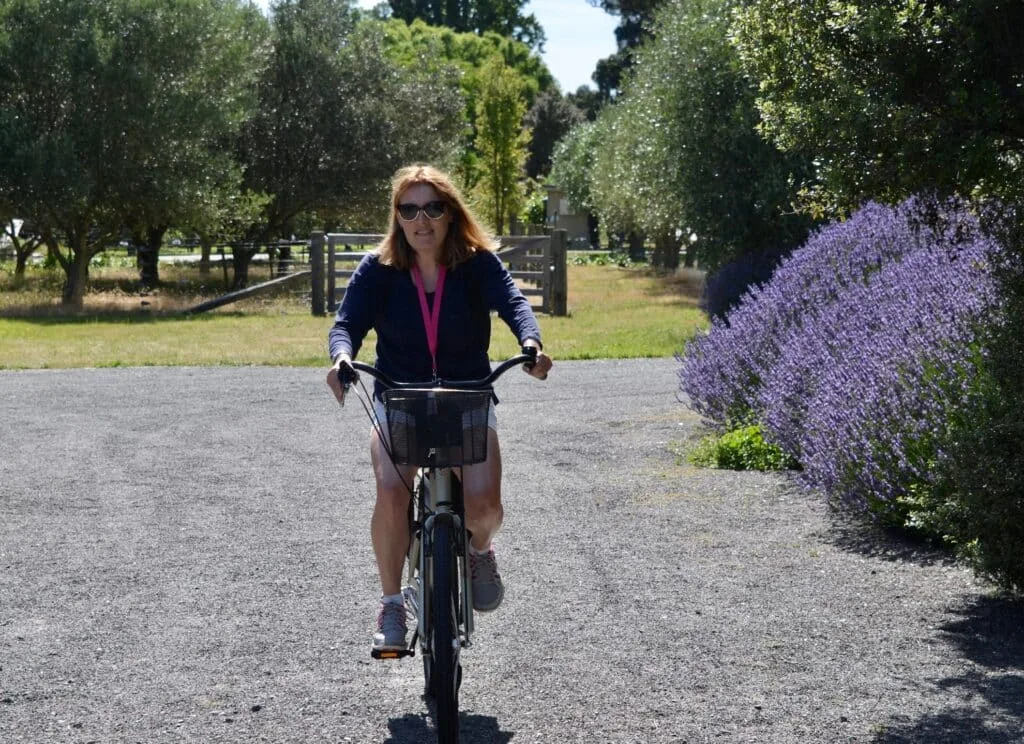
The following day we embarked on a second bike ride (with no wineries) just following local tracks and paths from town, and it was a highlight of our trip, and much needed exercise after a little over-indulging for the past couple of weeks.
Taking the TSS Earnshaw Across Lake Wakatipu
We couldn’t leave Queenstown without taking ‘TSS Earnshaw’ across the lake to a sheep farm, a major industry of the country.
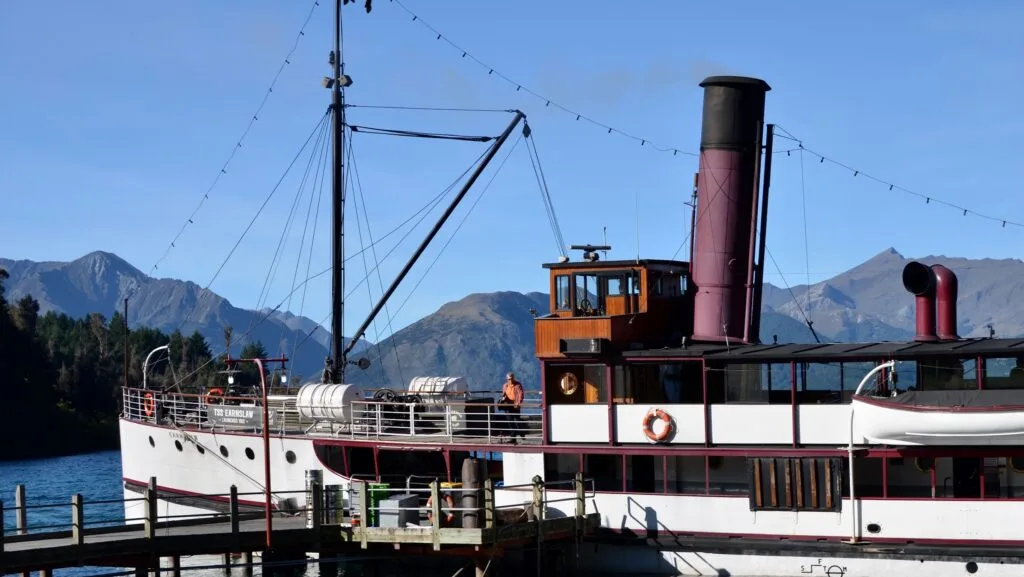
It was touristy, with a sheep shearing demonstration on arrival but we soaked in beautiful views sailing across the calm waters back as the sun set.
Central Otago Towns and Villages
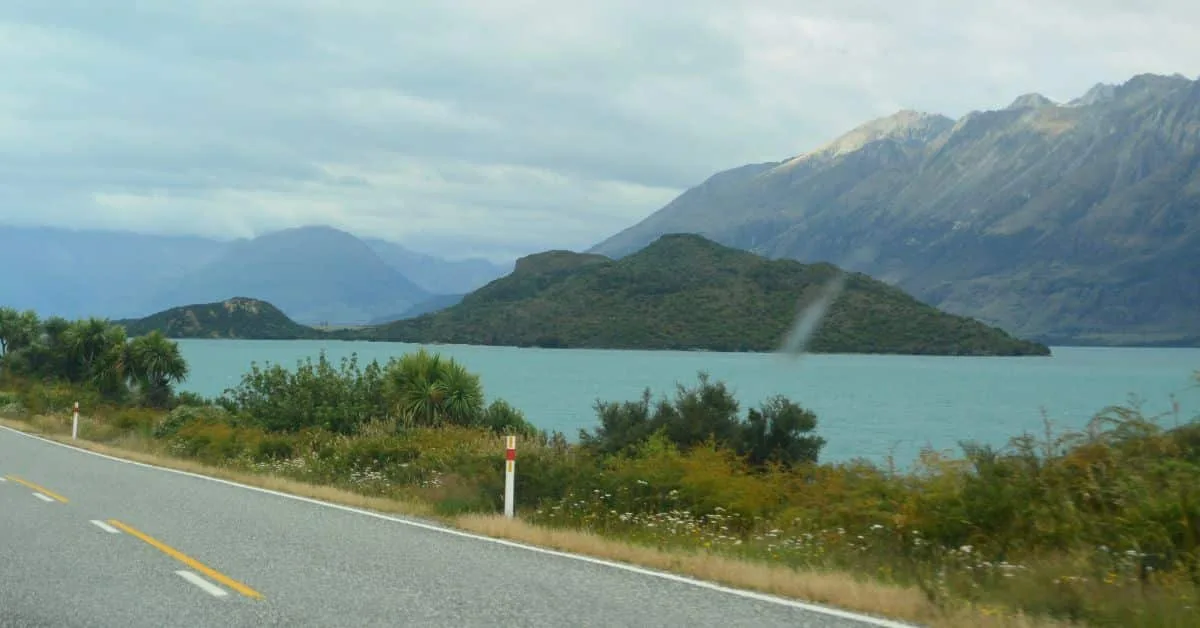
On our final day we jumped back in the car and drove to the pretty Glenorchy (the road to the village hugs Lake Wakatipu and has gorgeous views).
Spend a few hours in historic and picturesque Arrowtown, which was once a gold mining area full of boutique shops, small restaurants and flowing hanging pots of summer flowers.
Where To Stay in Queenstown
Hidden Lodge Queenstown – a 5 minute drive into town, this small lodge looks over the lake and is peaceful with friendly hosts and a ‘make yourself at home’ atmosphere.
Driving in New Zealand: Tips For First-Time Visitors
Is Driving in New Zealand Difficult?
Not at all, although I grew up in rural Scotland with similar small roads, hills and limited signage.
Realistic Daily Driving Times
Most days we spent 3 hours driving, sometimes longer, but it was our choice to take a detour or explore an interesting town a little longer. Spending a minimum of 2-3 nights in most stops gave us time to slow down, get to experience a little more of local life, with less pressure to drive miles daily.
Road Conditions and Mountain Roads
In summer when we did this road trip in New Zealand we had good driving conditions, although it did rain hard a couple of times and visibility was reduced. Coastal and mountain roads away from the the highways often have sheep or wildlife, are unmarked, so try to drive in daylight hours and slow down.
Fuel Stops and Navigation Tips
We fueled up each morning when we headed to a new town so as not to waste time trying to find one on the road.
Get Apple Car Play with your rental car (or equivalent) to help with navigation, but internet service is spotty so download Google Maps before you leave. Also have a paper map with you – or if you get lost, just ask someone, they’ll likely be delighted to help you on your way.
Left-Side Driving Tips – many of the roads are 2-way, with one lane in each direction. They are not always marked so err on the side of caution and keep to the left.
Avoiding Driver Fatigue
We suggest 3 nights in Auckland on arrival to give you ample time to rest up and get ready for 18 days of driving. Similarly, our route and daily drives worked well because we didn’t try to squeeze in too much. Rather we took our time, enjoyed what we saw along the route, and arrived when we arrived (before dark).
We traded off driving, but if one of you isn’t comfortable, bear that in mind and take more frequent breaks. Also consider taking more tours vs. driving at a destination like wine tours.
What Surprised Us About Driving in New Zealand
– Distances look short on maps but drives take longer than expected
– Roads are often winding and narrow outside cities
– We found 3–4 driving hours daily ideal – to enjoy journey & destination
– Fuel stations become sparse in remote areas
– Summer roads were busier than expected around tourist hotspots
Budgeting for a New Zealand Road Trip
Honestly, it’s hard to give you an exact budget for a 3 week trip to New Zealand driving yourself because it depends on many factors.
Here’s the main items to consider when looking at overall costs and our tips for keeping spend.
Flights. If you can splurge on business class tickets on your outward flight because most of us will have a long flight and it does take a few days to recover. We did business class one way and premium economy return (British Airways).
Accommodation. There’s accommodation to fit all needs in New Zealand and if you drive, you have flexibility to stay a little out of town, often cheaper. We liked bed and breakfasts, smaller lodges, family run – see our list for current prices.
Car Rental Costs. We used Hertz, but it’s easy to compare options using a site like Discover Cars. We say reserve a vehicle that is going to be comfortable for many miles, and put more than 1 driver on the booking.
Petrol (Fuel) Prices. At the time of writing, petrol prices are NZ $3.26/L. Download the Gaspy App to help direct you to petrol stations with best prices.
Food and Wine Budget. With breakfasts included, you’re likely looking at budgeting for lunch, dinner, snacks. When you book a winery tour, they often include an option for lunch and we found these very good value.
Activities Worth Booking in Advance
You need some flexibility when on a driving trip in New Zealand because weather does play a part in activities. Book glacier and fjord tours in advance, or a top event like a Rugby game, but otherwise we found it easy to find activities on arrival.
Here’s some quick links for pre-booking:
– Local Tours: Get Your Guide & Viator.
– Travel Insurance: Visitors Coverage
– Airport Transfers: Welcome Transfers
Where We Stayed on Our New Zealand Road Trip
We love small boutique hotels, local lodges and bed and breakfasts in stunning locations. Auckland was the exception as we wanted to be central.
Please check current reviews as you decide your accommodation in New Zealand as ownership of small properties can change.
- Sofitel Auckland Viaduct Harbour
- Best For Arrival, Easy Walking Around Town
- Manawa Ridge, Coromandel Peninsula (N Island)
- Ideal for Coastal Relaxation, Beaches,
- Breckenridge Lodge, Napier
- Hawkes Bay Wineries, Art Deco Town & Beach
- The Resurgance, Abel Tasman National Park
- Good for gentle hikes, kayaking & bird-watching
- The Peppertree Luxury Bed and Breakfast, Blenheim
- Perfect terrain for bike riding in wineries
- Novotel, Christchurch
- Easy overnight stop; short walk to International Antarctic Centre
- Hidden Lodge Queenstown
- Relaxing lake view – best for couples, 5 mins from town.
Please check current reviews as you decide your accommodation in New Zealand. Ownership of small properties can change and of course we all have our preferences on facilities and room layouts.
What We Would Do Differently Next Time
Trip Duration. 3 weeks sounds like a long trip but there’s so much to see and do in New Zealand, that if you can push your trip to 4-5 weeks, you can set a pace that is more sustainable. We felt a little rushed in the wine regions, and would like to have done a couple more hikes, and visit Bay of Islands.
Campervan vs Car. It’s definitely easier driving a car, but you’ll be a little boxed into making sure you arrive at the next destination to check into your pre-booked accommodation. Next time we’re considering an RV so we can park up as and when we please. However, for a first 3 week visit, I’d still recommend a car.
Send more wine home. When we finally got to Queenstown we had amassed 2 cases of wines from our tours and of course couldn’t possibly drink it all. We found out we could ship it back to London and sure enough it arrived a month or so later. Next trip it will be 3 cases.
This itinerary is designed for slower independent travel rather than trying to “see everything” in New Zealand in one trip. If you prefer fast-paced sightseeing or daily location changes, you may want a more condensed route.
FAQs
You can see the North and South Island highlights on a 3 week visit to New Zealand but prioritize as driving takes longer than you might image.
There are more activities in the South Island including glaciers and wineries, but the North Island is fantastic for hiking and remote adventures.
The best time to enjoy a driving tour of New Zealand is between December and February when warm summer days make it enjoyable to be outdoors.
No. You can easily tour New Zealand without a camper using local lodging, bed and breakfast options and driving a standard car.
Final Thoughts: Planning a New Zealand Self-Drive Itinerary
New Zealand remains on my top10 places to see a lifetime. The scenery, the food, the wine, the hikes, the wildlife – its all incredible to experience, but most of all we loved the local people!
I left a sweater at one of our bed and breakfasts. When we arrived in Queenstown, would you believe there was a parcel waiting for me. It was my jumper. The owner knew where we were heading next and had called them to double check our forwarding address. What a gesture of kindness!
So, reluctantly we left New Zealand and headed to Sydney, Australia.

