This post may contain affiliate links. If you book through our links, we may earn a small commission at no extra cost to you. Thank you for supporting Two Passports One Planet. Read our Privacy Policy and Disclaimer for more information.
Most visitors to Georgia plan their itinerary to visit Tbilisi and maybe Kazbegi and Kakheti. We know there is certainly plenty to see and do in these three places.
However, if you're in Tbilisi and you have a spare day, you might be considering venturing further and taking a trip from Georgia into neighbouring Armenia. But, then come the questions: is a day trip to Armenia from Tbilisi worth it? What exactly will I see and how do I get there?
Whether you join an organised tour like we did or hire a private driver, in this guide we give you an honest review of what you'll see on a Northern Armenia Day Trip.
This includes how the border crossing works, answering questions around visas and currency, and having done this very day trip, what we'd do differently next time!
Day Trip Options — Armenia from Georgia
Most day trips from Tbilisi to Armenia tend to focus on exploring the north of the country. This includes visiting UNESCO medieval monasteries, driving through mountain scenery, giving a glimpse into Soviet history and offering the traveller a different cultural experience from Georgia.
Some day trips include Yerevan — the capital city of Armenia. This is a much longer trip, often lasting 17 hours, with the focus on briefly exploring the city.
Here's our summary of the options we found: from an organised driving tour, a private driving tour, self drive or fly and visit the capital.
| Option | Pros | Cons |
|---|---|---|
| A Group Organised Tour |
|
|
| A Private Guided Tour |
|
|
| Self Drive |
|
|
| Fly to Yerevan |
|
|
Planning A Trip to Armenia — Our Approach
We immediately dismissed any thought of driving ourselves. It just made no sense to have all that stress of driving and navigating.
We then looked at the 17-hour trip wanting to spend as much time as possible in Armenia. However, taking a closer inspection of timings and stops, we quickly realised that although the 17-hour trip took in Yerevan, it was a five-hour drive just to get there, possibly longer if there was a hold up at borders.
It seemed that a lot of our day — at least 10 hours — would be spent in the mini-van.
Flying to Yerevan was ruled out simply because when we checked the schedules, there was no option to fly there and back on the same day and we didn't have enough time to stay overnight.
So, in the end, we chose a 10-hour tour into Northern Armenia. We opted for this rather than a private tour as it was sold as a small group (there were 6 of us). Also, for what we paid — £40pp — it was good value. Food and drinks were all extra.
It also seemed to be the trip where there was less time driving and more actual sightseeing stops where we could get out of the van.
🎒 Our Tip: Check the timings of trips carefully in terms of how many hours are driving time as opposed to sightseeing. If unsure, email or call your operator to check.
Also check if your nationality requires a visa to enter Armenia — you don't want to get to the border and be denied entry. It is your responsibility to have the necessary documentation, which for tourists is their passports. Visas are not required for citizens of UK, EU or US nationals, but some nationalities do require them so check with the Armenia Immigration Site.
Group Tour Itinerary from Tbilisi to Northern Armenia
What to expect:
We booked our 10-hour day trip from Tbilisi to North Armenia with Get Your Guide. The first thing to note is that this tour focuses on UNESCO monasteries and the history of Northern Armenia. It does not include towns or villages to look around so if you're expecting this, it's not the tour for you.
Click here to Book your Get Your Guide Tour
Most operators follow a similar route with the same main stops as on our tour:
- ⇒ Leave Tbilisi
- ⇒ Border Crossing Georgia to Armenia
- ⇒ Akhtala Monastery
- ⇒ Lunch
- ⇒ Alverdi and Sanahin Bridge
- ⇒ Sanahin Monastery — UNESCO site
- ⇒ Mikoyan Brothers Museum
- ⇒ Haghpat Monastery — UNESCO site
- ⇒ Border Crossing Armenia to Georgia
- ⇒ Return to Tbilisi
Here's an overview of our day at these stops. Times are all approximate and will depend on traffic.
10am — Leave Tbilisi and Head to the Border
Our 6-seater van left promptly from the centre of Tbilisi. There was no hotel pick-up so make sure you allow plenty of time to get to the meeting point if that is the case for the tour you book.
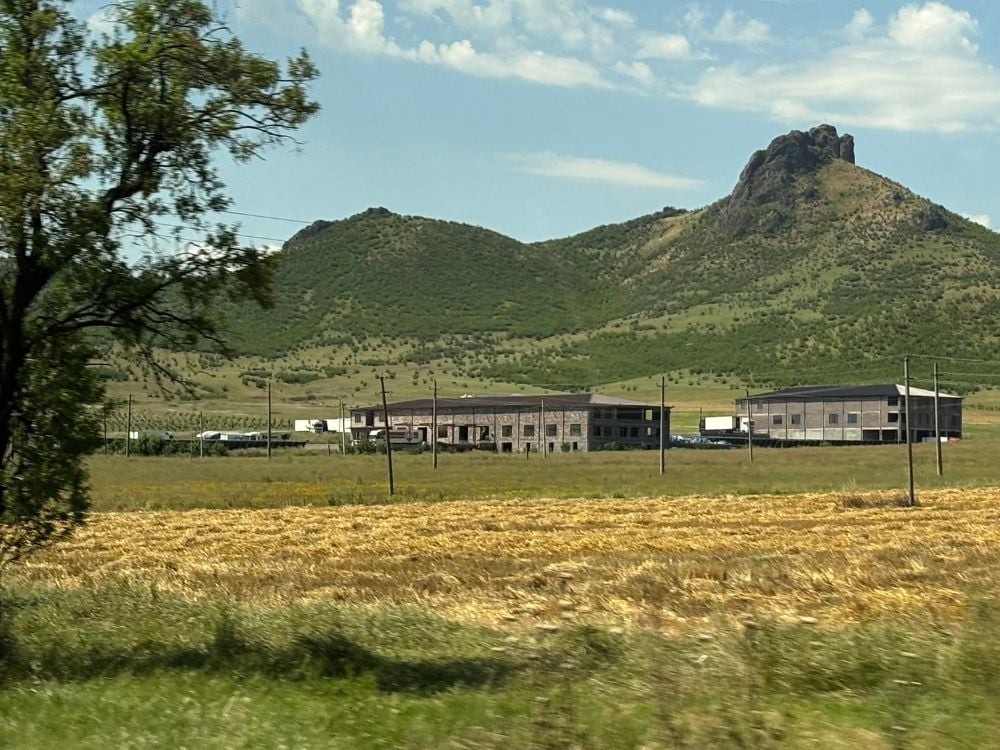
The scenery on route was mainly of farming and it took around 75 minutes to get to the border. There wasn't really anything significant to see on the way but it was pleasant enough.
During that time, our guide gave us a lot of facts about the history of both Georgia and Armenia. If you love history, this is great; if not, it could be a bit of an overload!
11:15–11:30 — Arrive at Sadakhlo-Bagratashen Border Crossing
Crossing the border was fairly straightforward. Having a guide with us made it easy to know what to do and where to go.
What to expect when leaving Georgia:
- Get out of the vehicle when instructed
- Take your passport only with you to immigration
- Have your passport stamped (there was a 20-minute queue)
- Return to vehicle which will be further along from where you were dropped off
- From here you will be driven for less than a minute to the Armenian checkpoint
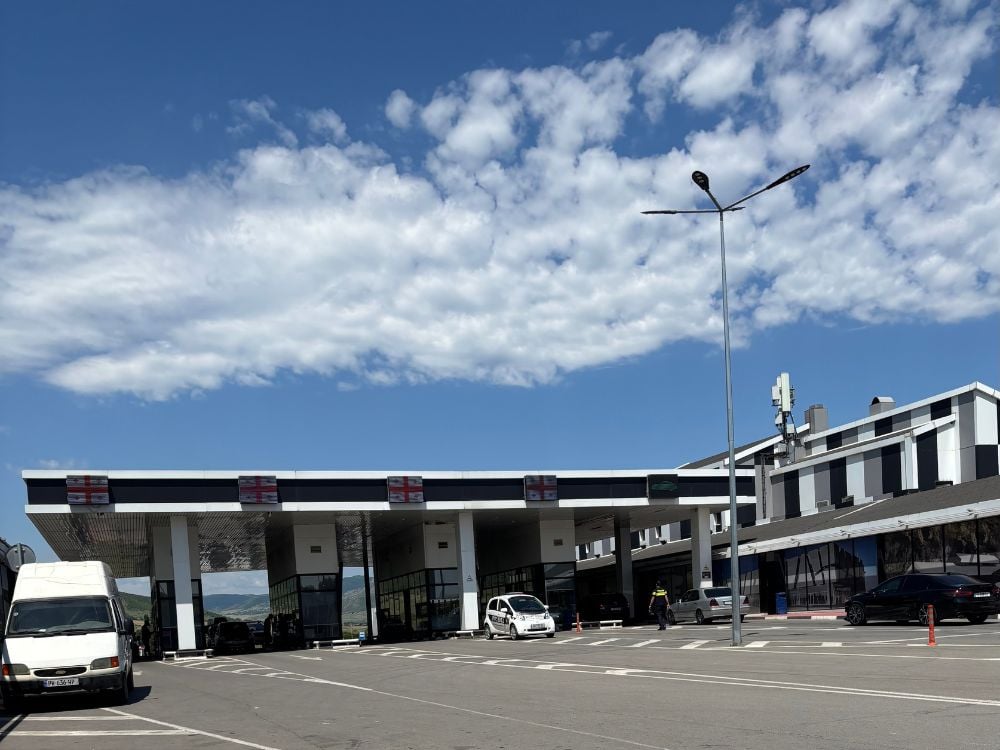
What to expect at Armenian Checkpoint:
- Get back out of the vehicle
- Take your daypack/luggage and passport with you
- Stand in line at border control — you may be asked the purpose of your visit. Just say you are on a day trip and returning that evening. We only waited 5 minutes here
- Your passport is stamped & luggage put through security
- Collect luggage and return to your vehicle which will be a little further on from where you were dropped off
It's difficult to give a specific time on how long the process takes. The minimum will be around 30 minutes which is quick if everyone in your group can cross without a visa and it's midweek.
Ours took a little longer at 45 minutes — as one person had a visa. This is something to consider if you are on a group tour as after all you don't know who your travel companions are nor their nationality.
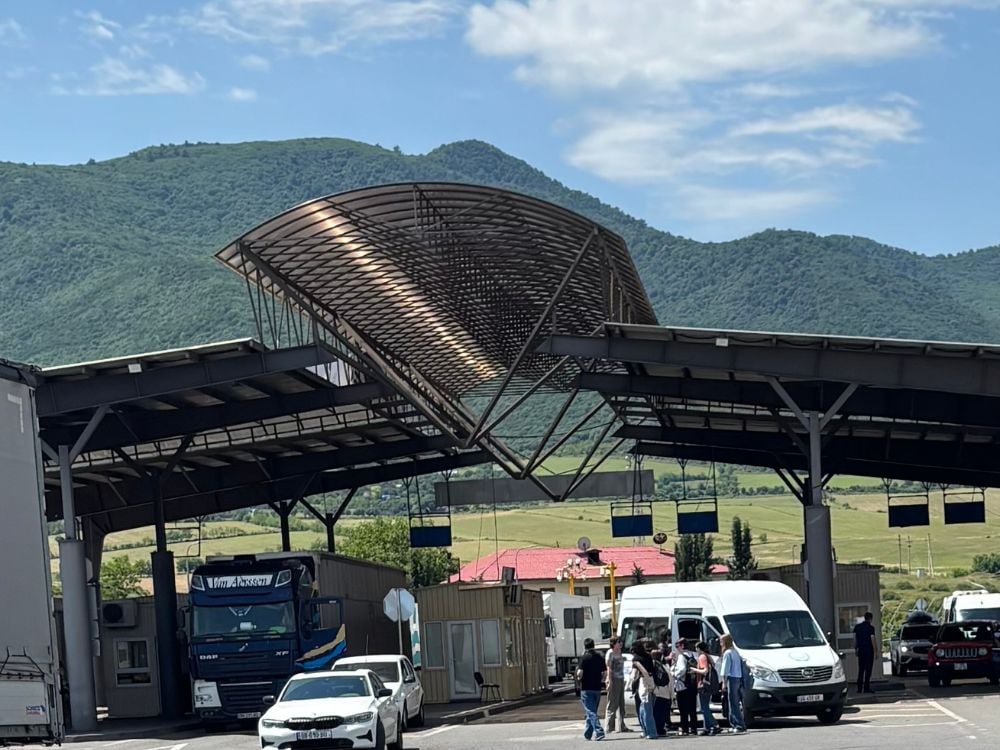
You will have to go through the same process in reverse at the end of the day trip when leaving Armenia and returning back into Georgia. This was a busier time and took around an hour. While the border crossing eats into your day, try and see it as part of the experience and enjoy getting another stamp in your passport!
🎒 Our Tip: We were advised that weekend border crossings are much busier so if you are planning a day trip to Armenia, best avoid these days or be prepared for longer queues.
12:00 — Border Currency Stop and Drive to Akhtala
Just after the border, a few minutes into Armenia we had a 10-minute stop at a supermarket mainly to access their money exchange desk. It also sells snacks and drinks so useful if you are in need of any refreshments.
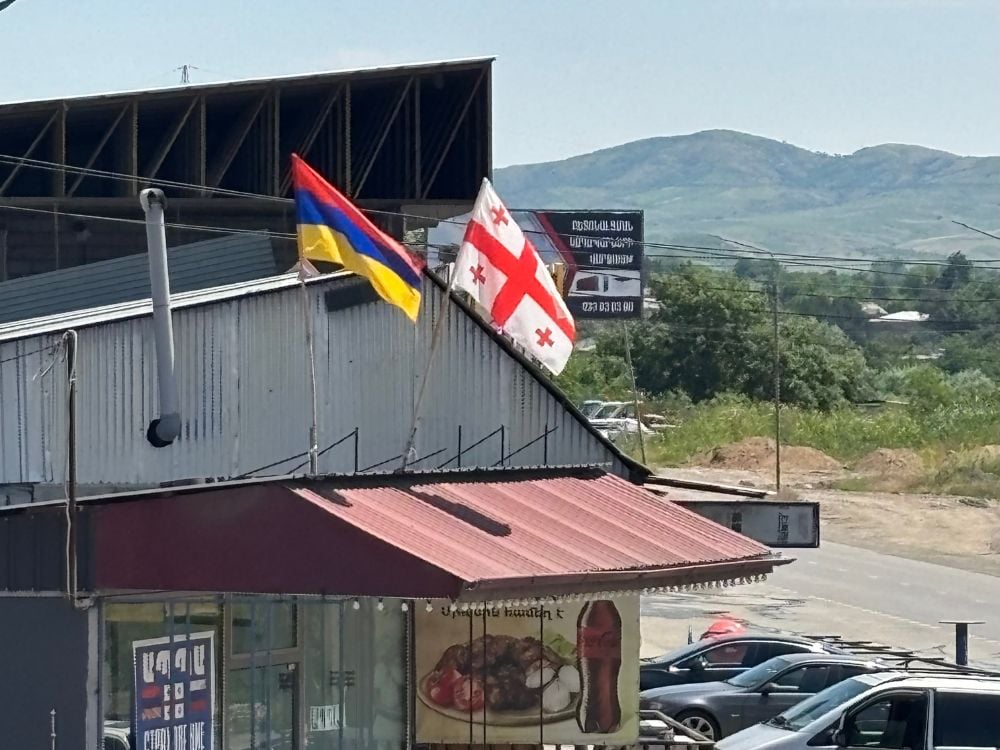
The currency in Armenia is the dram (AMD) and although you don't need much cash, having some for souvenirs, tips and small purchases is useful. We found that some places did accept the Georgian lari but not everywhere.
Lunch was not included in our tour but was part of our day and of course we wanted to try some Armenian food. Check when you book if payment by card is accepted at the restaurant you are dining at.
Upon leaving the supermarket, the scenery becomes more interesting. The road winds slowly through the gorge of the Debed River.
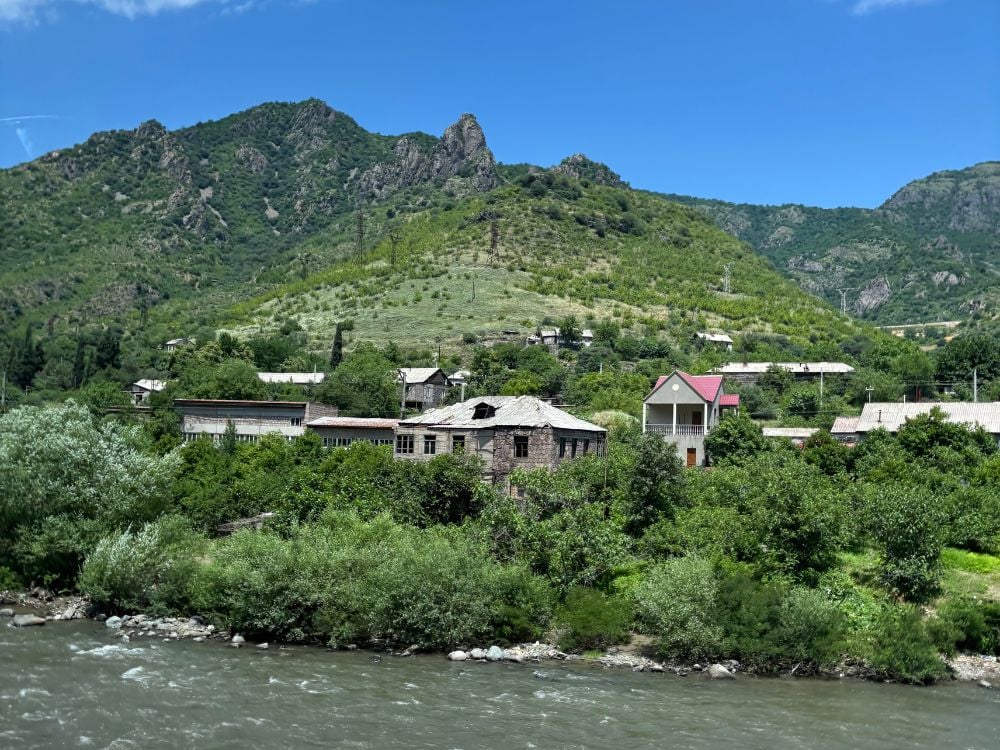
From the flatter agricultural landscape you'll find yourself in a more rugged terrain scattered with darker stone buildings, hills and eventually steep, forested mountain slopes.
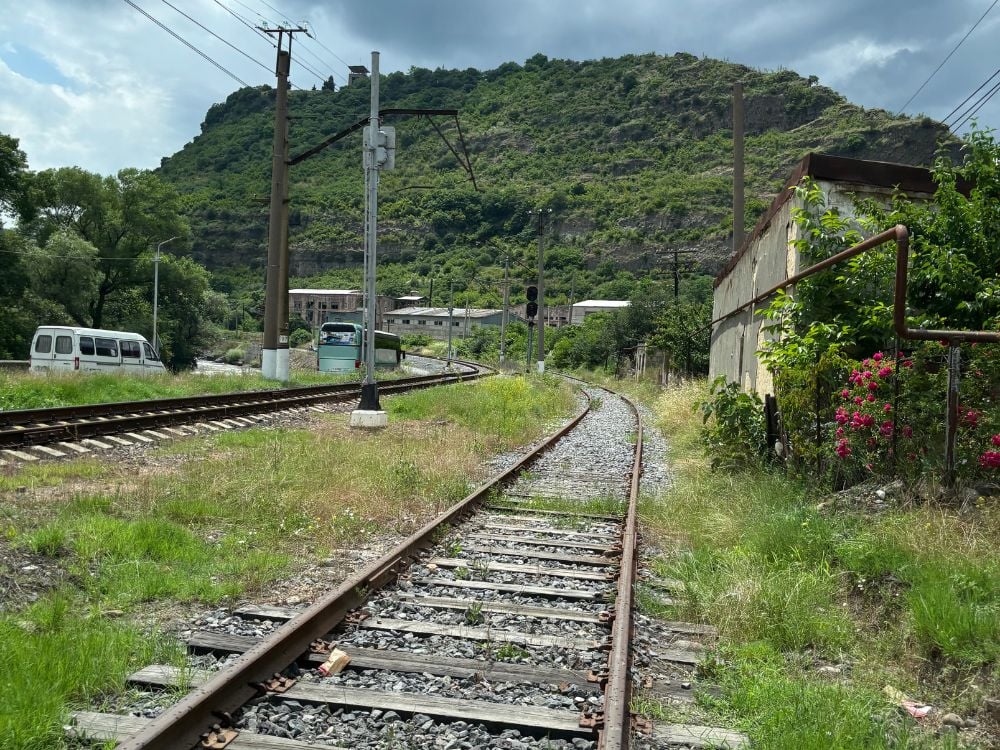
You'll see evidence of the region's history of copper and mineral mining, many abandoned Soviet-era buildings, old rail tracks and forgotten bridges. It does feel like you're now in another country and we enjoyed this part of the journey.
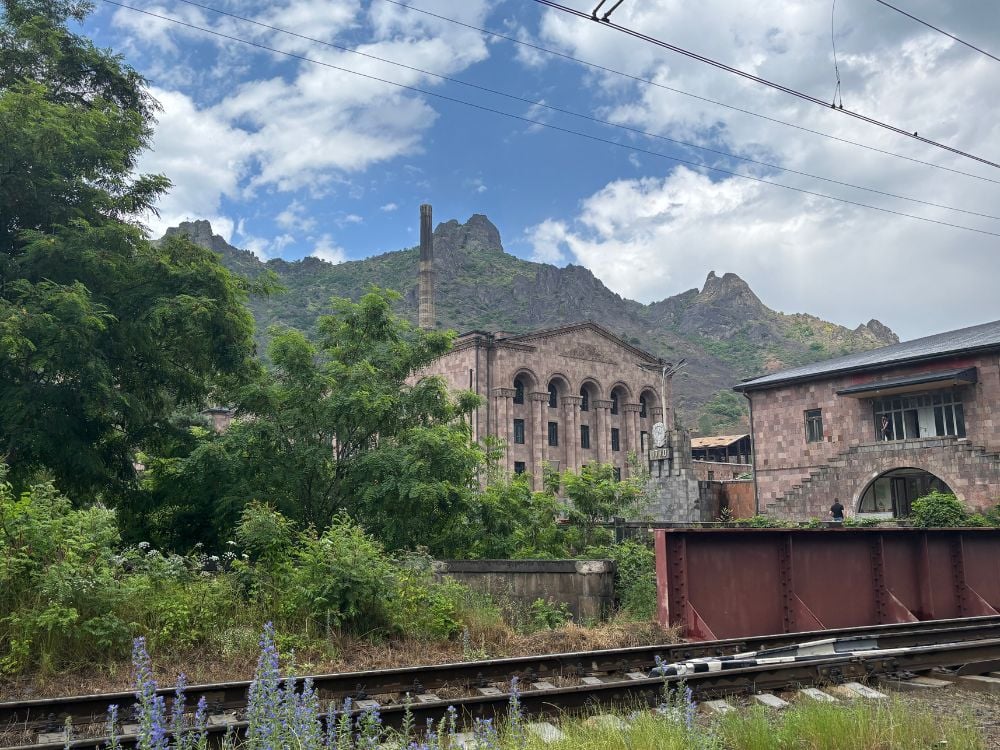
🎒 Our Tip: Ask your guide if you can stop for photographs as the scenery is dramatic and taking images from a mini bus window is limited.
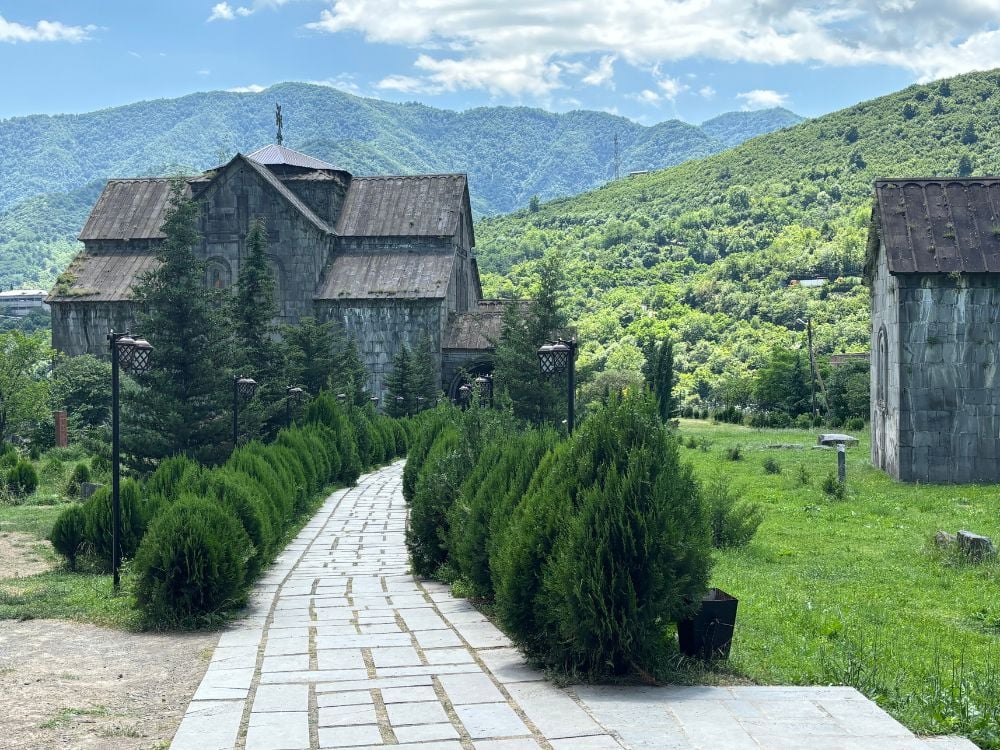
12:45 — Arrive Akhtala Monastery
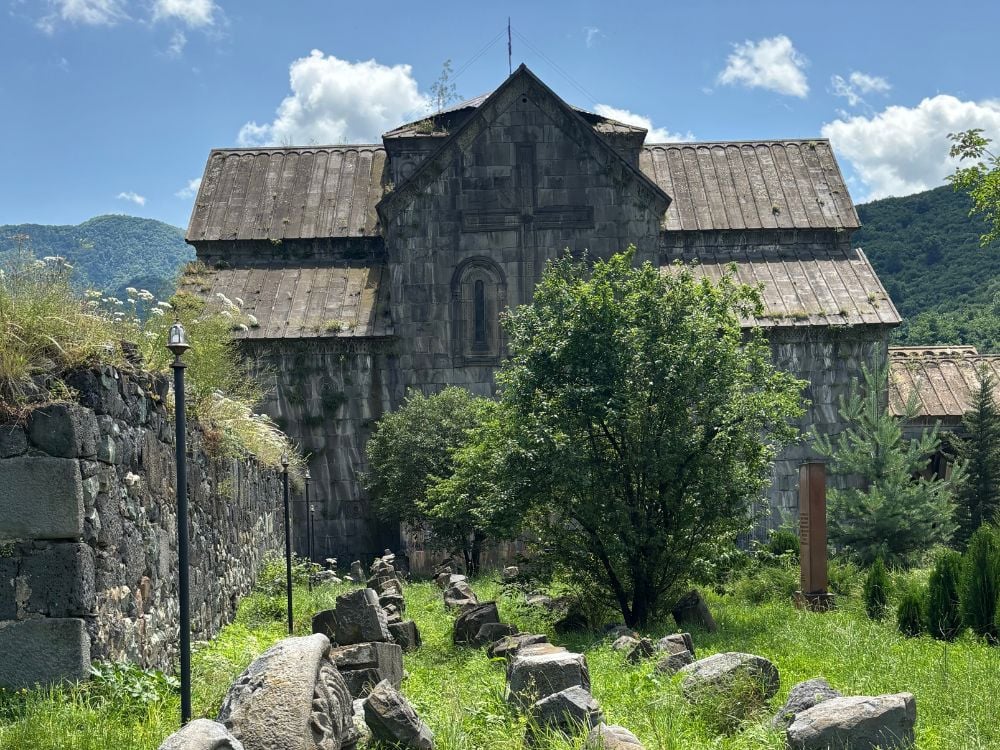
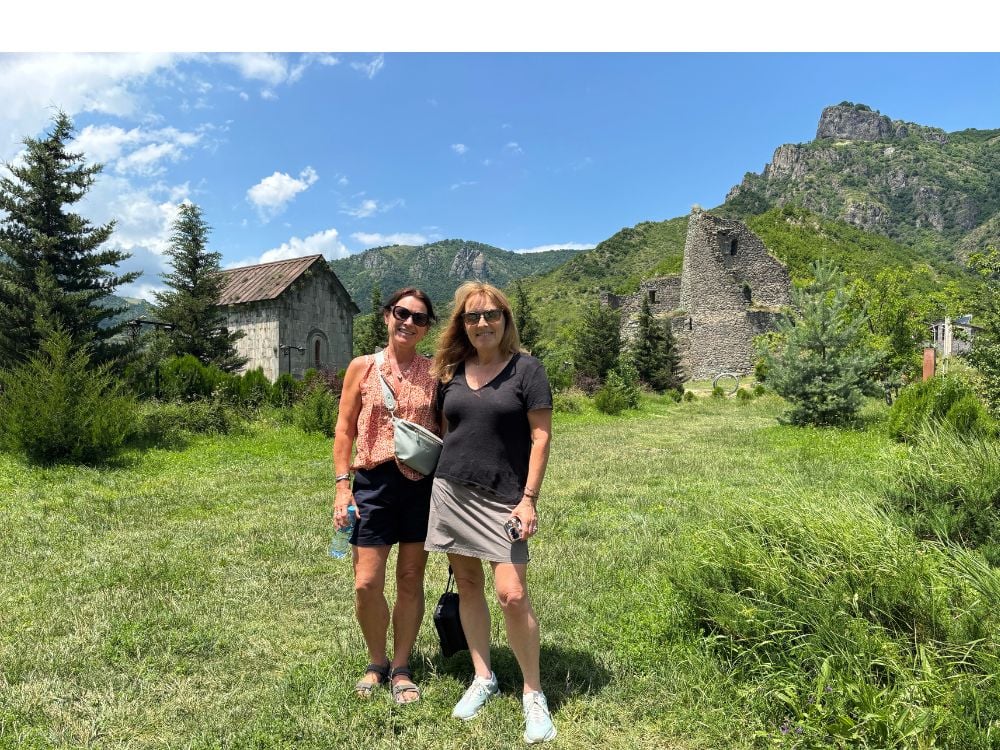
Almost out of nowhere, the fortified walls of Akhtala Monastery appear high above the town. Its position makes it more dramatic, perched dramatically amongst the trees with deep gorges on three sides.
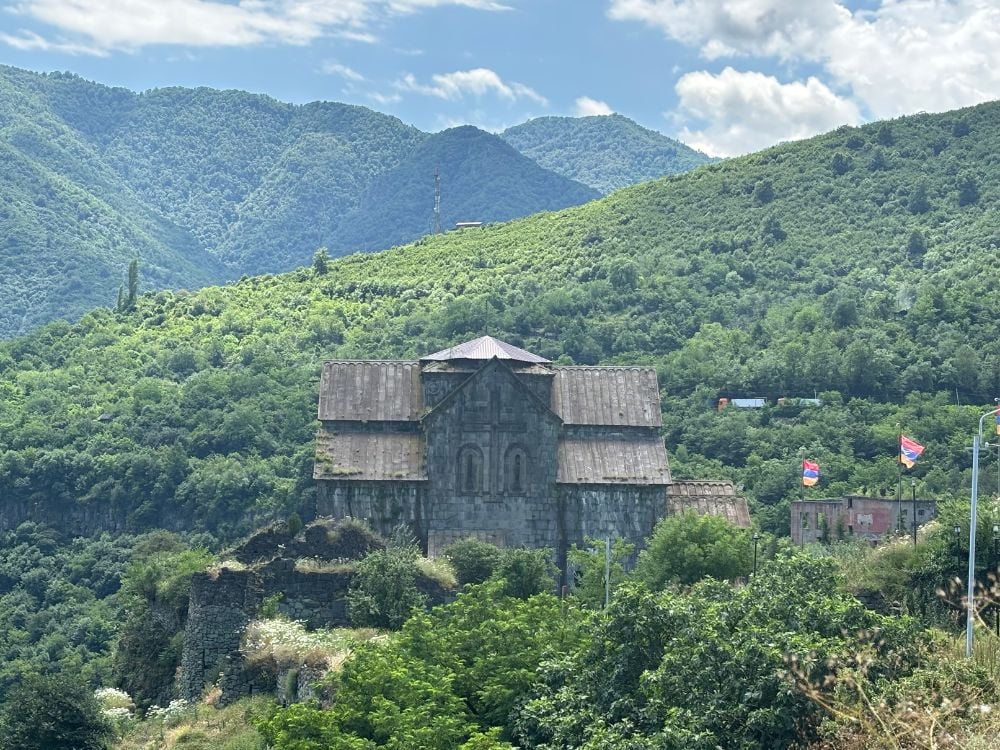
Once parked up, you'll walk a few metres to the entrance of the monastery. Just outside this entrance there are a couple of small souvenir stalls but you will need to pay in local currency. You will come across more on this tour so don't feel a need to buy now unless there is something that really catches your eye.
There are three main things to see here:
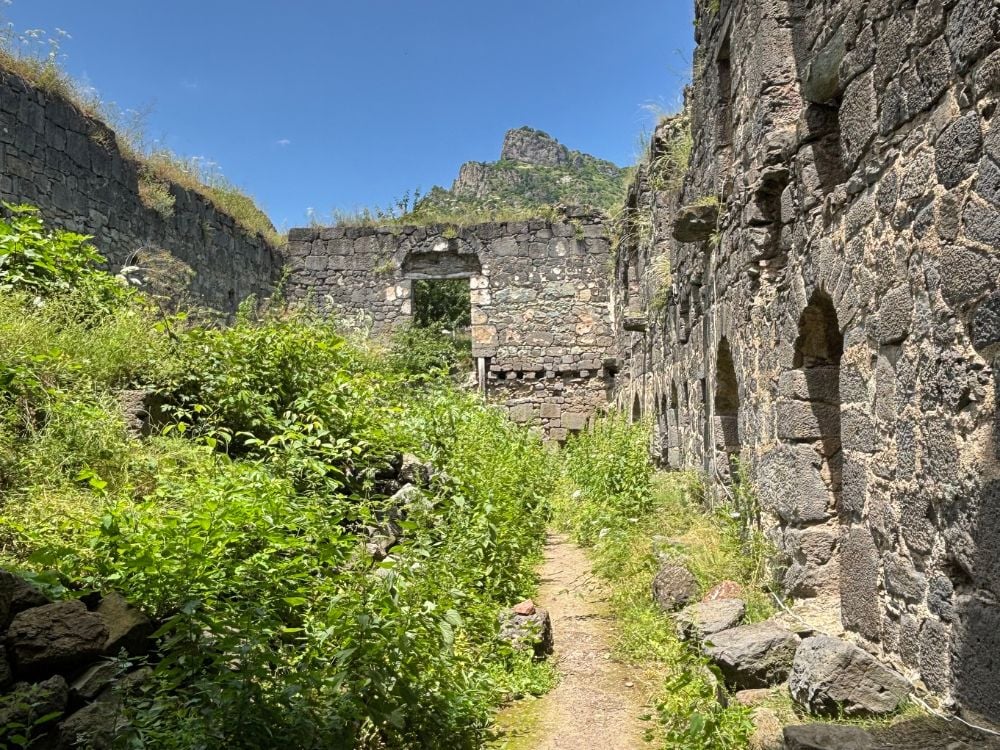
- The ruins of the Akhtala Fortress
- The Church of the Holy Mother of God
- The frescos inside the church
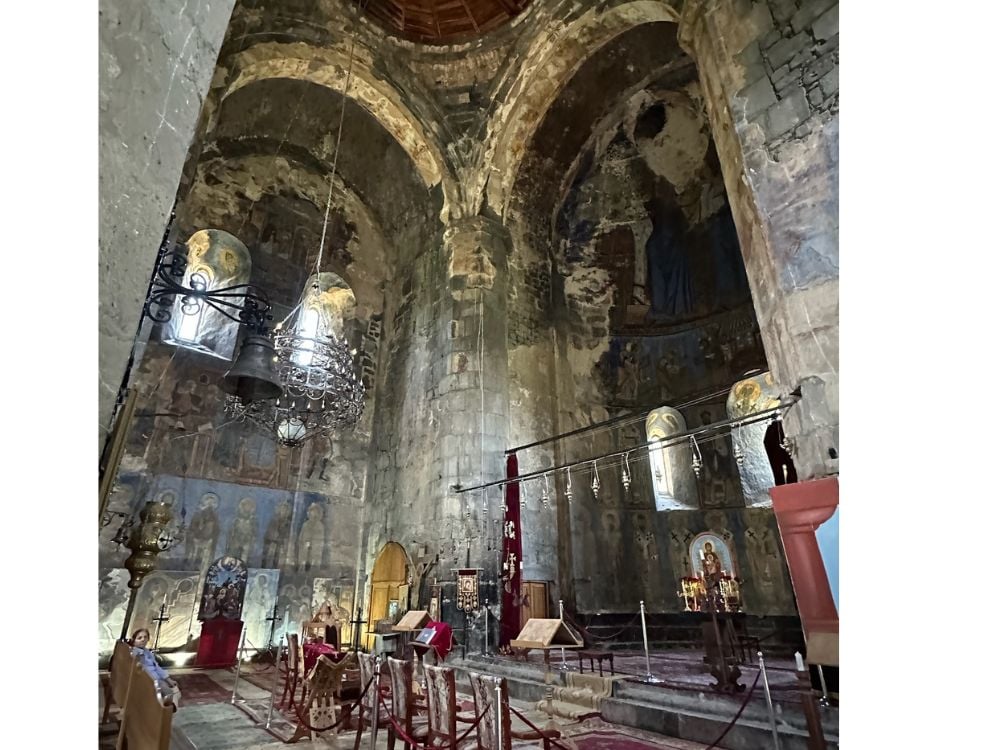
Once we'd had some information from our guide, we had about 40 minutes to wander around this well-preserved medieval monastery, fortress ruins and the church.
Built in the 10th century and finished in the 13th, it's incredible to still be able to see beautifully painted frescos inside of religious scenes.
The ground underfoot is uneven in places so just be a bit careful especially if you venture into the fortress ruins. What we liked about this stop was that it was quiet when we were there.
However a large coach did pull up as we were leaving so it is clearly a top tourist location.
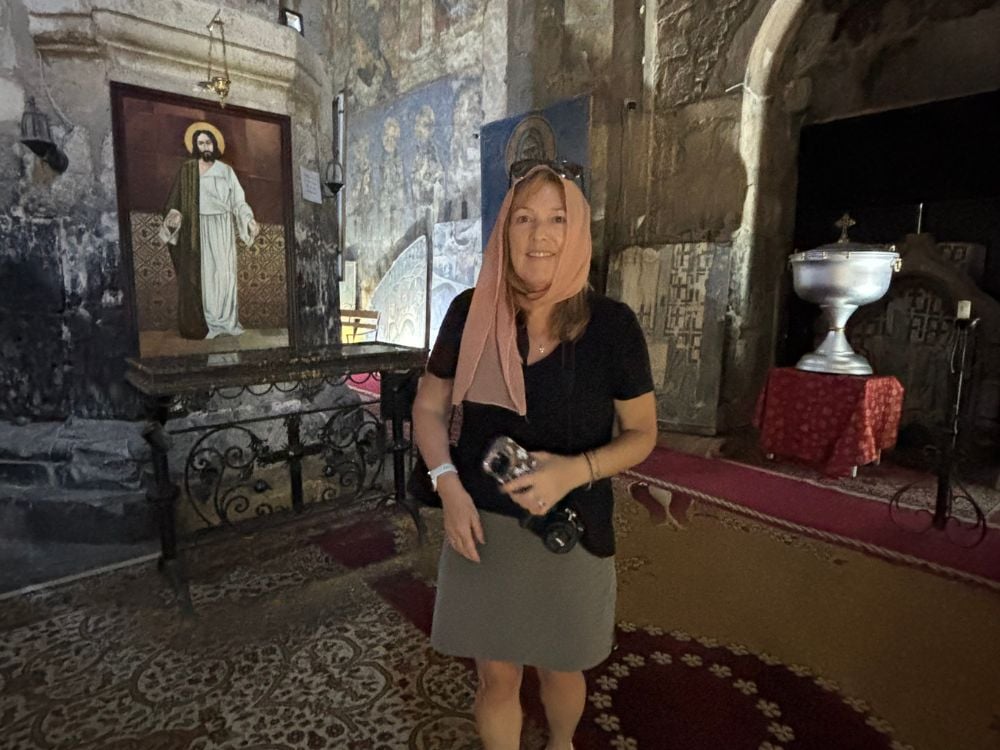
Dress expectations for all is to have shoulders and knees covered. Scarves are available but if you prefer, bring your own.
If you are travelling independently, there are no fixed opening hours so whilst it can be visited year-round, getting to Akhtala in winter months would be tricky and is not recommended. It's free to enter but a small donation is appreciated. If the church door is locked apparently there is a local caretaker who should be around to open it. You may have to ask at the restaurant here to find him.
1:30–2:15 — Lunch at Akhtala
Part of our tour included a lunch at Nurik Restaurant. If you are lucky enough to eat here, you won't be disappointed. We enjoyed delicious fresh summer salads, local bread and fabulous Armenian wine.
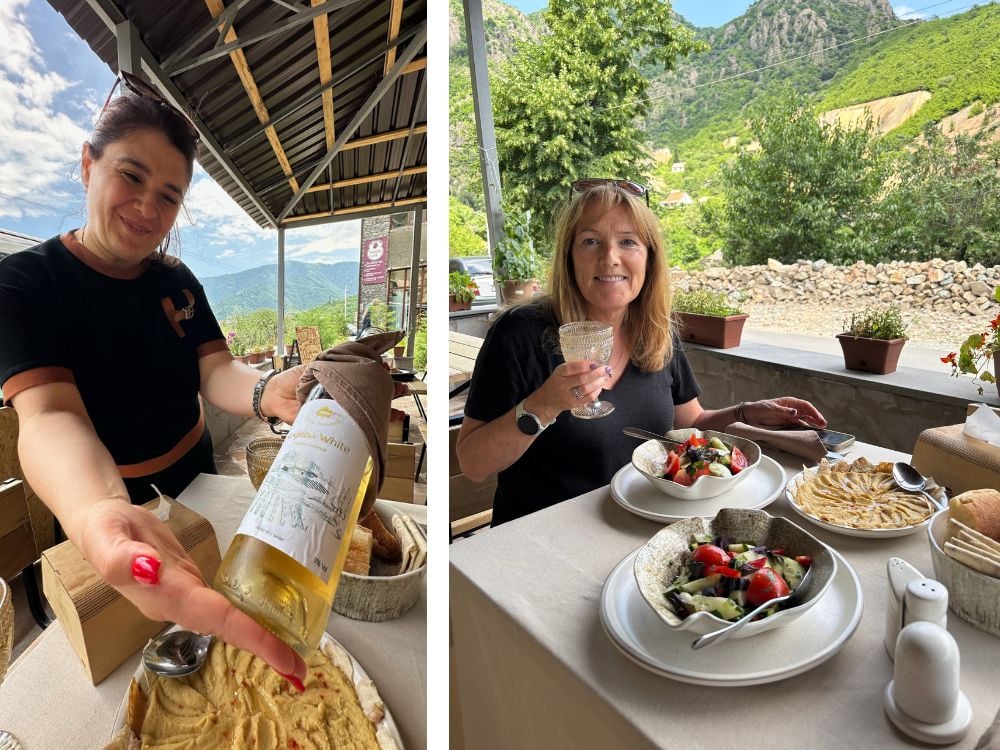
We paid 8,030 Drams for lunch which may sound a lot but the grand sum was only £16.50 for both of us. Aside from the food, you are eating at the top of a mountain, next to a 10th century monastery so the setting is magnificent.
2:15–3:30pm — Drive To/Explore Sanahin Monastery
On the 25km drive from Akhtala to Sanahin Monastery, we made a 10-minute stop at the very old Sanahin Bridge which dates back to 1192.
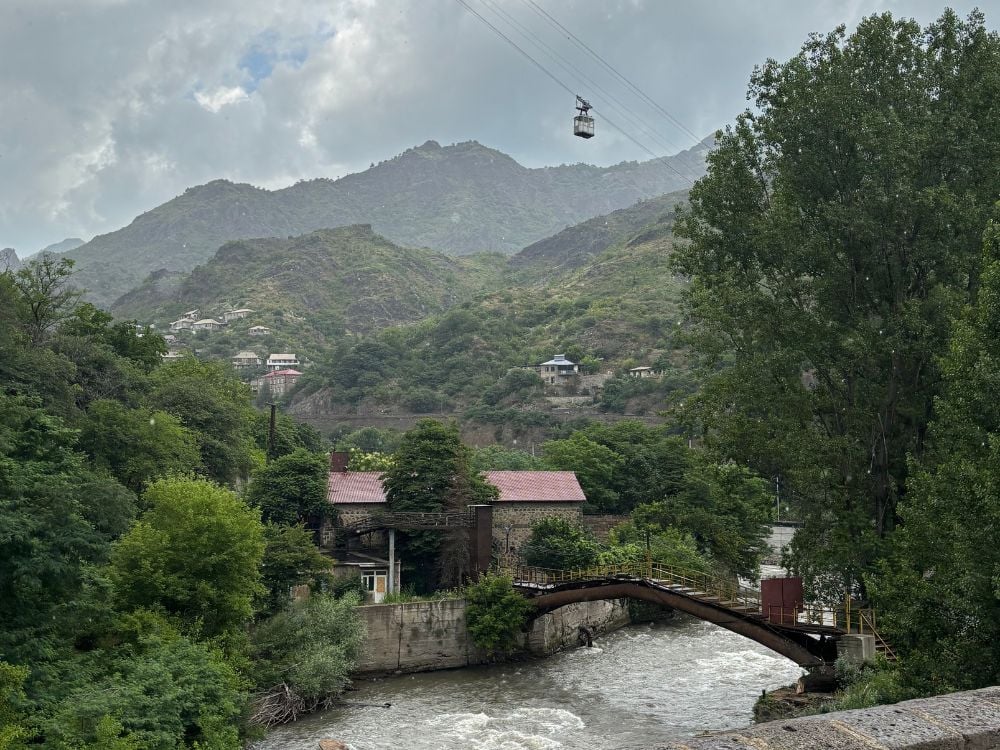
It was actually pretty wet when we arrived there so we only had a quick walk out. Look out for the large statue of an old man near the entrance to Sanahin Bridge. It's much more recent than the bridge yet surprisingly, there is little reliable information available about who the statue represents. Some say he is simply welcoming visitors to Sanahin.
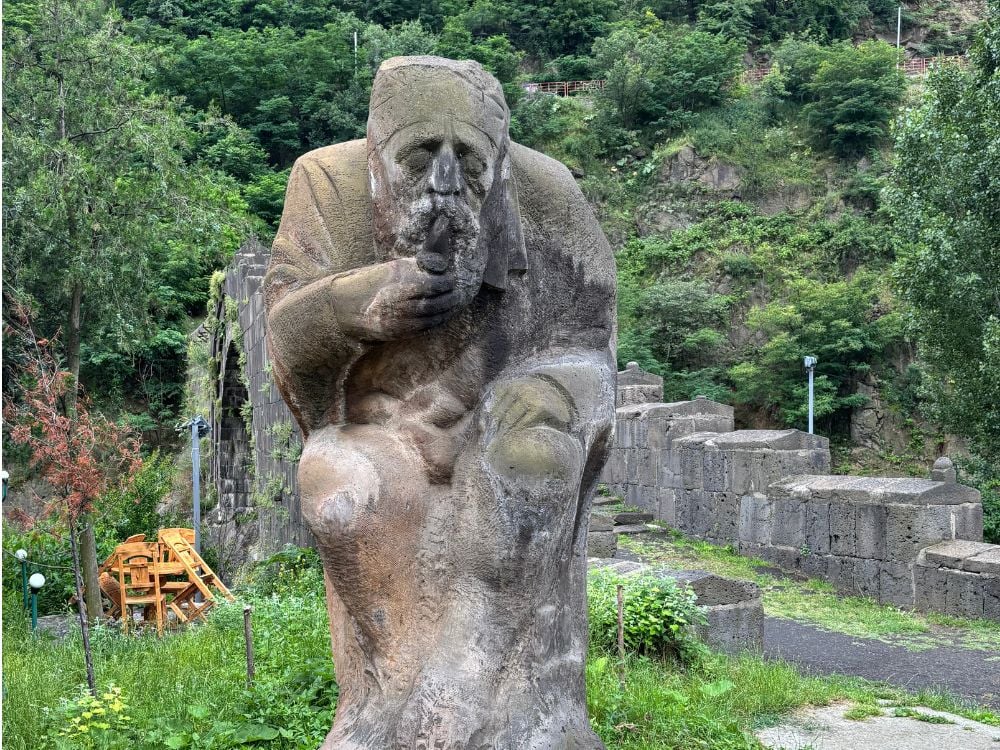
To be honest, there is not a lot here but the harsh stone buildings around gave a stark reminder of Soviet rule in this country.
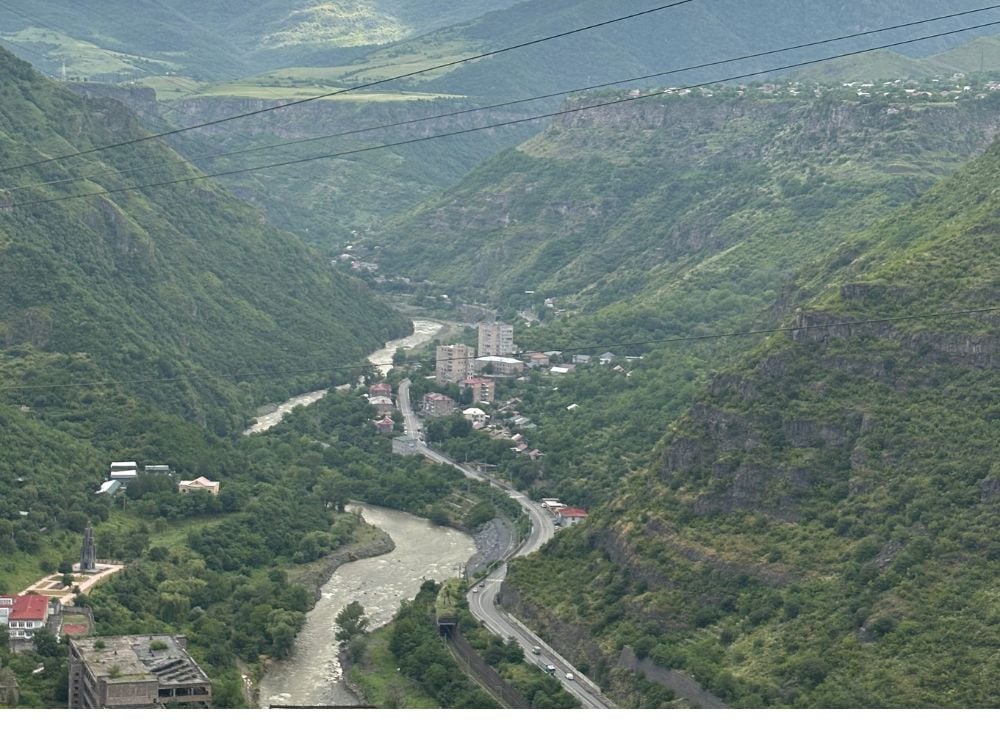
From there, we continued on for another 15 minutes winding our way above the Debed Gorge and up twisty mountain roads to Sanahin Monastery arriving around 3pm. Ask your guide to stop at a suitable point so you can take photos — the view down the valley is incredible.
Sanahin Monastery
We spent about 30 minutes exploring Sanahin which forms part of the UNESCO World Heritage Site shared with Haghpat Monastery. There's not just a monastery here but a collection of churches, an academy, library, chapels and other buildings developed over several centuries.
Being so remote, it's hard to imagine that this place was once a busy centre of learning, writing and scholarship with the monastery becoming renowned for its illuminators and calligraphers.
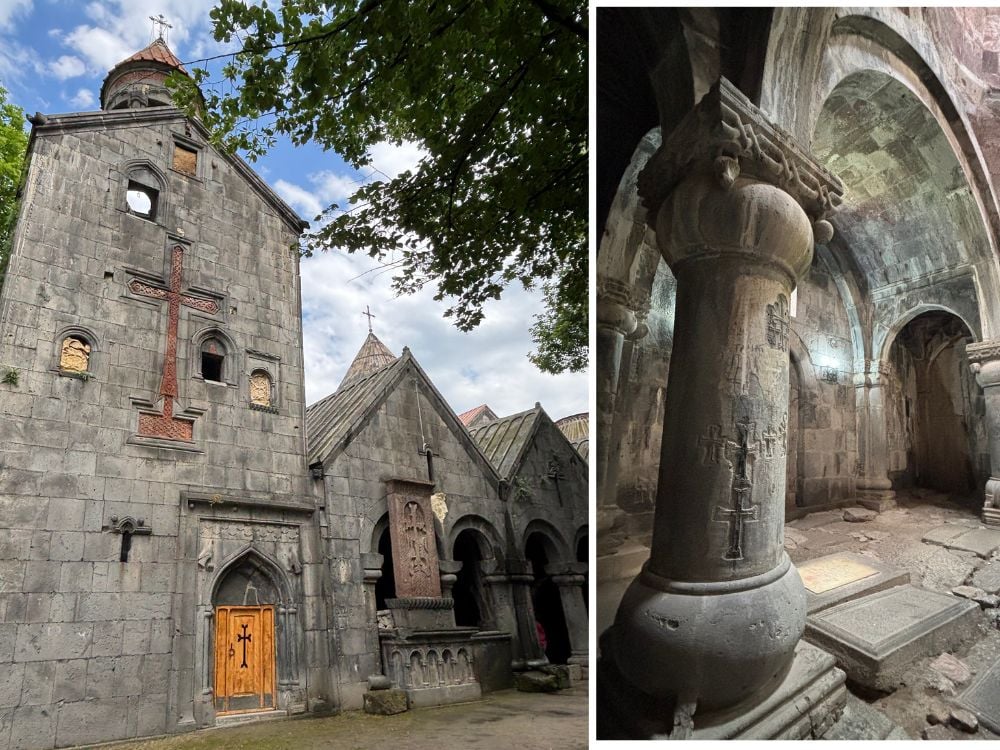
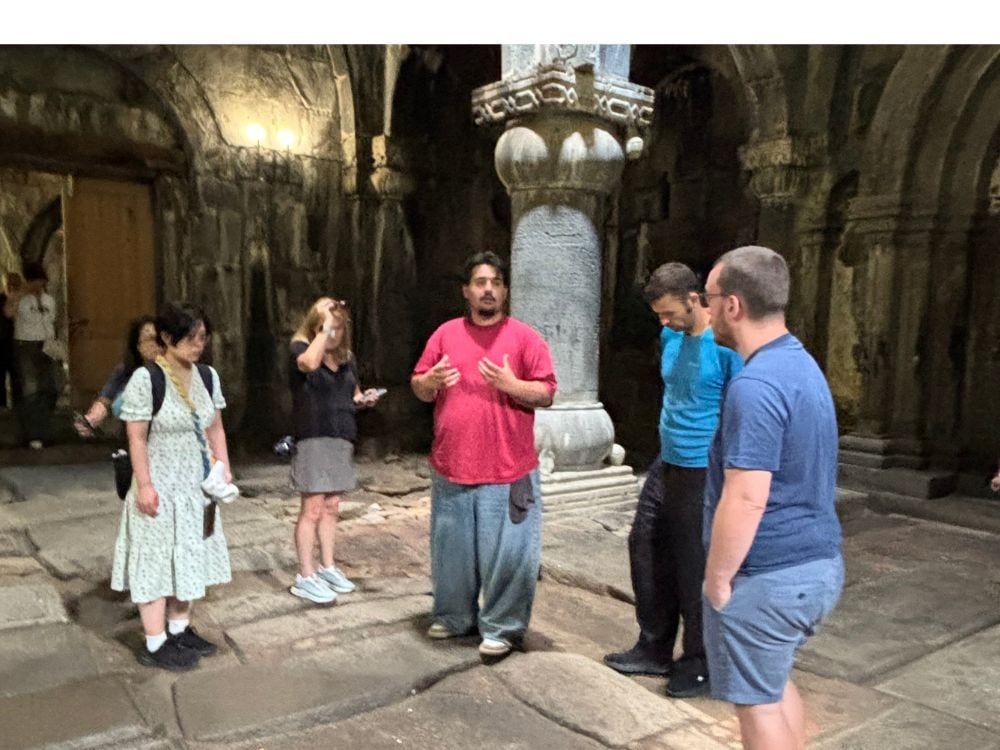
Our guide did reference several of the buildings and decor to us:
- Three churches — St Astvatsatsin, St Amenaprkich, St Grigor Church
- The Sanahin Academy — your modern day equivalent of a university
- The Medieval Library with niches in the wall where manuscripts were stored
- The Bell Tower
- The Gavit (church entrance) with its cross in square design supported by four columns
- The many Khachkars — Armenian cross stones, an expression of Armenian identity
Aside from the monastery, you'll find close to the entrance a few stalls where locals are selling their arts, crafts and produce. There was no hard sell so it was nice to browse.
Whilst at one, it started pouring. Our kind seller immediately beckoned to us to take shelter under her cover. We spoke no Armenian and she spoke no English. But together we managed to converse loosely and share a wonderful bag of local cherries with our new friend! It's these moments that we love!
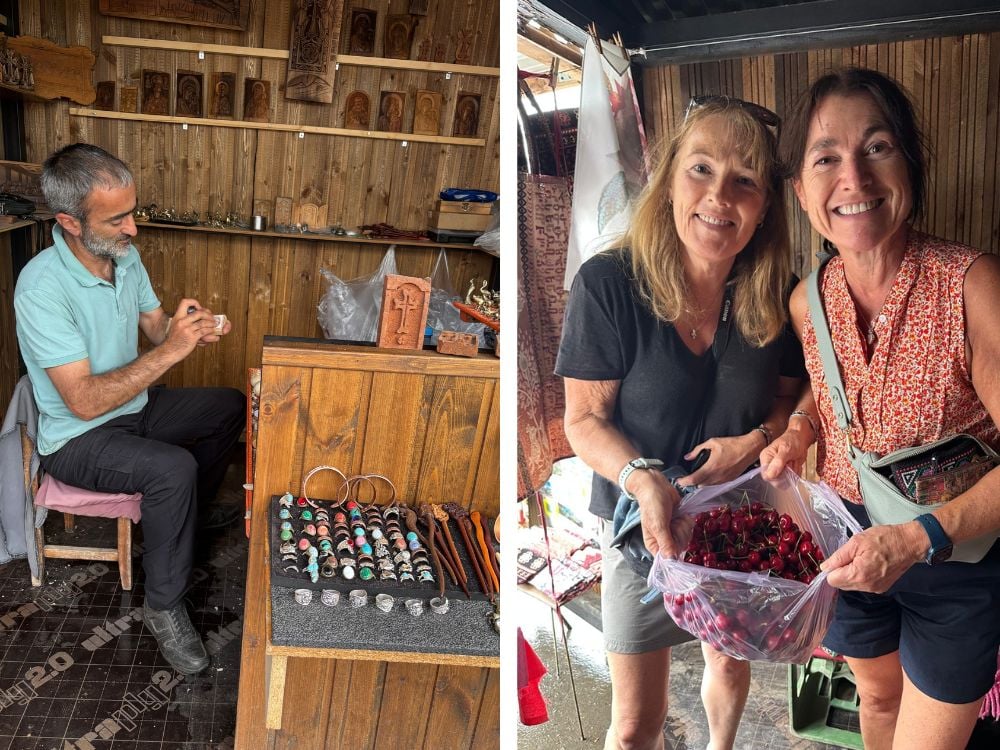
🎒 Our Tip: Pack a mac or umbrella! We visited in the summer but as you are in the mountains, showers can occur at any time of year. We had 4 seasons in one day on our trip!
4:00pm — Leave Sanahin and Head to Mikoyan Brothers Museum
Only a few minutes from the monastery is the Mikoyan Brothers Museum where a full size fighter aircraft MiG-21 is displayed outside the museum.
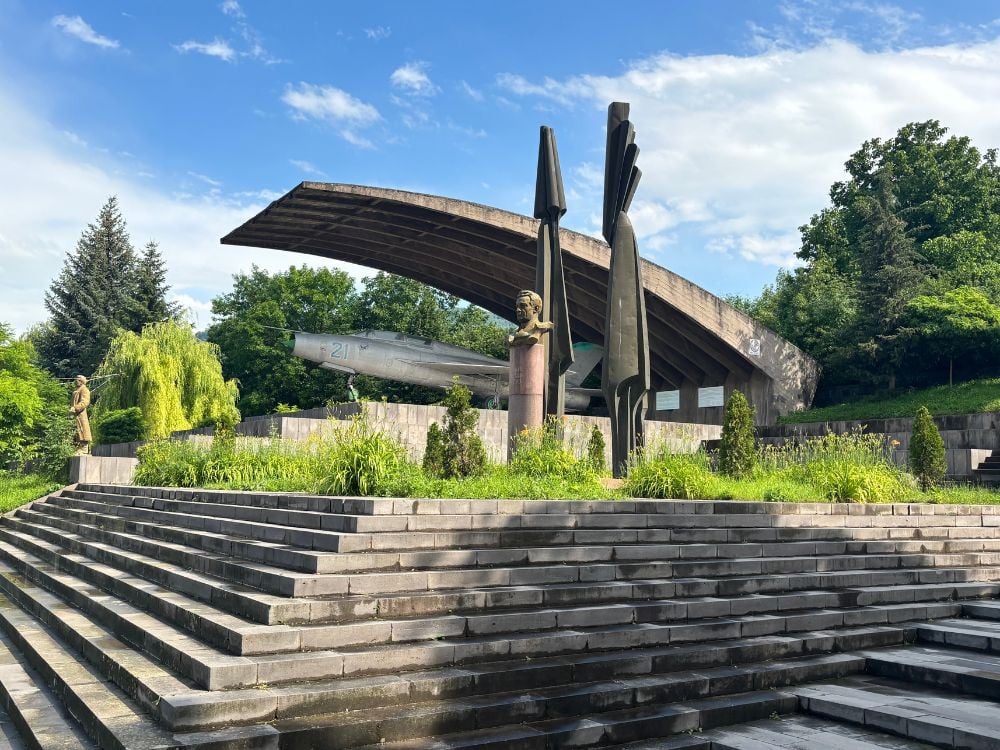
These two brothers, born in nearby Sanahin, grew up to become important figures in Soviet history. Older brother Anastas was a senior Soviet politician working under the governments of Lenin, Stalin, Khrushchev and Brezhnev. In fact, Anastas learned to read and write from a monk at Sanahin Monastery.
Younger brother Artem was an aircraft designer and produced Soviet fighter jets including the MiG-21. This design became one of the most widely produced jet fighters in aviation history with more than 11,000 built.
Artem's official car is also displayed in a glass-type casing outside along with monuments to both brothers.
Even if you're not particularly interested in aircraft, seeing a genuine Cold War-era fighter sitting outside a small museum in a remote Armenian village is quite a memorable sight.
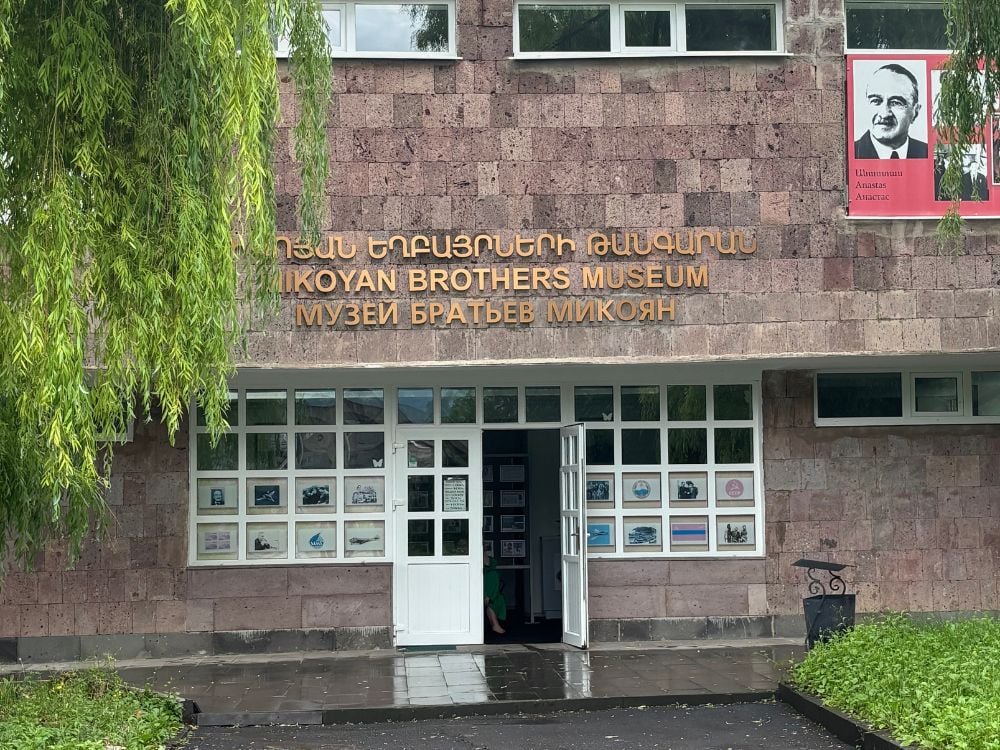
To go inside the museum, there is a charge of 1,000 dram which was around £2 per adult. Not everyone in our group wanted to visit inside, but for such a small fee, it's worth it to find out more about the brothers and what they did.
For example, we learnt that it was Anastas who introduced ice-cream into the Soviet Union during his time as Food Minister!
We spent about 30 minutes at this site.
4:30pm — Leave Mikoyan Brothers Museum and Head to Haghpat Monastery
15km from the museum, we arrived at our last stop — the Haghpat Monastery.
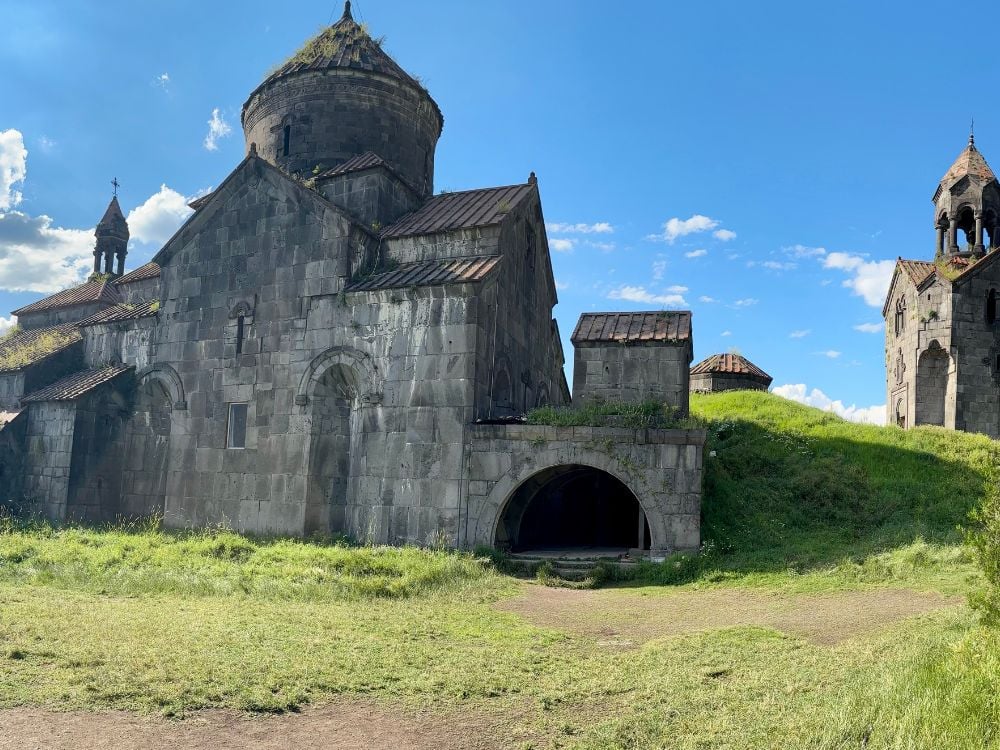
Haghpat Monastery, dating back to AD976, is also a site of several religious buildings. As well as a monastery, like Sanahin, it served as a place of education where monks and scholars studied subjects like medicine, philosophy and science.
Look for the Khachkars or Armenian cross-stones carved into the outside walls. Go inside the church called Surb Nishan (Holy Sign) and you'll find huge pillars supporting a central dome. They're pretty impressive.
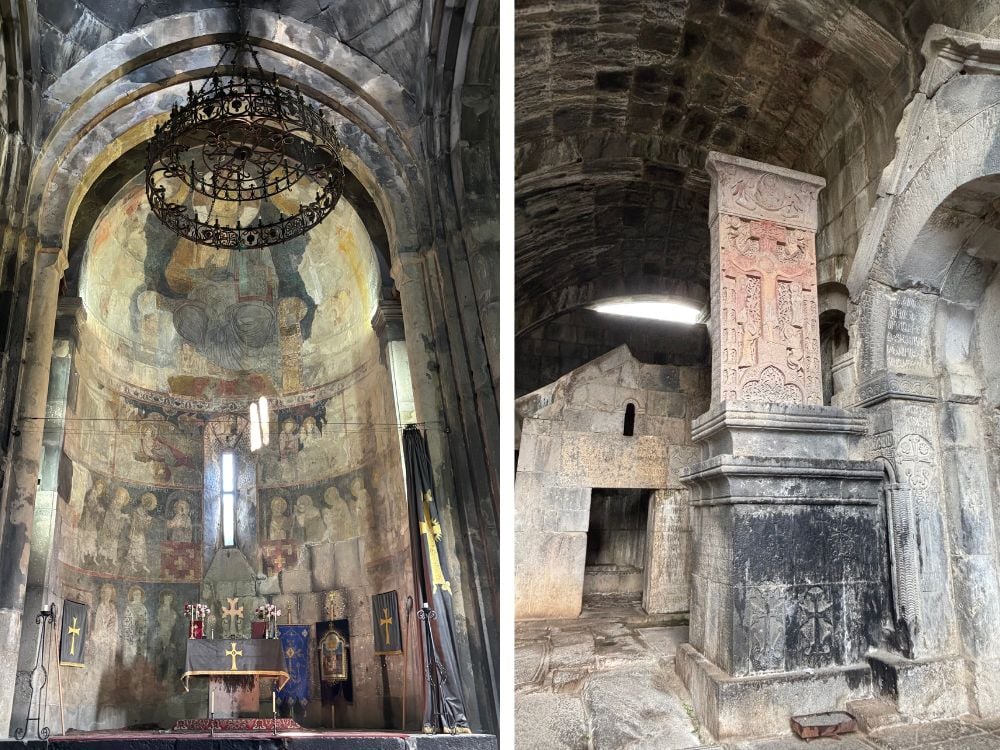
Wander around the grounds and take in the views of tiny houses dotted across the mountains. Our guide walked with us but we had some time within the 30-minute allotted time to explore ourselves.
You might see people trying to walk along a very thin ledge on the outside wall of Saint Gregory Church. Why? Well, apparently, this has become something of a tradition/legend where if you can walk the full length of the wall without falling off, the wish you make will come true!
Of course, we had to have a go — sadly it was much harder than it looked so I failed miserably but it was fun to try!
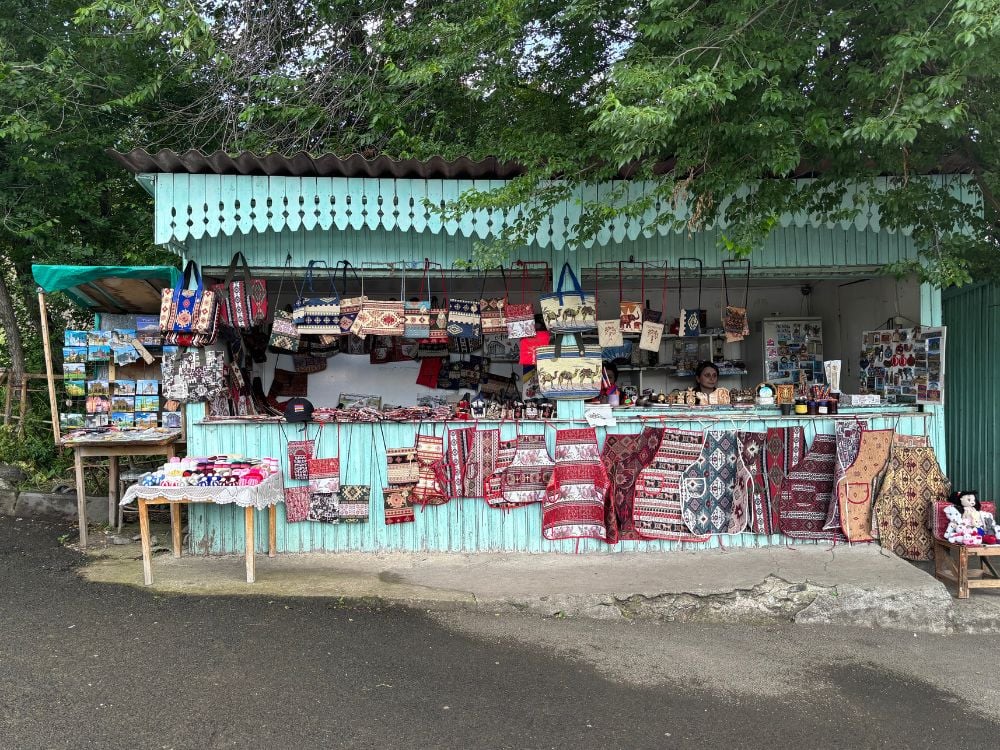
There are a couple more craft stalls here where we browsed picking up some tableware and small souvenirs.
5:00pm — Head Back to the Border and Return to Tbilisi
It was about a 50-minute journey back to the border crossing and around the same time to repeat the border formalities.
From here we drove back to Tbilisi arriving about 8pm back at our meeting point on Rustavelli Avenue.
Other Practical Information
Aside from visas and currency which we have already mentioned, here are our other useful points to note when taking this day trip to Northern Armenia:
- ⇒ Travel insurance — does your policy cover travel into another country?
- ⇒ Mobile data and roaming — check any network charges. Our minivan had free wifi
- ⇒ Timezone — it is the same as Georgia
- ⇒ Bottled water is safer so take some with you and buy another as required
- ⇒ Pack for mixed weather whatever the season — a raincoat, suncream etc.
- ⇒ Driving distances are around 300km round trip so expect around 5 hours of this time to be in the mini-van
- ⇒ Clothing needs to be respectful when visiting religious buildings
🎒 Our Tip: If you have an Azerbaijan visa stamp in your passport, you may have to explain this at the border crossing. Check with your tour operator before you book if you have any concerns.
What We Would Do Differently Next Time
Although our organised day trip was a great way to see Northern Armenia, if we were doing this day trip again, we'd choose a private driver and guide. Why?
- A private trip would give us much more flexibility over the pace of the day
- It would allow us to spend longer at the places that interested us most
- We love stopping for photographs whenever the scenery catches our eye and we felt unable to do this on an organised group tour as it wasn't on the schedule
- 10am was quite a late start — we'd rather start early, including one or two of the smaller sights along the way
- Having an experienced guide is always better
- Quicker border crossings
The extra cost of a private trip would, for us, be worthwhile for the comfort, flexibility and more relaxed experience it provides.
If we had more time to play with, we would book an overnight trip into Armenia and take in Yerevan as well. We would then fly back home from Yerevan rather than take the long drive back to Tbilisi.
Armenia At a Glance
Armenia Quick Planning Guide
| Capital | Yerevan |
| Currency | Armenian Dram (AMD) |
| Time Zone | GMT+4 (same as Georgia) |
| Language | Armenian |
| Visa (UK/EU/US) | Not required for tourists |
| Best time to visit | May–October |
| Day trip from Tbilisi | 10–12 hours (North Armenia) |
| Border crossing | Sadakhlo-Bagratashen |
| Driving distance | ~300km round trip |
| Safety | Generally safe for tourists |
Useful Information on Armenia
Helpful Travel Links
FAQs
Is Northern Armenia worth visiting in a day from Georgia?
Yes, it has a rich history with UNESCO sites, dramatic scenery, and is uncrowded. It's close enough to Tbilisi that you can comfortably visit highlights such as Haghpat, Sanahin and Akhtala and enjoy Armenian food before returning the same evening.
How long is the border crossing between Georgia and Armenia?
Typically 30–60 minutes, although at weekends, holidays and peak travel periods, it can be longer.
Is Northern Armenia safe for visitors?
Yes. Northern Armenia is generally considered safe for visitors, with friendly locals and a relaxed atmosphere. As with any destination, take normal travel precautions.
Can you use Georgian Lari currency in Armenia?
Some restaurants accept Georgian Lari, but you'll generally need Armenian Dram for purchases, especially in more remote locations and at craft stalls.
Ready to Check out Our Tbilisi Itineraries?
We are certainly glad we took this day trip from Tbilisi! And we are already thinking about seeing more of Armenia and heading to Yerevan next time.
With flights increasing to this part of the world, the Caucasus regions are certainly growing in popularity. So if this part of the world interests you, do take a look at our other posts on Georgia and Azerbaijan.